Baxter State Park is about Mt. Katahdin, right? It is certainly the most popular destination in the park, but it is a true wilderness with very few roads and those are all gravel. It has other mountains. It has streams, waterfalls, ponds galore, and some 209,000 acres of northern forest. The day after I climbed Mt. Katahdin, I took several hikes adding up to 10 miles that sampled some of the other sites of the park. Check it out at “Pond, Peaks, and Falls“.
Posts Tagged ‘Camping’
Baxter State Park
Posted in Camping, Exploring, General, Hike, Nature, Outdoors, tagged Baxter State Park, Camping, Hike, Nature, Northern Forest, Outdoors on July 13, 2024| Leave a Comment »
A Gorges Place
Posted in Camping, Ecology, Family, General, Hike, Nature, Outdoors, tagged Bushwhacking, Camping, Cascades, Ecology, Escarpment, Gorges, Hike, Waterfalls on September 18, 2023| Leave a Comment »
Yeah, I didn’t spell that wrongly. It is a play on words. I went on a two-night camping trip with my older brothers and their wives at Gorges State Park in Transylvania County, NC. As the name implies, it has some very rough real estate. In fact, it sits on the SC border where the escarpment drops out of the mountains into the Piedmont. The gorges are not what I usually think of as a gorge (1), however, since there are no cliffs in the park that I saw. Instead, they are steep-sided and steep-graded draws where creeks have worn down to bedrock, leaving cascades and the occasional freefall waterfall. Because of how fast the mountains drop away, Transylvania County has 250 waterfalls. That gets me to wondering how a waterfall is defined (see “Cascades, Not Falls“). What is the minimum height limit? What is the minimum slope of cascades? Does water have to leave contact with the surface in a cascade to be counted? There is little doubt that the various creeks have multiple waterfalls, but how are they counted? One thing that I observed in the Visitor’s Center while comparing labeled pictures of waterfalls and trails marked with waterfalls in the park was that most of the falls in the park don’t have trails to them. That sounds like to me an excellent excuse to go back and bushwhack more. The combination of geology, topography, aspect, and prevailing winds results in significant rainfall and runoff. The average annual rainfall in Upper East Tennessee where I live is about 44 inches. In Morganton, NC, where I used to live, it is 51 inches. In Gorges State Park, the average annual rainfall is 91 inches, making it nearly a temperate rainforest. That is all good for the waterfalls, but the particularly shallow topsoil still causes the tree cover to be predominated by drier slope varieties like pines and certain oaks. However, seeps here and there are lush with a profusion of hornworts, ferns, orchids, and many other wildflowers. Check out all of the gorges lushness at “Gorges State Park.”
- “gorge- a narrow valley between hills or mountains, typically with steep rocky walls and a stream running through it” https://www.bing.com/search?q=gorge+definition&form=ANNTH1&refig=31b0bb6c75e64e7bb332c55d569e5433
Quick Camping Trip
Posted in Backpacking, Camping, General, Hike, Nature, Outdoors, Photo, Wildlife, tagged Camping, Hike, Linville Gorge on May 18, 2021| Leave a Comment »
I can frequently do spontaneous. I guess my children know that. My youngest son called me last Friday morning and said, “Do you want to go camping in the Gorge tonight.” Well, that took some rethinking the day, but I was in. By the time he got off from work, drove home to get equipment, drove back to my house, and we drove to the trailhead, it was nearly 7 PM. No worries, it was only 1 1/2 mile downhill romp to the river on the Pine Gap Trail. I really like the late evening light and shadow in the this picture with the diffraction blurring around the shadow.

I feel like they should have replaced the post when they replaced the sign. That post is on the way out.

This is a frequent scene with my sons. I can’t keep up anymore. Additionally, I don’t even want to since I am looking around and taking pictures. At one point he said, “I thought we had lost the naturalist there for a minute.” The trail, as do all of the Linville Gorge trails, starts off flat for a short distance and then plunges down between the cliffs in switchbacks or rock scrambles.

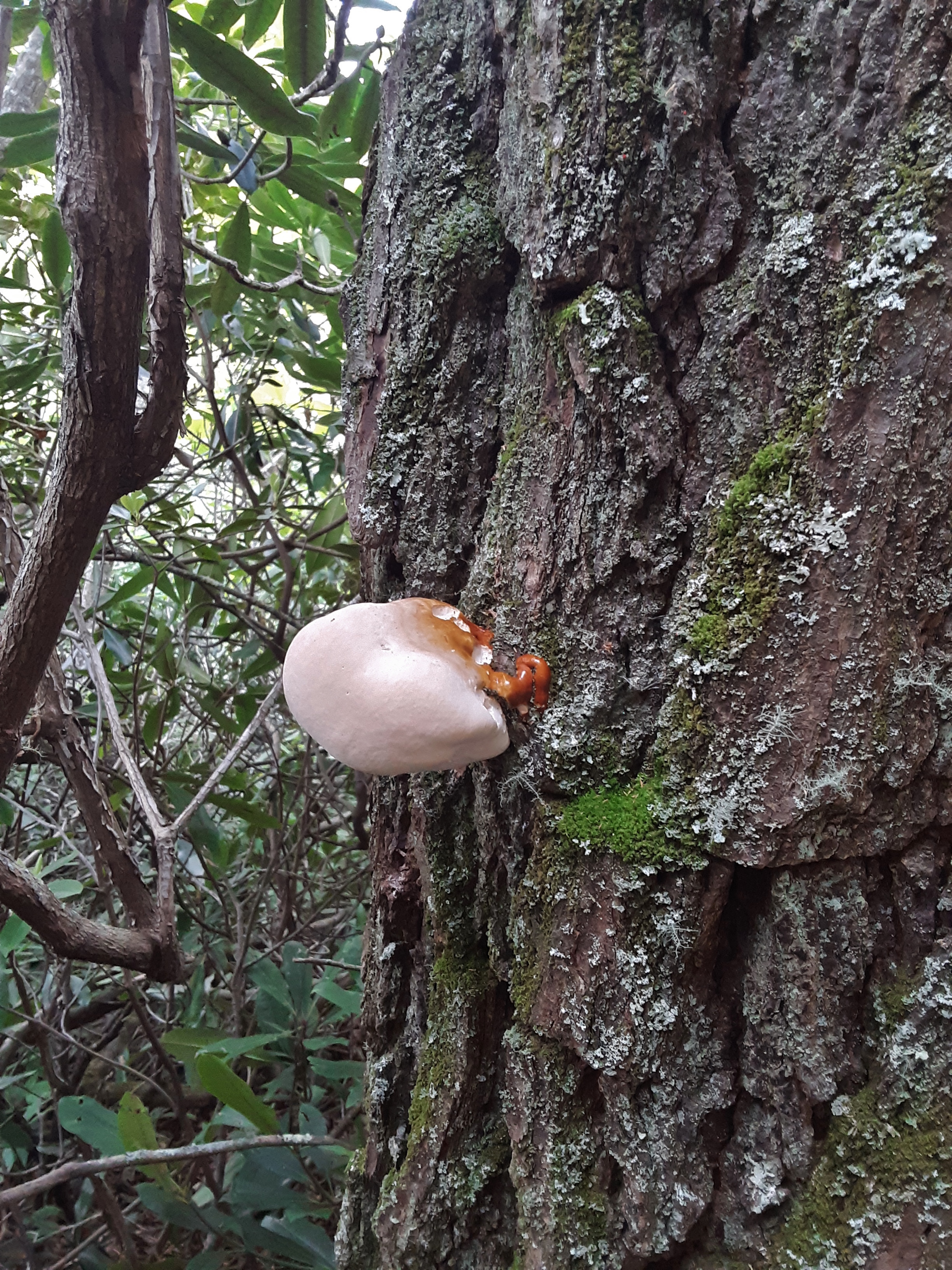
This Pine Tree had some fungal “foam” inflating on its side.
Catawba Rhododendron are not as large as Grandifolia, but the blooms are very beautiful.

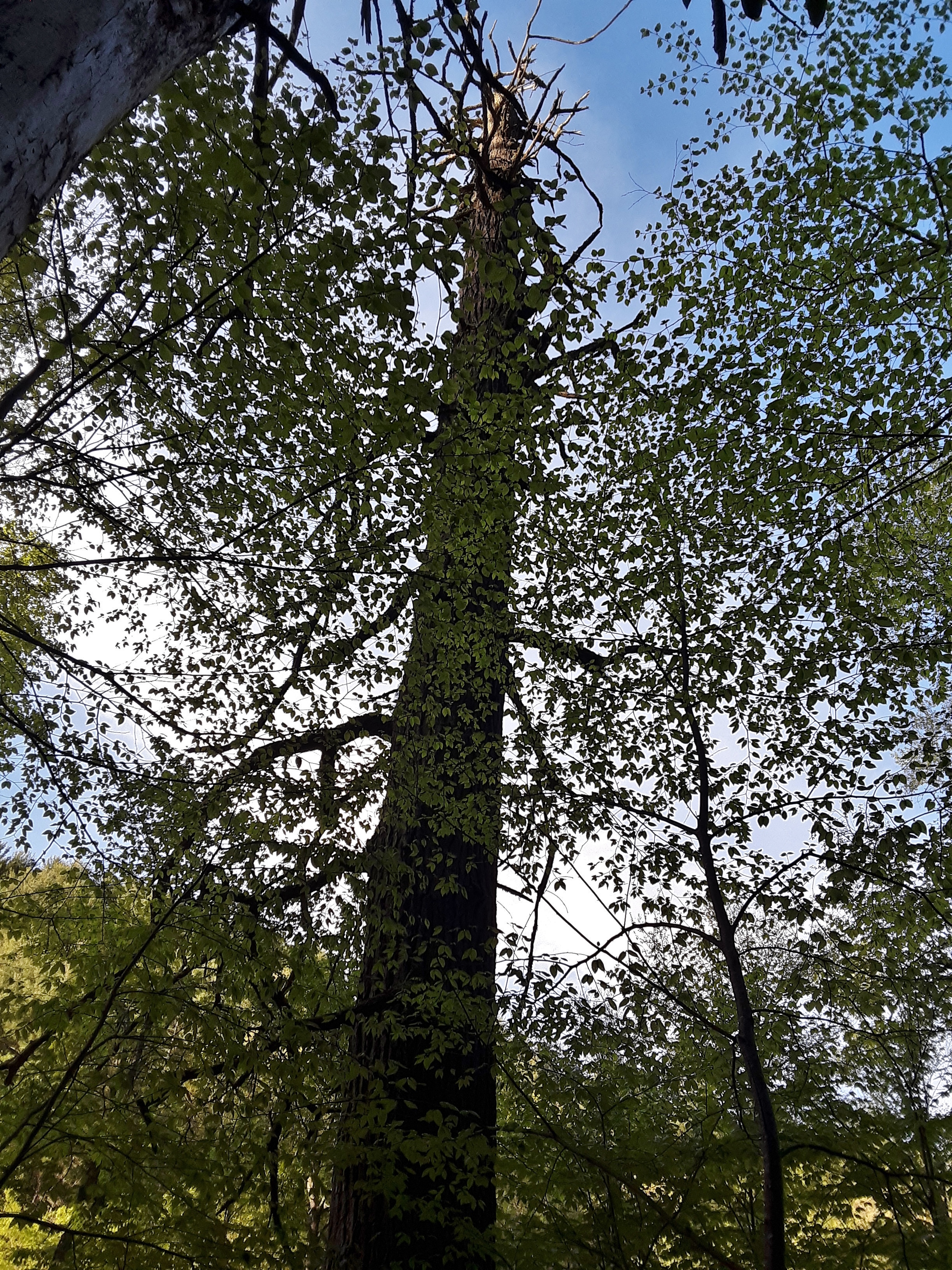
We passed many looming giant hulks of dead Hemlock trees. It is sad that another grand tree has been essentially eliminated from the forest.
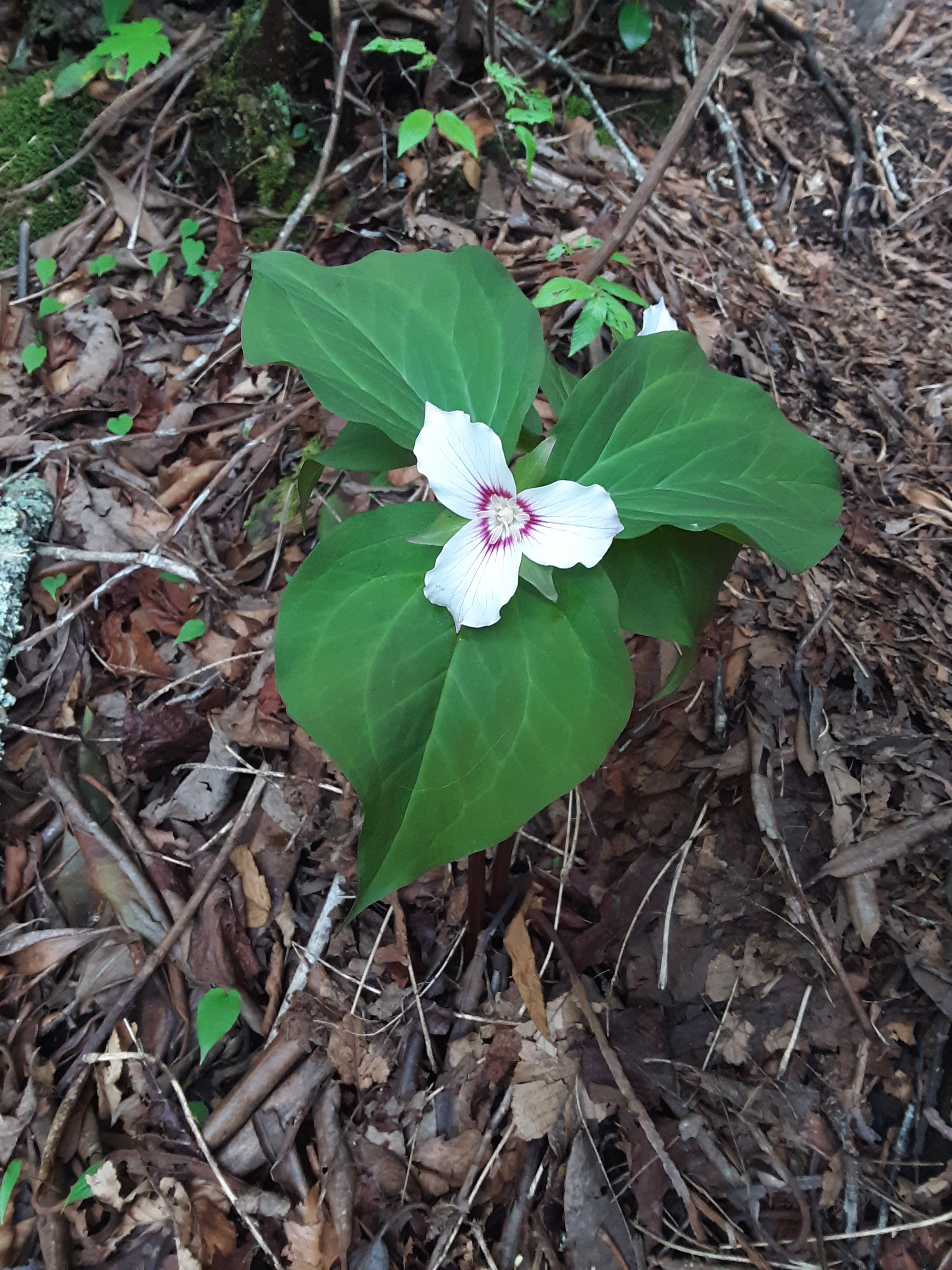
This may be the best picture of a trillium that I have ever taken. It is Painted Trillium (Trillium undulatum).
Here is the first sighting of the river. Notice the blooming Doghobble in the next two pictures.


Just before dropping down to the camping site next to the river, the trail wound through the rhododendron, pine, oak, and Galax thicket at the top of an eighty foot cliff that was immediately over the river. I was almost made for a movie scene, but better.

The river was not as loud as it frequently is, since the water was low, but it still is exciting to hear it as you get nearer.

Following was our view from the campsite at the river when we first arrived.

Linville River

Since it is a frequented campsite, I had to range out 1/4 mile to collect down and dead branches for a fire. I saw that the sun was getting low and I must return to camp.

We sat around and enjoyed the glow of our carbon footprint accelerator. I thought about it and remembered that if you leave the wood on the ground to rot it released the carbon dioxide all the same, only slower. It warmed us, occupied us, and warmed us up to good conversation about history, new horizons, family, and even a touch of science.

Just above waterline was a mound of moss crowned with clump of bluets.

Violets are such a simple flower, but they always remind me of my wife since it one of her favorite flowers. The composition of the picture is so warm with rock, wood, lichen, Galax, violet, and even a touch of fern.

Electronic zoom on a phone camera is almost useless, but it did allow me to capture a hawk on a branch the next morning as we hiked out. Though blurry, can you see it?

After we exited the Gorge I directed my son to drive to the Linville Falls Access in order to show him the little jewel that I had discovered recently. (see “Underappreciated Little Jewel“)

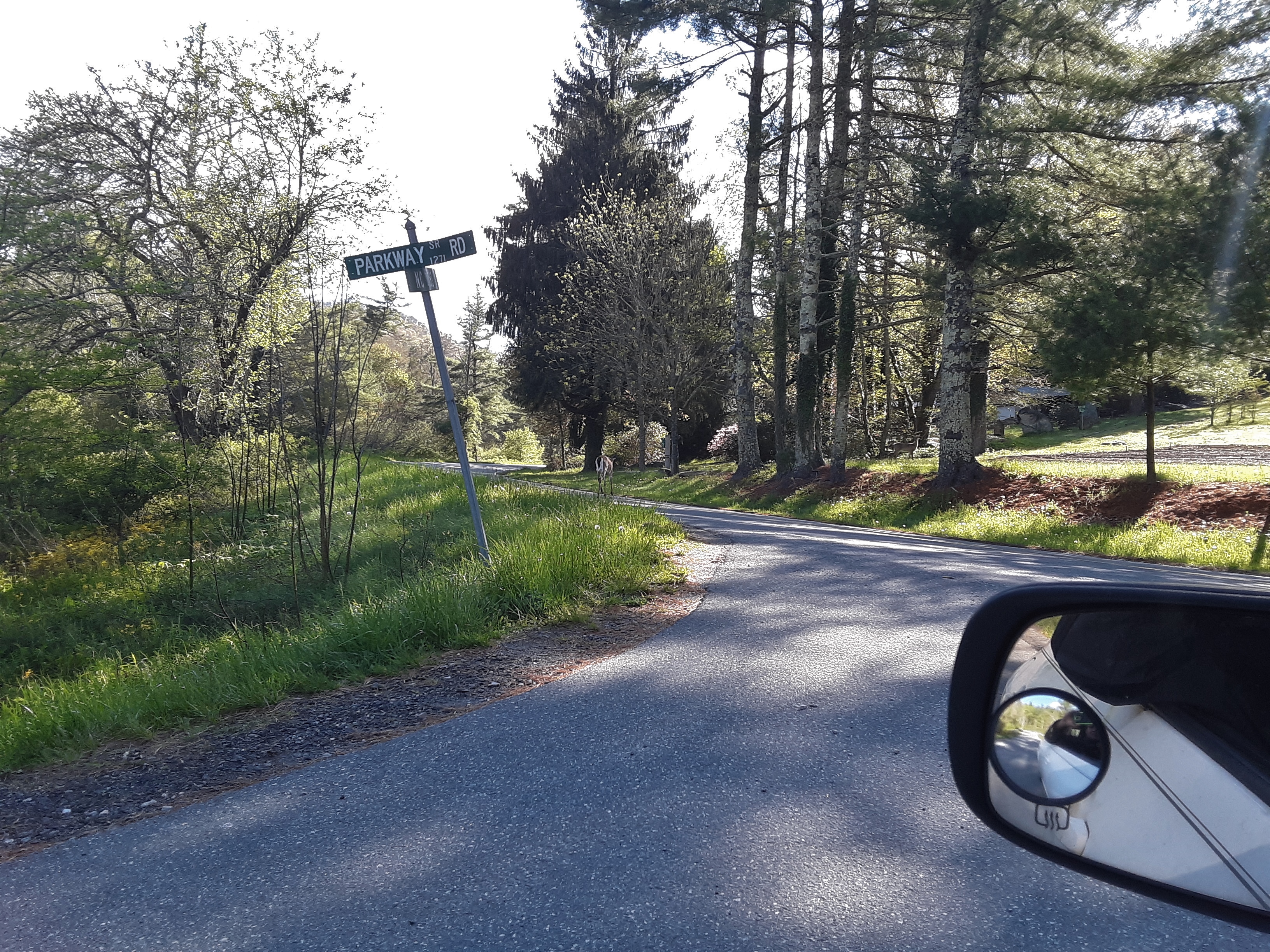
We even had the privilege of seeing two young deer on the drive out. Wildlife is so hard to capture. I am amazed at the talent, persistence, and equipment that professionals use to bring such amazing images of wildlife to us. Even so, I like to see it for real in nature.
From start to finish, this little overnight outing only occupied sixteen hours. Don’t say you don’t have time to get out. Make the time to exercise the body, rest the mind, and inspire the spirit. God has made us a whole person in need of Him and desirous of the beauty of His Creation.
Reminiscence Rarete’
Posted in Backpacking, Beauty, Camping, Experience, General, Glory, God Thoughts, Grace, Outdoors, Remembering, Reminiscence, tagged Backpacking, Beauty, Camping, Experience, Nature, Outdoors, Remembering, Reminiscence, Worship on May 19, 2018| Leave a Comment »
 CreatorWorship