Feeds:
Posts
Comments

Posts Tagged ‘Photos’

I have the privilege (really!) to patrol Monday morning parking lot duty from 7:15 until 7:50. On most Monday mornings there are no more than 2 or 3 cars in the parking lot when I arrive. That makes for some quiet moments to consider the day, pray about concerns, and look around. Quiet allows you to observe better. One morning I saw various seeds under the trees: Bald Cypress cones, acorns, and Sweet Gum balls. Another morning I saw oak leaves of various sizes and broadness on the ground. Looking up into the tree I could see that smaller ones generally came from the top of the tree and larger ones from the bottom. These larger ones are called shade leaves. They are competing for the sparse sunlight in the shade cast by the rest of the tree. Yet a third morning I spied leaves popping up a few at a time in the direction from one bush to another. I kept watching and every 5 to 10 seconds the leaves would pop up an inch or so. After every few minutes the movement of the leaves would retrace the path back toward the first bush. I concluded that I was seeing a mouse or other vermin forging a tunnel just under the leaves and mulch on this frosty morning.

Speaking of frost, the very next week the morning was even colder, around 27 degrees (-2.8 degrees Celsius). As I approached my usual vantage point for watching cars, students, and nature, I saw that the golden brown Bald Cypress needles had fallen to the ground in the last week and this morning were fringed in frost. I went to investigate and caught a hold of an early arriving former student, requesting that he snap a picture and e-mail it to me (gonna have to get one of them new fangled smart phones one of these days).
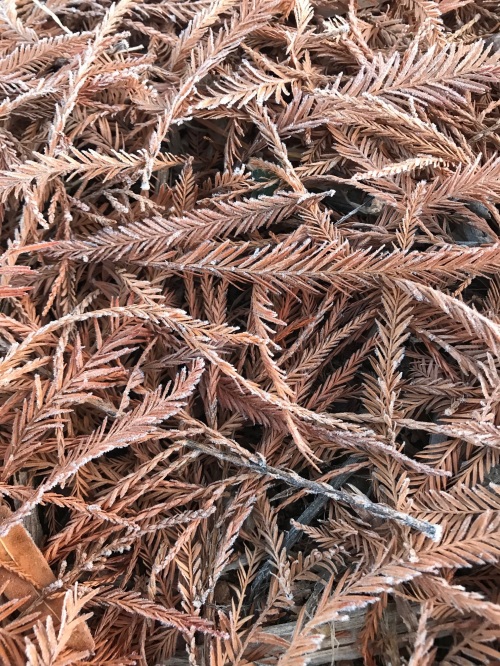
Bald Cypress needles

The most Exquisite Lace

I retreated back to my self-appointed post. Still there were but few cars in the lot and none nor no one stirring. I glanced over toward the frosted needles once or twice. Then between two bushes I spied a curious sight about which I was at first incredulous. In fact, a few minutes later a student came to pass my way and I requested the use of her young eyes to see if she would see what I think I was yet seeing. She confirmed that there were indeed the appearance of heat waves between the bushes. Imagine, heat waves on a frosty morning! She went on and I was left standing to contemplate how this could be. Moments later a small breeze kicked up and the waves were gone. That only served to confirm my belief that they had been heat waves.

Heat waves are caused by varying densities of fluid (air in this case) refracting light passing through them. Usually the warmer fluid is rising, forming a convective cell. As it randomly snakes upward the background images are gently contorted by the light passing through the foreground fluid.

But what was forming the heat waves? As my eyes scanned the parking lot and Cypress needles, it seemed to me that the frost was heavier during the short period I had been standing there. That may have only been to my sight because of the increasing light as the sun rose, but it brought a possibility to mind. When frost forms, water vapor in the air turns directly into solid ice crystals on the grass or windshield. This process is called deposition, which is the opposite of sublimation, and skips the liquid state going either way. The heat given off by changing from gas to liquid and liquid to solid is about 8 times more than the heat given off by the same amount of liquid water cooling from 100 to 0 degrees Celsius. Needless to say, a significant amount of energy is given off by the deposition of frost. Frosty heat waves, that is shimmering amazing.*

*If my conclusion is correct


Read Full Post »

Sometimes I’m not sure if I have already written a post or just thought about it. So, sometimes I go back into my own blog and search for a post. The post I actually wrote was about 29 years of heating with wood (Click on the following title to read “A Warm Habit“.). I am now heating in my 35th year. I have some unfinished writing I said I would write another day in “A Warm Habit”.

The first year I heated with wood was the second winter of our marriage. I used a wood stove borrowed from a friend. The next year my father bought me a small, cast iron, bolt together wood stove with a nice picture on both sides. It was sufficient for the small 3 room house we were renting. As hindsight now allows me to regret, I sold that stove the next year. I thought that I would not heat with wood again when my wife and I went for a year of Bible School in Chicago and lived in a 4 room house with central oil heat. The next  year we moved to Elizabethton, TN, and lived in the front half of a split house. Ironically, though we had just lived in Chicago, the first winter in Elizabethton was the coldest we ever had in a house. The landlord had a wood stove in the the crawl space with ductwork to supposedly heat both halves. It didn’t heat our half. Our first child was constantly wrapped up like he was outdoors. The next winter we lived in a house on Camp Ta-Pa-Win-Go. I paid a small rent and worked as maintenance man. We heated with the very nice installed wood stove. The next year we moved to the Horseshoe, a small gorge and bend in the Watauga River in that shape. The first year in that little house in the woods with the curtains that blew in the winter breeze, we heated with my friend’s wood stove again while he was building a house.

If you having been following this story, then you will realize that we had now been married 7 winters and heated with wood for five. It was again time to find a wood stove. I started checking the want ads of the local newspaper, because this was in the days before Ebay and Craigslist. I looked at several that were a combination of too small for heating a whole house and too expensive for my budget since I was was in the state of affairs referred to as under-employed at the time, doing odd jobs. I saw another stove advertised for $250 in Bristol, TN, about an hour and a half drive by the roads then available. The price seemed at the edge of my range and it was called a Fisher “Grandfather”, which I understood vaguely to mean it was a larger model stove. I grabbed a friend and we went that way. It was well after dark when we pulled up to the most curious house in the neighborhood. The house was obviously much older than any other in the neighborhood. It was a one story white clapboard house that had a large porch all across the front with disproportionately large white columns one might expect to see on a big house on the plantation. The address matched. The windows were unlit even as the neighborhood was poorly lit. A young couple came to the door. The stove was in the front living room which was almost empty except for the large, two door wood stove in front of the chimney. I sized it up while my friend made small talk. I began to engage with the man in order to try to haggle the price. He referred me to his wife, who he said was the owner of the stove before they were married. One of us made a comment about the interesting house. They began to explain that they had hoped to remodel this post-Civil War house and raise their family there. Instead, they were now going to be missionaries and had already cleared most of their furniture. I told the young woman that my budget was really tight and I intended to heat with wood as I had already been doing to save money. With what I thought to be almost tears in her eyes she explained how the stove was meaningful to her because of family connections and that she hated to part with it. She had already turned down several other people who had wanted the stove and finished her story by saying, “I just want to find a home for this stove with someone who will burn a sincere fire.” I assured her that based on the fact that I was already regularly heating with wood, cut and split all of my own wood, and had a growing family and a limited income, that I could most certainly “burn a sincere fire.” I felt as though I was swearing to always burn fires in this way. Based on my sincere testimony, the woman was convinced and allowed me to give her just $190 for a stove that probably cost $900 to $1000 new. But I was not scamming or playing; things were really that tight. The stove was very hard for us three young men to move, given its size and weight. We laid down boards and mostly scooted the stove across these boards to avoid scratching the hardwood floor and porch. We wrestled it onto the back of my 1970 F-100 with the rusted bed. For the next 30 winters thus far I have burnt the most sincere fires possible, keeping warm a wife and 5 children in three different houses in two states. I think that what most makes the fires in this stove sincere is the enjoyment I obtain from heating with wood and the reflection I have while starting fires. My wife encouraging me to get up and start a fire because it’s cold in the house probably doesn’t hurt any.

As He has so many times, God provided what I needed when I needed it. During those times when it seemed as though He didn’t, really He did, just not in the way or at the time that I expected or requested. He is good.

101_0744

Starting a sincere fire during the first snow of the season with wet wood drying by the wood box in the background.

101_0742

The sideboard of an old woodbox that my wife stenciled when we lived in the Horseshoe.

Read Full Post »

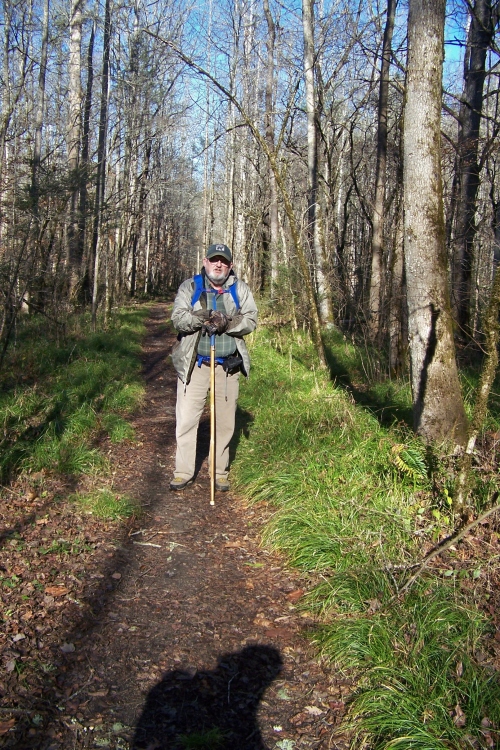
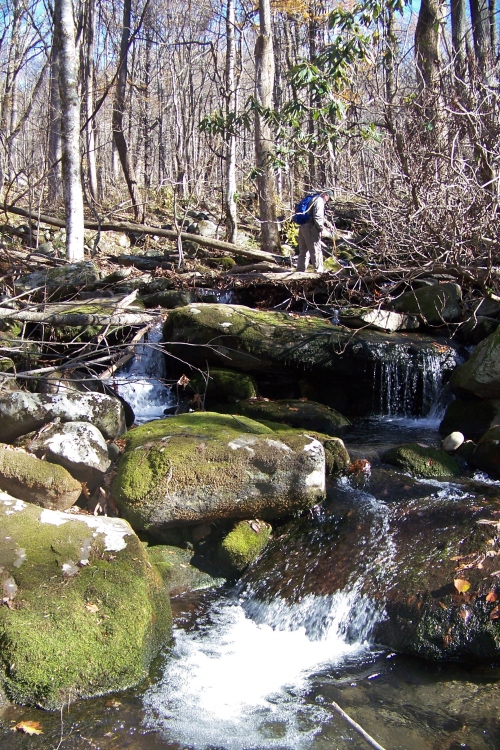
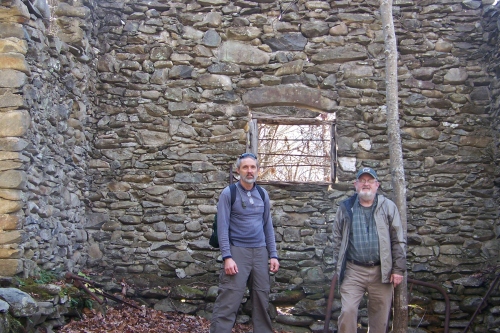
Many of the Thanksgiving traditions of my family are over 30 years old: the meal with the brothers at the oldest’s house, the flag football game, the day after hike, guests from near and far. Many of the children who are now parents don’t really remember Thanksgiving any other way. But as spouses have been added, which means extended families, the traditions have had to flex and bend to traditions and schedules of other families. The day after hike used to be on “Black Friday”, sort of a rejection of the shopping madness for a stroll in the mountains and conversation with family. But this year and last the big meal was on Friday, and this year the hike was on Thursday. Rather than brothers and spouses and children and cousins, it was trimmed down to my oldest brother and me.

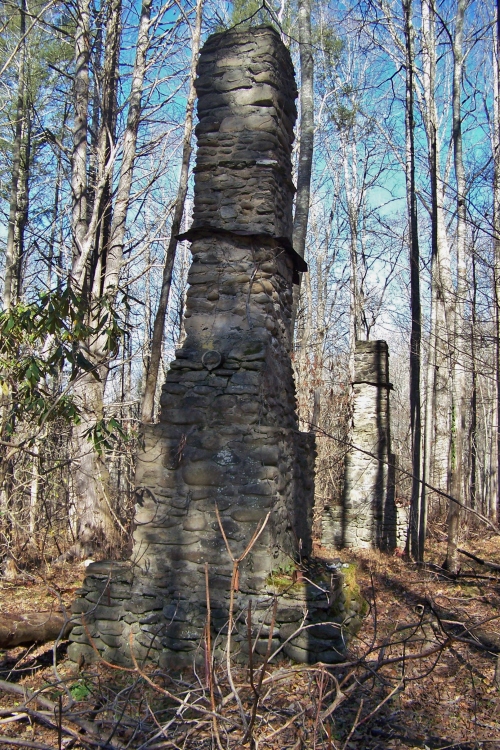
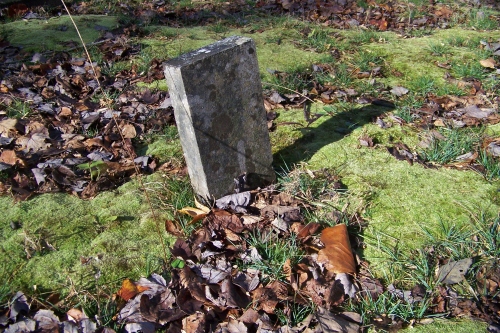
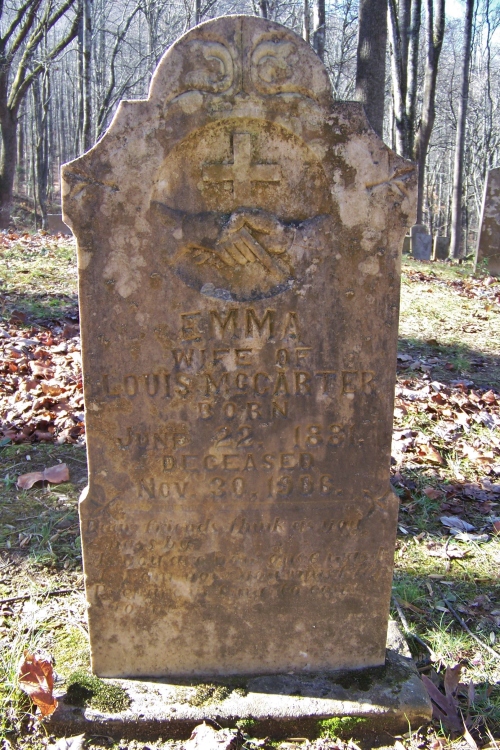
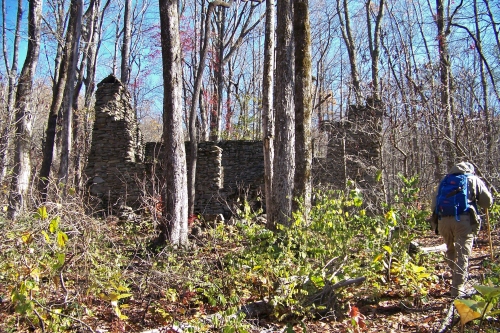
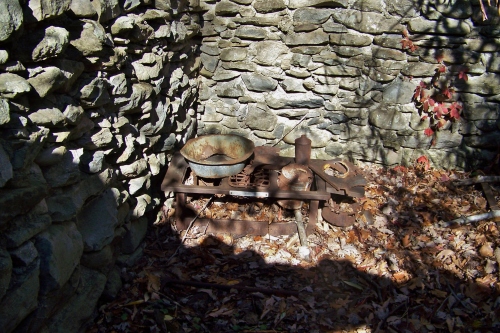
We explored a few ruins and cemetery in the Sugarlands of the Great Smoky Mountains National Park. There was once a thriving community on this gentle slope below Bulls Head of the Mt. LeConte. The sugar maples upslope were a source of sugar and the name of the community. There was Pi Beta Phi settlement school begun there in 1920 with a stone house for the teachers and later a CCC Camp for workers in the young National Park.

101_0677

Catching rays in the leafless Autumn before the dim winter days

101_0679

The main school house? The boarding quarters or dining room?

101_0681

Rest under the plush carpet

101_0682

Emma

101_0685

Creek crossing

101_0688

Teacher’s House

101_0689

Kitchen

101_0695

Living Room

101_0696

Beech and Sourwood juxtaposed

101_0704

Bedload scouring

101_0709

Both lively and peaceful

101_0715

Double Duty- cleared land and separated

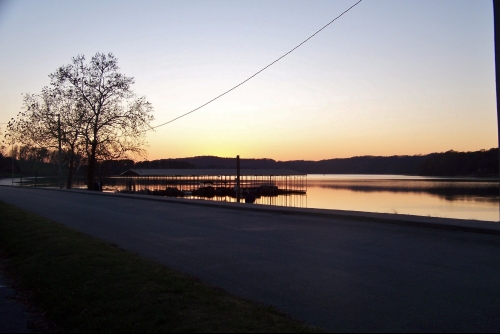
After the hike I went to visit my 3rd born. Arriving just before dark, we went down to Kingston to see the sunset. Having already set, we walked the concrete “boardwalk” enjoying the fading colors and good conversation.

101_0718

Too late and just in time

101_0721

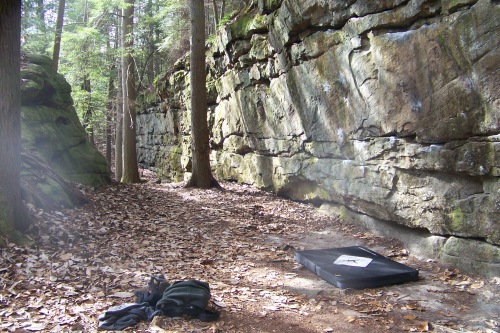
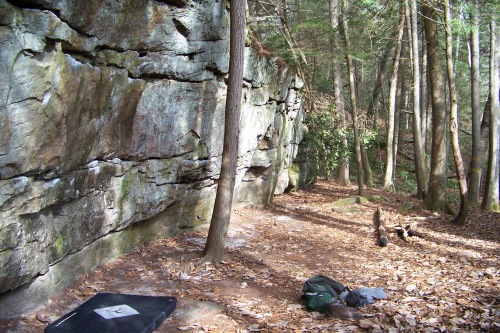
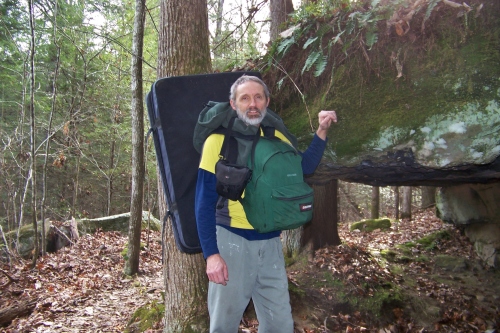
On Saturday I went bouldering at Lilly Boulders at the Obed Scenic River climbing area. I was by myself at first but met up with another climber with whom I enjoyed the day. I was climbing exceptionally well, and truth be told, the grading of climbs seems easy here than at home. The day was perfect for climbing: crisp, dry, sunny.

101_0722

One wall at Lilly Boulders

101_0723

Lots of good climbing

101_0725

Approach Pose

Read Full Post »

It’s a pity when life gets in the way of blogging (just kidding!). But I have so many thoughts and experiences from the summer that I could blog for quite some time. It is not likely to happen as I see more things happening soon, but that’s OK.

I did want to share a few thoughts and pictures. I don’t often suggest books for several reasons. I do more technical reading than reading for pleasure, and frankly many books don’t meet my high standard of what I would unreservedly pass on to those I call friends, or enemies for that matter since I want them to one day be friends. A book that I can enthusiastically suggest is “The Book That Made Your World, How the Bible Created the soul of Western Civilization” by Vishal Mangalwadi. Because of his culture and his faith he simultaneously looks at the West as an outsider and insider at the same time. I keep having the feeling that he is correcting much error from lies our culture has fed us about how we got to where we are. He uses personal experiences and copious quotes to show the deep imprint of the Bible on western culture. I think that you will hear more about it here once I am finished with it.

My friend, colleague, and climbing partner, CC, took me to two boulders I’d never been to before. In fact, he had only been there a few days before with another climbing buddy for the first time cleaning about ten problems, laying a thick base of branches in a wet spot, and clearing part of a large fallen tree. I was privileged to try out the new rock. I like to go back to old familiar routes, but there is a particular excitement about trying new routes, and particularly ones that haven’t been climbed before. I was definitely not climbing at the top of my game, only topping out on a V1 and 3 V2’s. I tried two V4 and got shut down. Both problems involved a gaston with my left hand that I could not stick. It has challenged me to train that weakness. On the second one I discovered that if I did a side pull with my right hand instead, I could top out to the left much easier. We both agreed that it would rate as a V2. I decided to name it “Easy Out”. The two pictures are of me on the right sidepull and the topout. We saw several Cardinal Flowers in the wet, rich spots by the creek. I definitely want to go back, and hopefully clean some problems on new rock myself. (Photo credit: CC with his phone)

KIMG1043

Lobelia cardinalis

KIMG1051

Taking it “Easy..”

KIMG1054

“Easy Out”

Read Full Post »

After a fire in 1925 the stumps of the recently logged area appeared as grave markers to some and the eroded soil and shallow bedrock prevented the forest from coming back in places, thus the name. 100_9964100_9963

100_9957

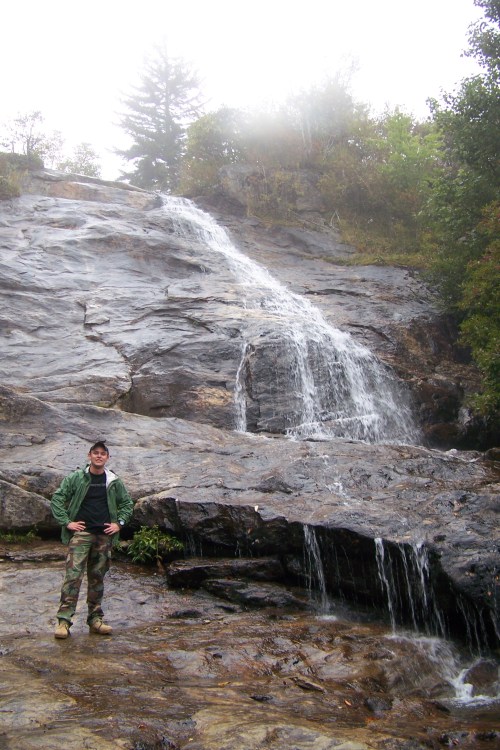
Upper Falls

100_9961

From the top of the Upper Falls

100_9962

Light rain, fog, lush spruce and wildflower growth

100_9965

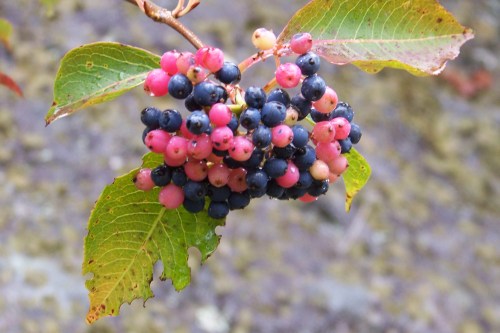
Viburnum sp?

100_9966

Any idea which species?

100_9968

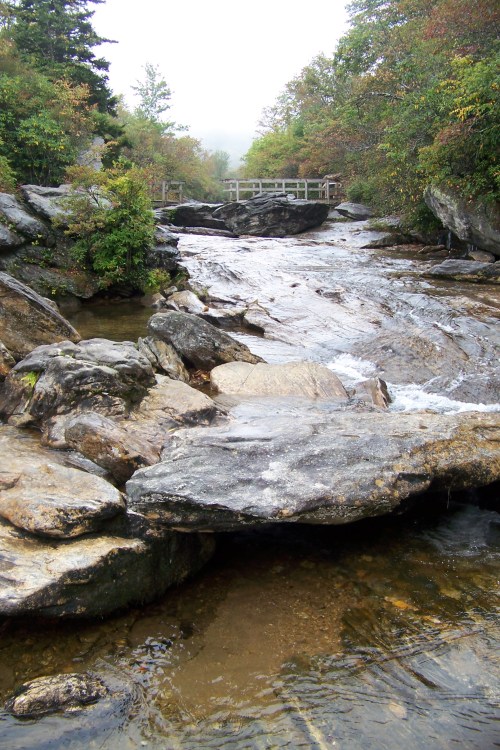
Just above the Lower Falls

100_9969

Looking down over the Lower Falls

100_9971

Lower Falls

100_9977

Enjoying some time together

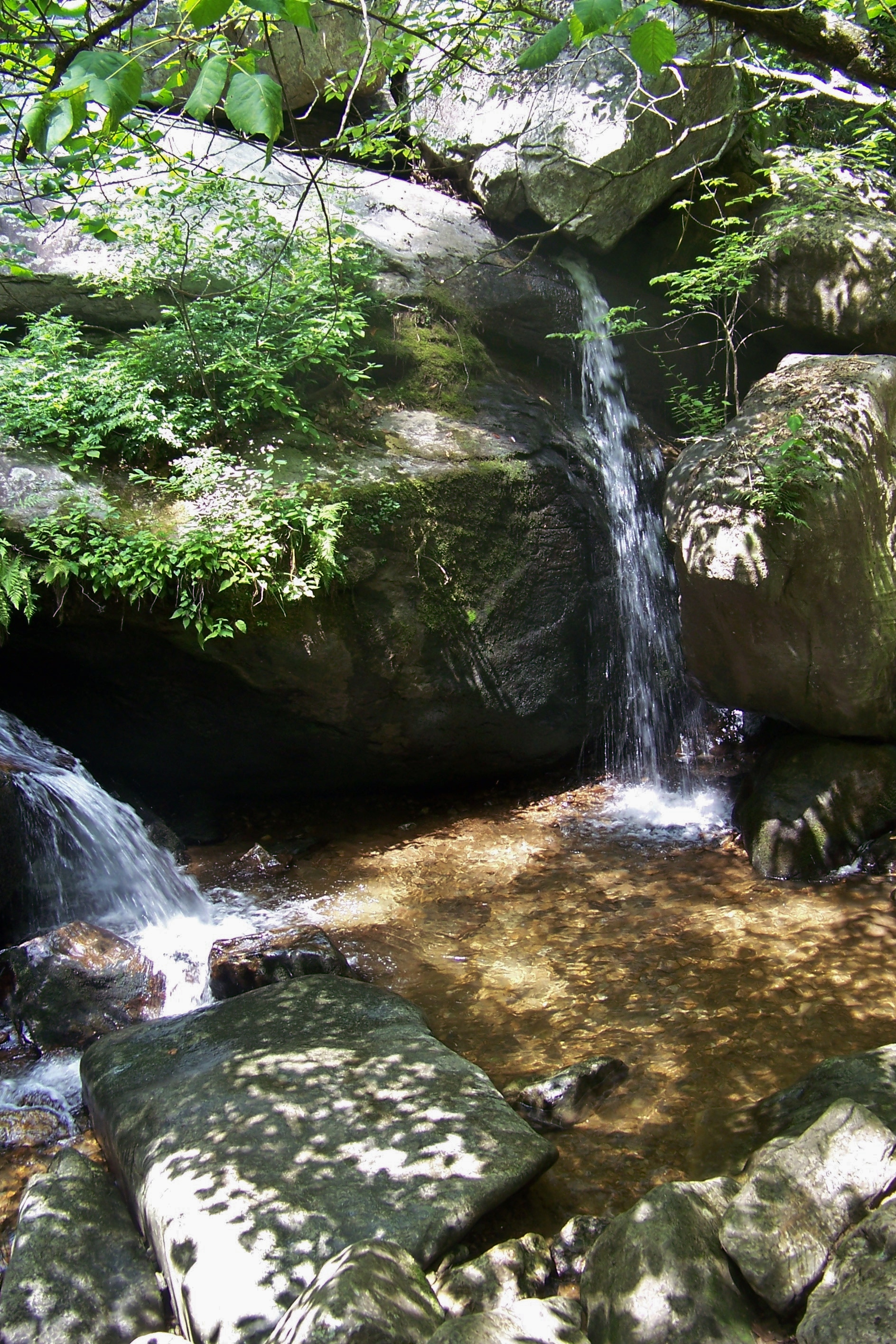
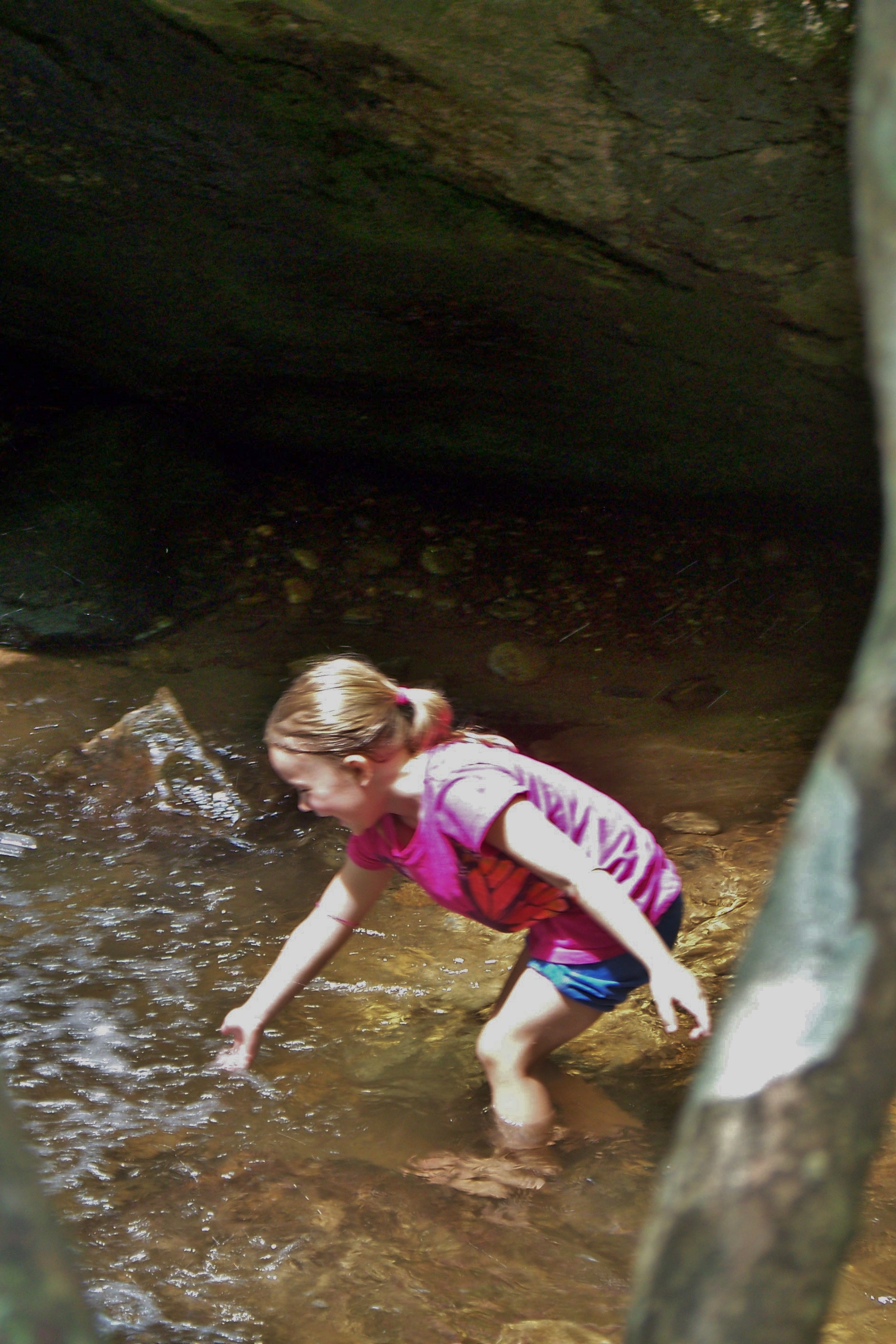
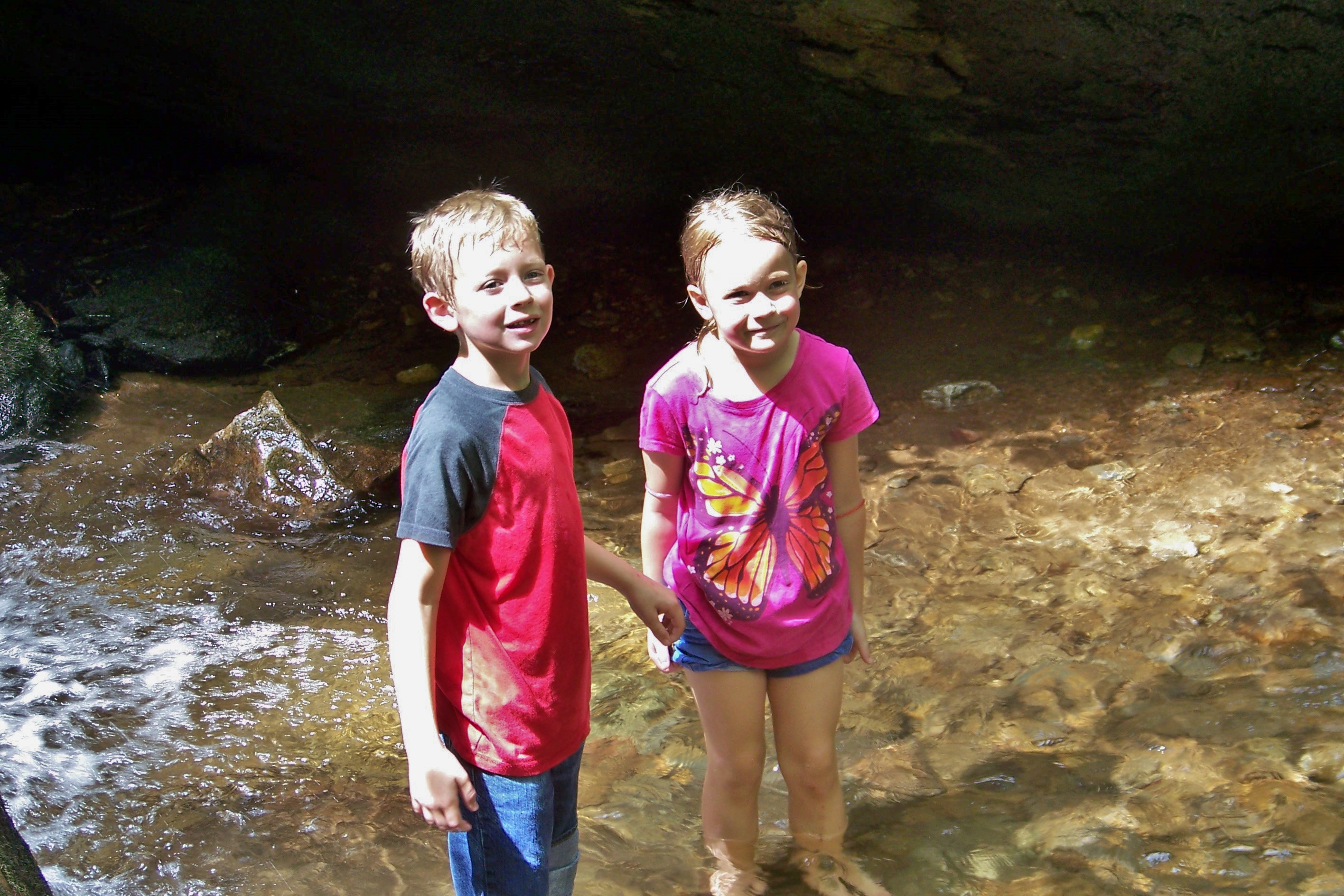
The day could have been a wash, driving 2 hours to see it rain. Upon approach, the fog seemed unavoidable. The light rain started soon after we started walking and continued almost the whole time. When we got to the top of the Upper Falls, thinking to just take a  quick look and head for the car, we found a spruce tree, rhododendron combination that was keeping the rock at creek’s edge dry. We sat down for a lunch and snooze. I walked upstream a bit while my son snoozed on. It was a quiet time together with no one on the trail all the way back. In route to the Lower Falls we crossed the “fields”, heather thicket really, with scattered wildflowers. The hike was shorter than we had planned because we didn’t really want to get up on bare, Black Balsam with the possibility of heavier rain or lightning, but it was pleasant and relaxed. We both agreed it was an enjoyable time together and in the woods (fields).


Read Full Post »

Labor Day Play

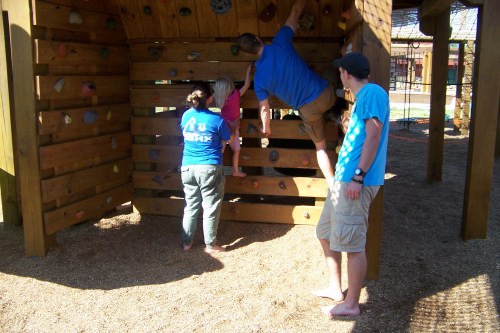
After a good sleep in we went to the park. It has all kinds of things to climb on and swing on. Active but chill, that’s my kind of holiday.

Read Full Post »

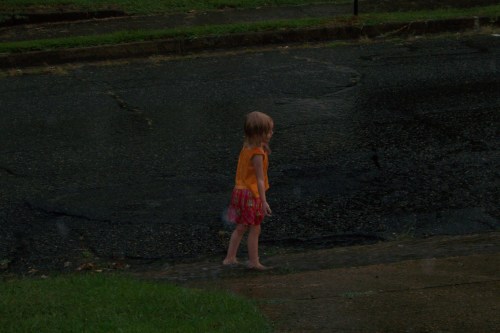
To paraphrase, children and grandchildren are a gift from the Lord. As distance and years pass it is harder to have quality time with either. My daughter commented that with a child you can do things that most adults (so called responsible adults) wouldn’t do. It is good that my grand-daughter has a mother who will play with her in the rain. It has been an exceptionally wet summer where I live, but 4 hours away where my daughter lives it has been an exceptionally dry summer. I’m thinking, “Oh, rain again.” My daughter is thinking, “Oh, rain again!” You have to supply intonation based on context.

Read Full Post »

Before I ever started rock climbing I used to hike… alot, thousands of miles over the years. In high school and college it was backpacking with day hikes to get in shape. I continued after marriage but increased responsibilities as time went along resulted in reduced overnight trips. Not to worry, because I used to take my green daypack, a child on my shoulders, and go. Summer, winter, it made little difference. About 15 years ago I scrambled into the more vertical sport so that the majority of hikes were approaches. I still climb but I see that climbing may have to be set aside in a few years (not slowing down at the moment, though). The time off from hiking just warms my desire to do some more. I like new places but I’m not shy about visiting old haunts. I have hiked (in a day or overnight) to Hump Mountain on the Tennessee/North Carolina border nearly 30 times since 1977. It has been my go to when someone wants to experience backpacking for the first time. I have hiked several times this summer, once to Purchase Knob (see previous blog entry). Several weeks before that hike I went with some new friends to South Mountains State Park. It has one hike that most anyone would enjoy and is not too overwhelming- High Shoals Falls.

The water was low at the falls, which is odd considering how much rain we have had. I guess the water level drops fast after just a few days of no rain. That didn’t dry our enthusiasm a bit. There was plenty to talk about and plenty to see along the way.

I enjoy getting to know people on a hike. You can talk about nature which leads to many subjects you might not otherwise find out about a person. They certainly learned some things about my spider research in college. I studied Agelenid intraspecies competition in the lab, the woods, and the desert. (Curious side note: As I am composing the number of spiderlings that just left their egg sack and are moving back and forth across my computer screen is growing. They are too small for my unaided eye to discern variety although P. tepidariorum (“common house spider”) is the most likely candidate.) There are about a baker’s dozen of Agelenid species in the US. I remember that most of my study involved the A. aperta from New Mexico and Arizona.

The picnic meal was particularly good- Mexican on the grill. I had hiked with the father and young children several other times to mountain tops. This was a nice change. We played in the creek several places, seeing crawdads and minnows. We talked about plant life along the trail both herbaceous and arborescent. It was an enjoyable day, the likes of which I’d like to repeat. We even left just before it began to rain. God gifted us with a beautiful day and good conversation.

Read Full Post »

Purchase Knob

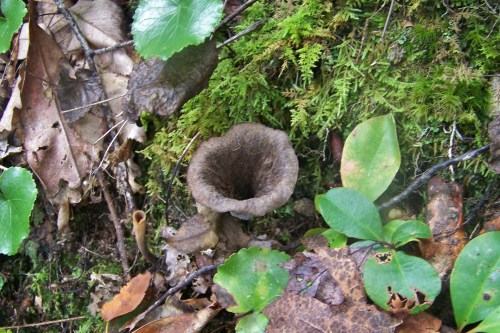
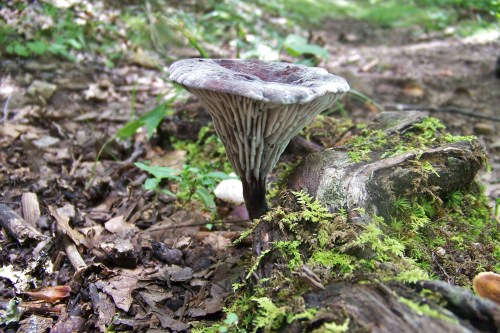
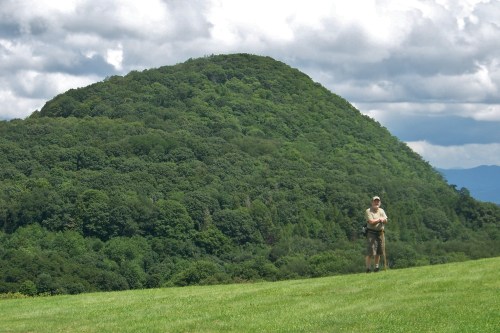
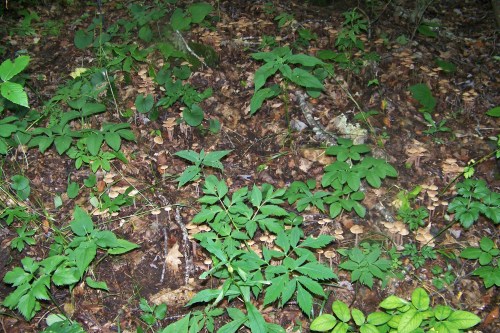
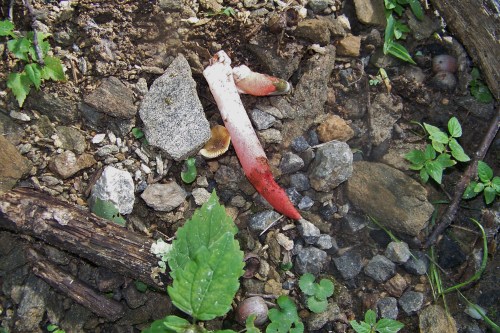
Before two weekends ago I had not seen any of my brothers for a year and a half, some for much longer. We had a cookout at my youngest brother’s house with spouses and a few children and grandchildren. During the conversation we planned a hike for Friday to the Purchase Knob area of the Smoky Mountains National Park. It is the location of the Appalachian Highlands Science Learning Center. The hike we took went along the border of “The Swag”, a Bed and Breakfast that allows hikers to visit their viewing lawn. The weather has been moist for a month and the fungi are out. With more time and patience I could have gotten some really good pictures of the abundant and colorful fruiting bodies of diverse mycelia. One of my sister-in-laws is known for her love and identification of wildflowers. She said she wants to know fungi better. Here’s a place to start.

000_0327

Cep or Penny Bun?

000_0328

Lush creek side

000_0331

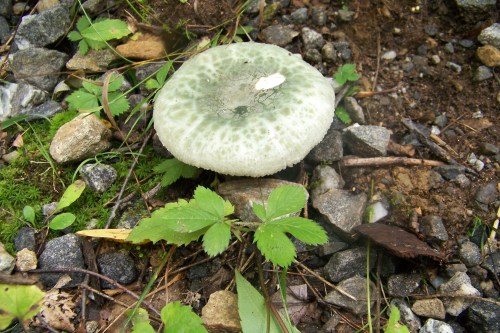
Green Cracking Russula (Russula virescens)

000_0332

Students coming down from the Learning Center

000_0333

Bee Balm soothing a Pipevine Swallowtail

000_0335

Winesaps?

100_9815

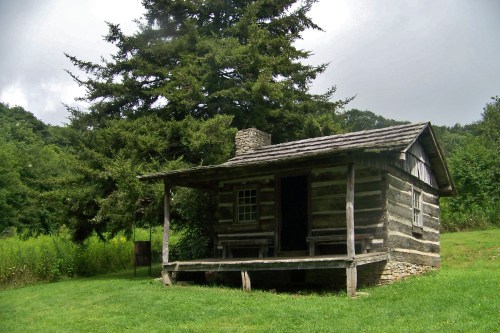
Furguson Cabin

100_9819

Black Earth Tongue

100_9824

Doll’s-Eye or White Baneberry

100_9829

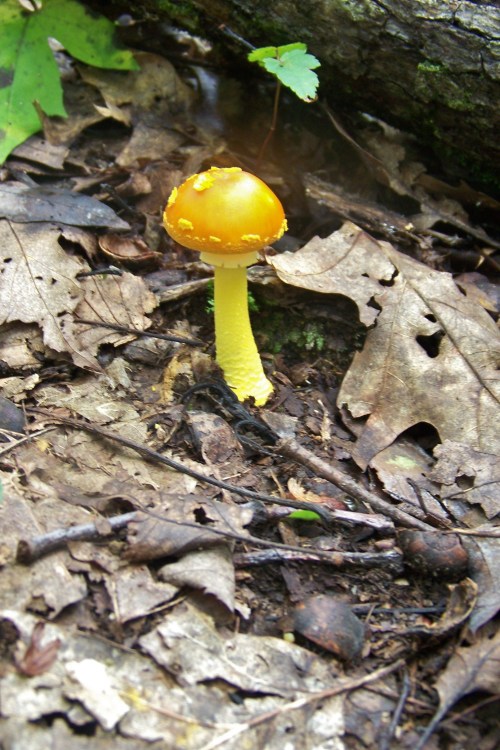
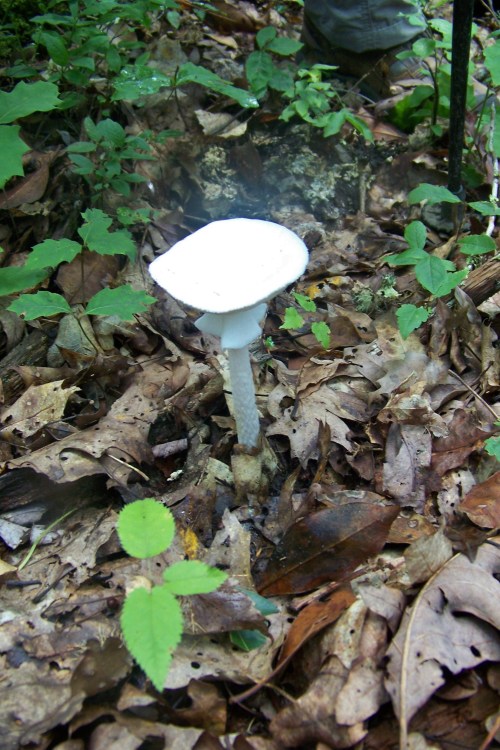
Yellow Wart (Amanita flavoconia)

100_9832

“Good Fences Make Good Neighbors”?

100_9843

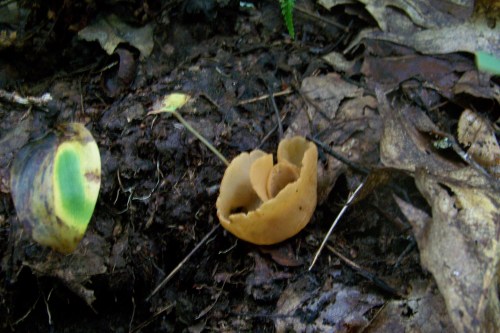
Orange Peel Cup Mushroom

100_9847

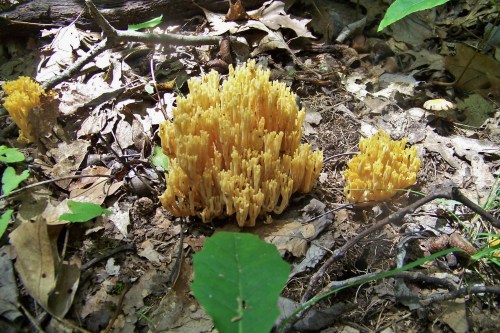
White Coral Fungus

100_9854

Earth Cup Mushroom?

100_9856

Catch some rays and relax

100_9858

Maggie Valley

100_9859

Nice smiles! OK, I was trying to make sure the camera was working.

100_9866

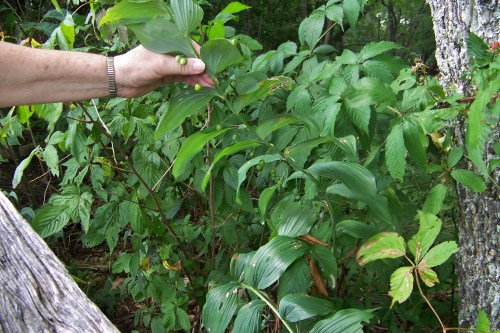
Great Solomon’s Seal (Polygonatum biflorum)

100_9867

Insulation, flight, camouflage, mating, ….versatile… not by chance!

100_9874

Coral Fungus

100_9876

Chanterelles?

100_9878

So many colorful varieties

100_9893

Death Angel

100_9896

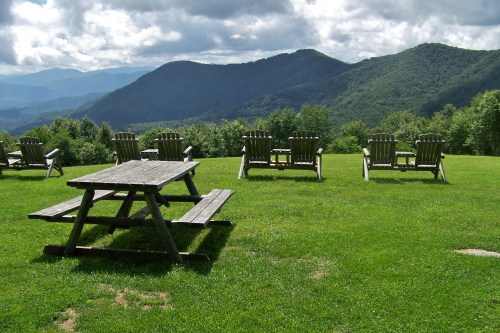
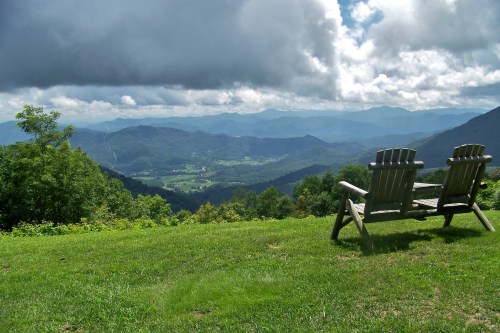
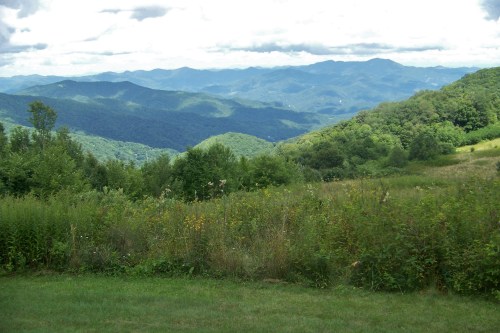
Taking in The Swag view

100_9899

The Real Purchase Knob

100_9905

Hiding under a rock on top of the knob

100_9910

Do you see the fairy ring that I found near the top of Purchase Knob?

000_0320

Elegant Stinkhorn

The variety and beauty of God’s creation! I could go out every weekend and never get tired of learning and looking.

Read Full Post »

I am very thankful for a weekend at home. I have been out of town six times in the last six weeks. I am also thankful that I am not a long distance truck driver or regional salesman. My back and mind would die a quick death in a vehicle seat. Last weekend I drove 32 hours in 4 1/2 days to see my fourth-born graduate from LeTourneau University in Longview, Texas. Not only was the graduation worth the trip but the Christian fellowship I experienced while there seemed like a spiritual retreat.

The couple whose house my son has lived at the last two semester was where my fourth son and I also stayed. They opened their home and their hearts. The man is an emergency transport helicopter pilot who once flew in Papua New Guinea for Wycliffe Bible Translators. He uses his technical expertise as a witness to how believers in Jesus serve people. His wife homeschooled their eight children. She explained how inadequate and fretful about teaching she felt at first until she remembered her Christian college president’s saying,”Walk with the King, and be a blessing.” That is what she wanted to teach her children and that was all that was required of her. She could relax and live the life of grace before them.

I met my son’s Senior Design Project Professor. He has an encouraging testimony of how God saved a wild red-neck and put him into service to teacher young men and women to make good use of God’s gifts while giving God the glory. 

The commencement speaker was Edmund C. Moy, one time Director of the US Mint in Washington, D.C. With stories from his own experience he urged graduates to be competent and caring Christians. Following are my quick notes on the seven pieces of advice he gave: 

  1. Seek a Mentor.

  2. Find or form a like-minded group with whom to pray and fellowship and witness.

  3. Be trustworthy with the small things; integrity matters.

  4. Do good work; it praises God.

  5. Make a “to be list” to become spiritually mature.

  6. Consider public service.

  7.  Many resumes have a zig-zag path. That’s OK: God is behind it.

Both at the dinner on Saturday night and Sunday afternoon the hosts, other parents, and graduates talked freely of spiritual matters. Several of the graduates led singing of spiritual songs. Another father and I were grateful for the friendship forged between our sons and the hosts’ son-in-law over the last four years, encouraging each other to live godly lives and be good students imparted life-long lessons and habits in all three of these young men. On this Mother’s Day, several mothers told stories of God’s work in their children’s lives and the graduates responded with other stories and thanks for godly mothers and fun times with Christian brothers.

In the Sunday School my son has attended the last 3 1/2 years the teacher reminded us by a survey of examples that the stories of the Bible they had been learning are examples of God’s grace and sovereign plan worked without fail in believers’ lives. The sermon following was given as a series of five sermonettes by the five elders on aspects of God’s love:

1. God is love because He is a Father in a triune relationship.

2. God’s love is expressed in the Old Testament as ‘hesed’, steadfast love.

3. God’s love is best expressed in the gift of Jesus.

4. God’s love never fails.

5. It is difficult for us to comprehend how much God loves us.

I had abundant time to think about all of these lessons as I drove 5 hours on Sunday and 10 1/2 hours on Monday by myself back to North Carolina. My back ached by the time I arrived home and my mind was dull and exhausted but my spirit was refreshed, ready to begin again at the mundane and stressful job of teaching high school science with excellence and care.

Paraphrase of the Great and Secondary Commandments

Paraphrase of the Great and Secondary Commandments

One Time "Richest Acre in the World", Kilgore, TX

One Time “Richest Acre in the World”, Kilgore, TX


Senior Design Project and Senior Designer

Senior Design Project and Senior Designer

An Inventor, Entrepreneur, Industrialist, Philanthropist, Evangelist Christian

An Inventor, Entrepreneur, Industrialist, Philanthropist,
Evangelist Christian


!---!---!---!

!—!—!—!

Dad, Grad, and Sib

Dad, Grad, and Sib


Good Aim Matters

Good Aim Matters on The Big Muddy

Waiting in Line for the upstream passage

Waiting in Line for the upstream passage

Read Full Post »

Sandblast

I having been blogging since July of 2007. Until the past year I have been very regular, blogging between 1 and 4 times a month with the most being 12 times in one month (need to go back and see what that was about). I have missed a month or two now and then. For 8 years and 2 months I missed blogging 8 months, more than I realized. September is my most missed month; I’m a teacher and life gets busy about then. Since last September I have missed 4 more months. I do not desire to slow down or quit but opportunities and responsibilities seem to keep increasing. So I find myself in a quandry. I don’t want to be so busy naval gazing that I don’t live life, but neither do I want to rush through all of the events of life without reflecting on them which allows me to live more deeply. 

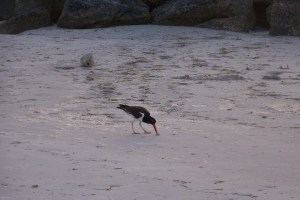
Here I am with a few moments only to record part of a privileged event from April. I went to a seminar in Clearwater, Florida. It was very worthwhile and may open more opportunity and I may comment on it later. But in the midst of 10 1/2 hours of driving there and 12 hours back (There is something surrealistic about miles of stopped traffic for construction in the middle of the night on what would otherwise be a lonely stretch of interstate.), 20 hours of class in 2 1/2 days, and a 45 minute commute before and after each day of seminar, 2 hours on a beach just before sunset was glorious. I ran 3 1/2 miles barefoot to the north end of Honeymoon Island and walked through surf, collected shells, and took pictures on the way back. Such mini-vacations are what I find to be the balm for frenetic schedules. Many people I am around seem to take their comfort in interacting with people and food. As a teacher who happily interacts with people every day (OK, some people are annoying but I like to converse and teach and help.) and sits or stands far too much, I prefer to go “away” when break time comes. I hope that you may enjoy the thought of the break I took in these pictures and find ways to take breaks yourself.

American Oystercatcher

American Oystercatcher

Honeymoon Island State Park Beach facing south toward Clearwater

Honeymoon Island State Park Beach facing south toward Clearwater

Tide coming in

Tide coming in

Plover or Least Sandpiper in its Winter Plumage?

Plover or Least Sandpiper in its Winter Plumage?

Got one!

Got one!

Working Late

Working Late

Wind in you hair; sand between your toes

Wind in you hair; sand between your toes

Evening Glint

Evening Glint

Day's End

Day’s End

Read Full Post »

I kept wanting to go to the mountains but people, responsibility, and other priorities kept preventing it. Seeing my repeatedly frustrated efforts my wife said that I should go tomorrow. I wasn’t going to second guess the cessation of chores and her encouragement to go. Besides, after taking a walk with her early on this August 1st I knew that it was an exceptionally clear, low humidity, and cool day. (65 degrees was enough for several people to say it felt like the first Fall day- wishful thinking with August and September ahead.) So a hasty breakfast and quicker packing job and I was gone. I like solitude but I like company, too, but the whole reason I was going alone was because I couldn’t find anyone and one had even backed out. 

I even enjoy the drive up on a very curvy rode in a small, good cornering car with a clutch and adequate power. The air was crisp, the sky totally blue, and my heart was light. Bouldering by yourself is considered to be quite risky by some, but I have observed others doing it with care. You only attempt climbs that are straight up over the pad with no barn door potential. The weather meant exceptional friction, almost unheard of in the humid South in the summer. I was climbing well, but I can’t say if I was climbing exceptionally well because I couldn’t try anything really hard because of the ground rules for climbing alone I’d set down. During rest breaks I took pictures of fern and tree leaves.

Rockcap Fern (Polypodium virginianum) I believe

Rockcap Fern (Polypodium virginianum) I believe

Frazier Magnolia

Frazier Magnolia

I set up several videos of me climbing (I just admitted to a selfie! I will not let this become a regular event and certainly not an addiction. I must keep this under control.) You may check them out by clicking on the names below. It will be immediately obvious that I’m no rockstar, but I enjoy the challenge, nonetheless:

Disc and Throw

Chainsawleft

Trillium fruiting

Trillium fruiting

American Chestnut "bush"

American Chestnut “bush”


After bouldering around until my forearms were quite tired, I walked up to the top of the ridge, sat down, took in the view, ate lunch, and read my Bible. Actually, when I first arrived up top I lay down on the bouldering pad a prayed for awhile. There was such a rest in telling my Father all my burdens about work, family, and internal stress. I have been enjoying, not just tolerating reading Leviticus and Numbers. Numbers 2 and 3 seem like lists of camp arrangement and numbers of fighting men, and numbering religious servants, but they reveal several things about God’s character. He is orderly and efficient and given to detail.  The arrangement of Levites reveals His concern for His holiness among the people and grace to not destroy them with His fierce justice. The taking of the Levites in place of the firstborn and the redemption of 273 additional Israelites by a gift of five shekels each reminds us of the depth of our sin problem and the gloriousness of God’s solution in salvation. The more I read the Pentateuch (Genesis to Deuteronomy) the more I feel like Jesus is repeating Himself when He points to God’s holiness and the Law. As a man did He have “aha!” moments of learning the Word from His parents or the synagogue teachers, moments when He said, “I remember saying that.”? All of His Word speaks of His character and what is important to Him. Are we bored with it because we have little passion for knowing Him and what He cares about? Knowledge of Him is our ultimate goal here. Beautiful days in the mountains and hard days of difficulty or frustration are profitable and meaningful if we allow them to direct us to knowing Him more. Yeah, I prefer one over the other but I am slowly learning to muse, “Hmm, I wander how this situation may draw me closer to Him?”

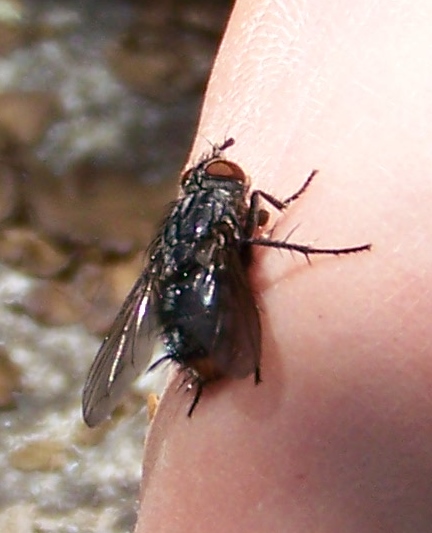
House Fly

House Fly


Evergreen groundcover

Shining Clubmoss (or Shining Firmoss) Huperizia lucidula (Thanks for the ID help Sister L)


The view up top increased my enjoyment of my time concentrating on God. He created all of the beauty around us to remind us of His beauty and the enjoyment we may have from these gifts from His good hand.

Left to Right: Table Rock, Hawksbill, Gingercake

Left to Right: Table Rock, Hawksbill, Gingercake

Exceptionally Beautiful August Day

Exceptionally Beautiful August Day


Read Full Post »

Culture is an odd and interesting phenomenon. Though the word has now been co-opted to refer to interaction in a business office, the more traditional definition looks more like the http://www.merriam-webster.com first entry: “the beliefs, customs, arts, etc., of a particular society, group, place, or time”. Therein is the oddity and interest. That is a very broad definition trying to capture all that goes into a culture. You can mix and match the first three terms (and the “etc’s” for that matter) with any combination of the “particular” last four terms. Try for instances this combination that helps to explore a situation our tour explored in Peru: ‘art of a particular society in transition through time‘.

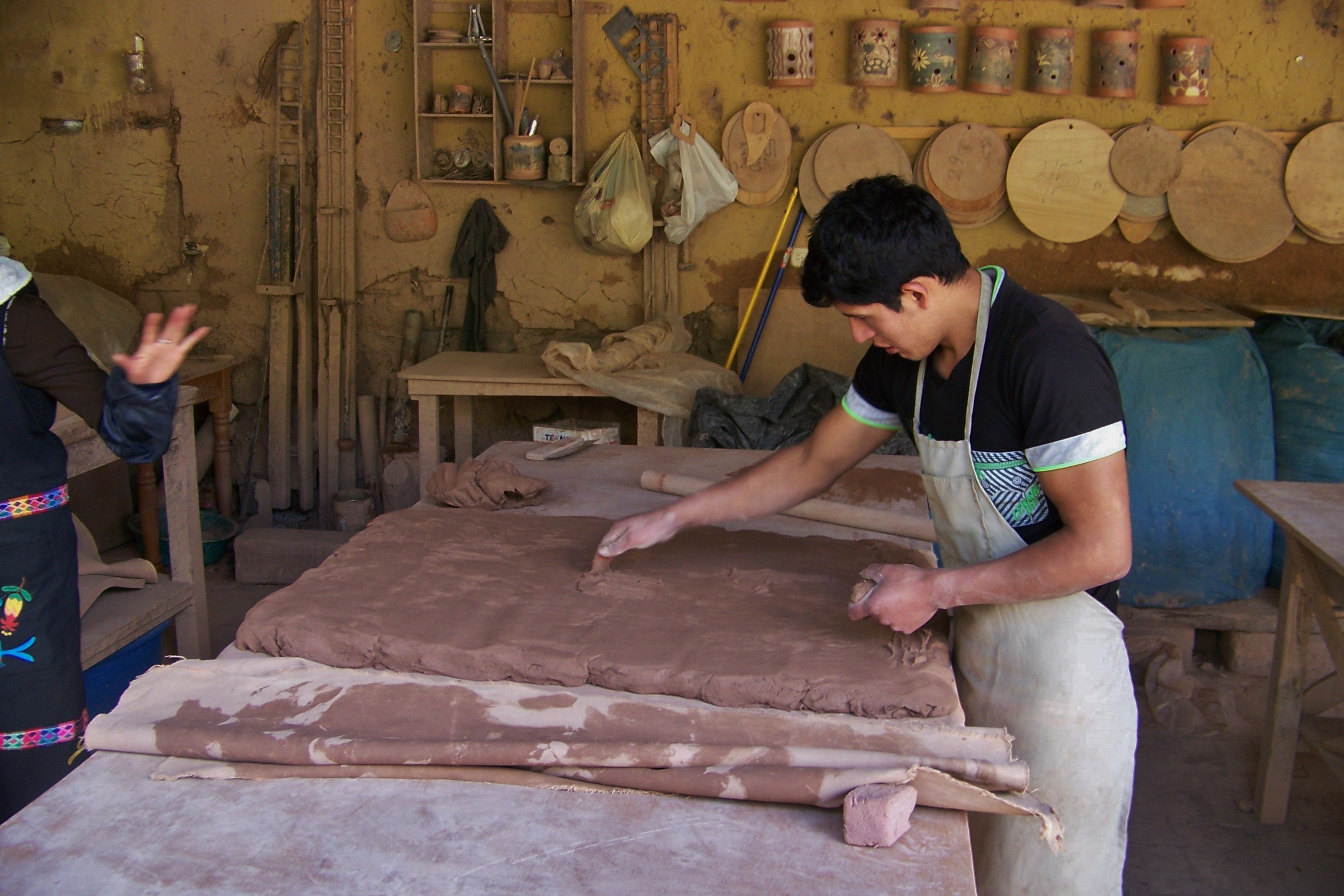
Pressing out the air bubbles

Pressing out the air bubbles

Painted, glazed, kiln dried, sun drying

Glazed and painted and drying in the sun in readiness for the second firing


We toured the Seminario Ceramicas in Urubamba of the Sacred Valley of the Incas. The head potter, Pablo Seminario, along with his wife the head painter, Merilu Behar, developed a style of glazed and decorated pottery that has elements of ancient Peruvian cultures and modern stylistic exploration. The style was further developed by the isolation necessary for survival during the Shining Path insurgence of the 1980’s. One motif that the potter declared to me that he finds ever new is the shape of the arrowhead. As he said, “It was a tool for gathering food…is similar to the water drop or a leaf”. So Pablo continues to explore splashes of modern creativity mixed with hints of ancient continuity.

Moderno-ancient mix

Moderno-paleo creations

   I was temporarily separated from my tour    group because I was taking some pictures in this gallery of creations of the artist. When I exited the room outdoors I didn’t see anyone. I assumed a whole group could not have gone far in a minute so I went to the nearest doorway. When I entered, there was Pablo wielding a small carving tool on a large arrowhead. Realizing I had entered his private studio, I began to back out but he waved me forward, not even slowing the pace of his work. 

Pablo manifesting a new vision of the arrowhead

Pablo manifesting a new vision of the arrowhead


  For the next 10-12 minutes we amicably discussed the creative process. He seemed to be quite interested in talking with me because I had brought students to tour Peru and because I talked intelligently about art and science. I asked several questions about how he begins a concept and carries it out. One question involved the arrowhead, “You obviously like to make arrowheads. Why did you start with it and why do you continue with it now?” He related the request from an art exhibit many years ago that he combine modern and ancient elements of design. This request caused him to reflect on the usefulness and ubiquitousness of the arrowhead shape he noticed in nature as quoted above. He continues to see new things in the shape and strives to continue to grow and so pursues more content in the arrowhead. This discussion led to me commenting on how one should be thankful to the Creator for instilling the gift of creativity. He retorted that it was far more work than creativity. I countered that the work is necessary but without merit if the person lacks the creative ability; each of us should work to develop the gift we have. The waste of potential that he sees as an artist and I see as a science teacher consumed some of our interaction. We also interacted over the similarities in science and art, how each involves elements of the other, and how both center around the abilities to think and work hard. It was one of those moments when we both knew that we had connected in a meaningful way even though before that moment we had been total strangers from different cultures pursuing different vocations and avocations, separated by different worldviews. Our connection was musing on life, its processes, and its meaning.
His life had been one sufficiently isolated from the insanity of the violent culture around him in order to survive and thrive, and yet not isolated from creative interaction, as his collaboration with his wife and 50 potters and painters in training attests. 

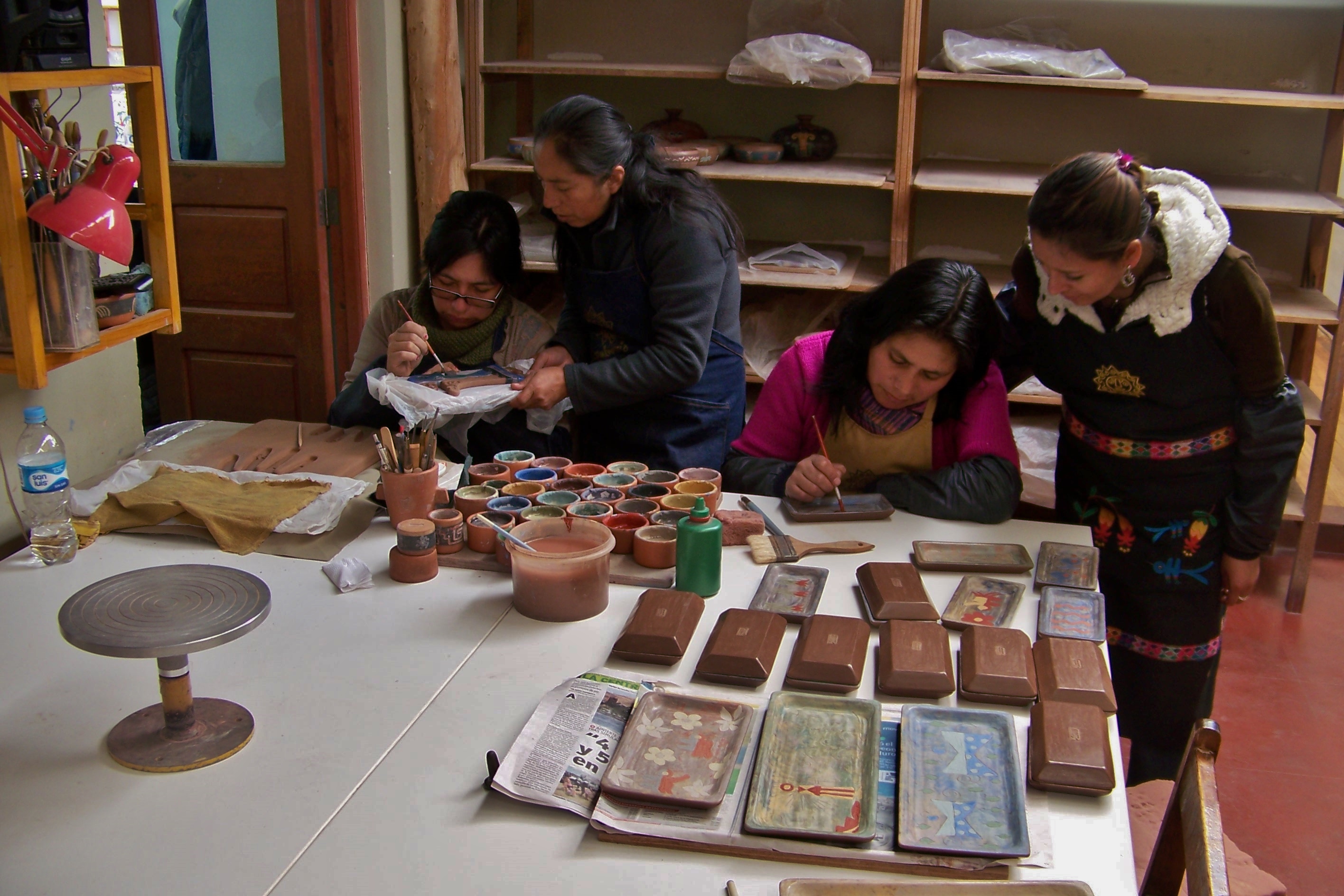
Decorating the forms

Decorating the forms with Inca symbols

Main Gallery

Main Gallery


I think that in this discussion and on this trip I discovered a more complete reason for why I like to travel. It extends my musing on life through observation of diversity in nature, culture, thinking, history, distance, science, people, God’s work in the world, and a host of other providential allowances given by a good Creator. We want to see beauty and substance and understand its meaning and purpose. But many are not willing to wade through the meaning of ugliness and triviality to reach the beauty and substance that does not lend to their preconceived ideas of what it should mean. I agree with Socrates, “The unexamined life is not worth living”. Don’t be afraid to examine yours and others and risk having to change what you hold dear for what is true and good and beautiful and full of substance.

Contrasts of Hues and Properties

Contrasts of Hues and Properties

Courtyard Beauty

Courtyard Beauty of Seminario


Read Full Post »

Peru 4

From Ollantaytamba the train winds down the ever narrowing and deepening gorge toward Machu Picchu. The trip takes 1:45 including a few short pauses on siding for passing trains. The gorge only has room for the river and the cut for the train in many places where an extended arm would literally touch the jagged rocks of the cut. Some of the rapids are intense looking and the vegetation slowly increases in density, height, and variety from semi-desert to cloudland rainforest. Students in their uniforms and farmers in their work clothes were headed to school and field. Terraces still hold corn and grazing animals.

I spent most of my time looking out of the windows.

I spent most of my time looking out of the windows.

The Whole Tour Group at the first good view of the city

The Whole Tour Group at the first good view of the city

The Narrowing Urabamba River Gorge

The Narrowing Urubamba River Gorge

Terraces still used

Terraces still used


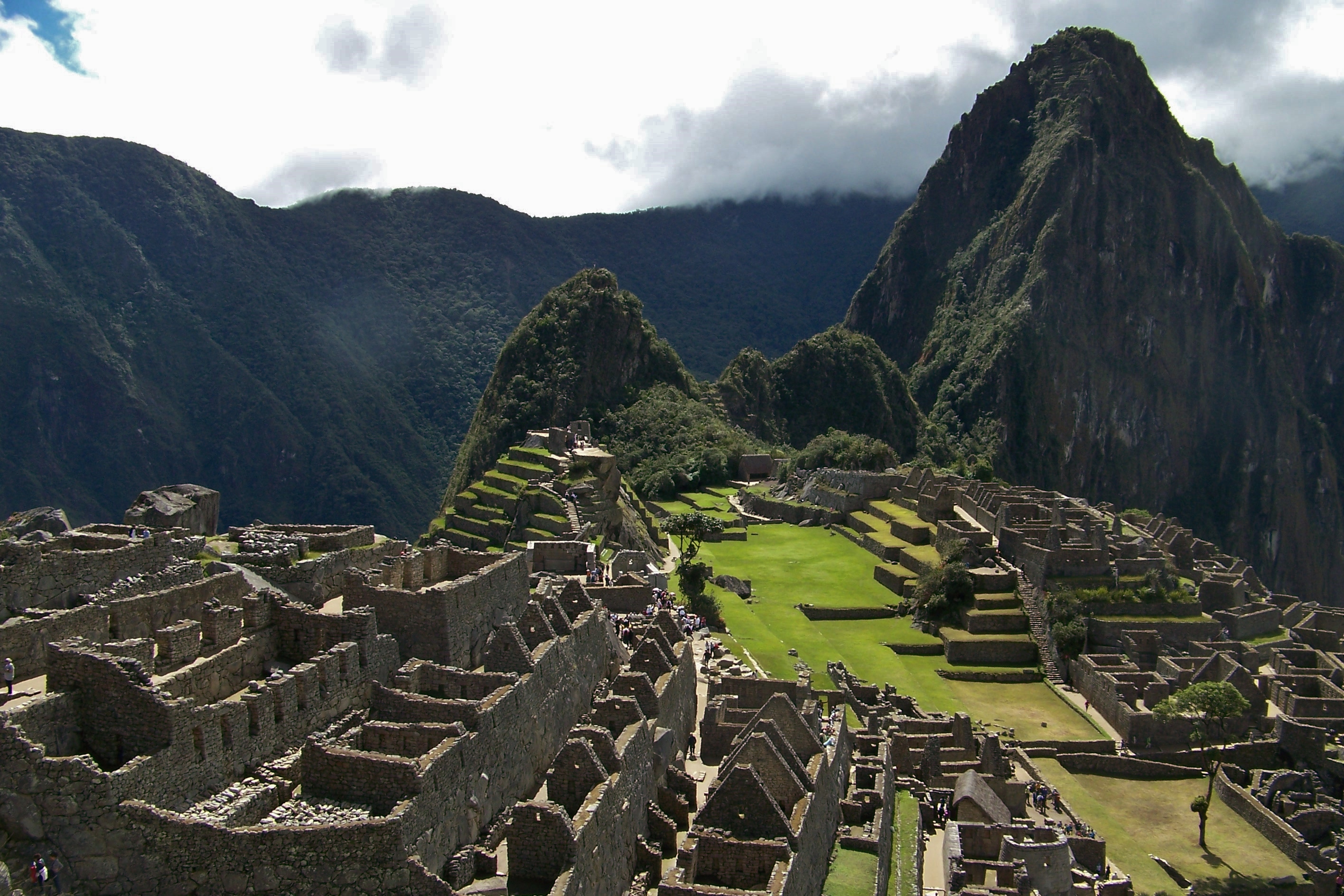
The village of Machu Picchu is not more than 100 m wide and is cut in two by the Urubamba River and the railroad. Densely vegetated cliffs rise easily 1500 feet on either side. I find the topography the most amazing characteristic of the village and the ancient site. Machu Picchu is a UNESCO World Heritage Site visited by over one million people each year. Many details about the construction, location, and history of the site are amazing. Being in a rainforest, the Inca engineers provided it with a subterranean drainage system without which it would have long since eroded away. The temple and Inca rulers’ structures are built of the smooth, fitted stones that are earthquake resistant and yet the Temple of the Sun is slowly splitting apart due to a minor fault line that extends across the concave city green. A wire stretched across the green from one side to the other and made taut by a weight and measured by an instrument indicates that the green is expanding by a few millimeters per year. A quarry on the brow of the ridge was the source of the building stone.

Inca Trail

Inca Trail (25 miles to the Capitol Cusco)

Main Gate to the City

Main Gate to the City

Temple of the Sun has a fault

Temple of the Sun has a fault

Living and Working Spaces

Living and Working Spaces

Llamas wander throughout the site

Llamas wander throughout the site

Steep Real Estate (note the archaeologists in blue)

Steep Real Estate (note the archaeologists in blue)


Chinchilla Chillin'

Chinchilla Chillin’

Huayna Picchu overlooks the ridgetop city

Huayna Picchu overlooks the ridgetop city

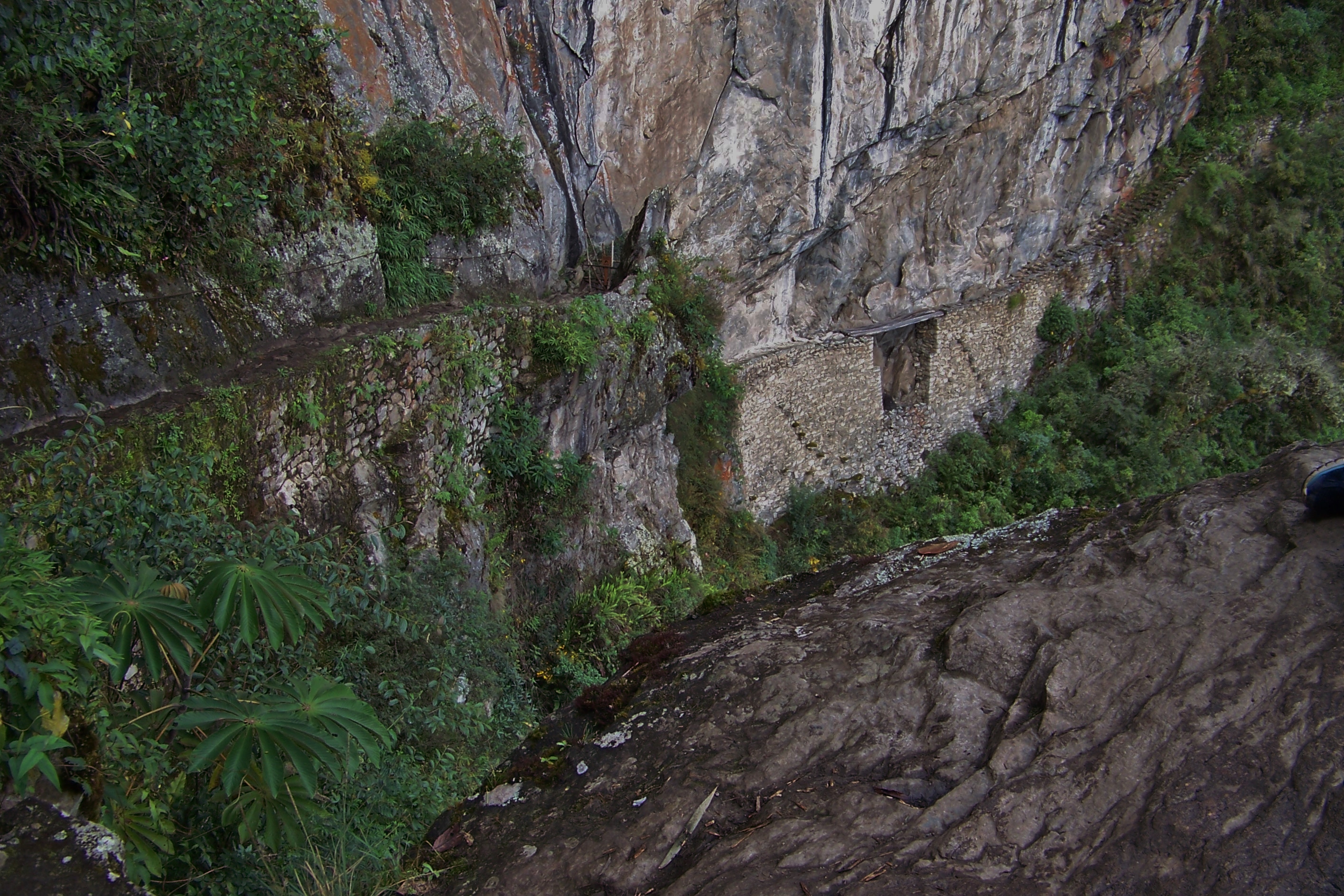
Hiram Bingham, the Yale historian who revealed Machu Picchu to the world in 1911, was not the first person of European descent to explore the terraces and temples. It was not the Spanish who saw it though, for they never found it. Why? It had been abandoned before they came and conquered the Inca. The actual reason for its abandonment is unknown but the well worn theories about religious, political, or military causes are not very convincing. Our trained Peruvian guide seemed to think that the evidence of syphilis in the bones of some buried at the Temple of the Condor suggests that an epidemic caused the inhabitants and would be inhabitants to forsake the city. It seems most plausible to me since the Spanish never seemed to have even heard about it. Their writings make no mention of its existence. Also, syphilis was a new world endemic disease before Europeans arrived. Epidemic levels of syphilis result from a sexually debased society. A mere 10 years of abandonment would have been sufficient for the jungle to cover all evidence of its existence. Hiram Bingham would not have found it if farmers had not shown him exactly where it was and had several terraces cleared for farming. The Europeans who discovered it before the American were treasure hunters who did not want Peruvians or anyone else to know they had come and gone.


Inca Bridge-a secure gate against an enemy who never came.

Inca Bridge-a secure gate against an enemy who never came.

Farmers were in good shape

Farmers were in good shape


Built in about 1450 and abandoned before 1520, the 140 stone buildings of a construction project in progress testify to both the semi-permanence and futility of all that we do apart from God. Syphilis, war, superstition, drought, or whatever caused the peoples of Machu Picchu to leave give testimony to the ultimate powerlessness of an empire to perpetuate control and forego God’s judgment on evil practices. If we assume that empires and culture are simply short-lived because that is the way it must be, then we fail to remember that this world is fallen and it did not have to be that way. God did not create life for death; man chose death. The enemy is not outside the gate but inside the heart.


Read Full Post »

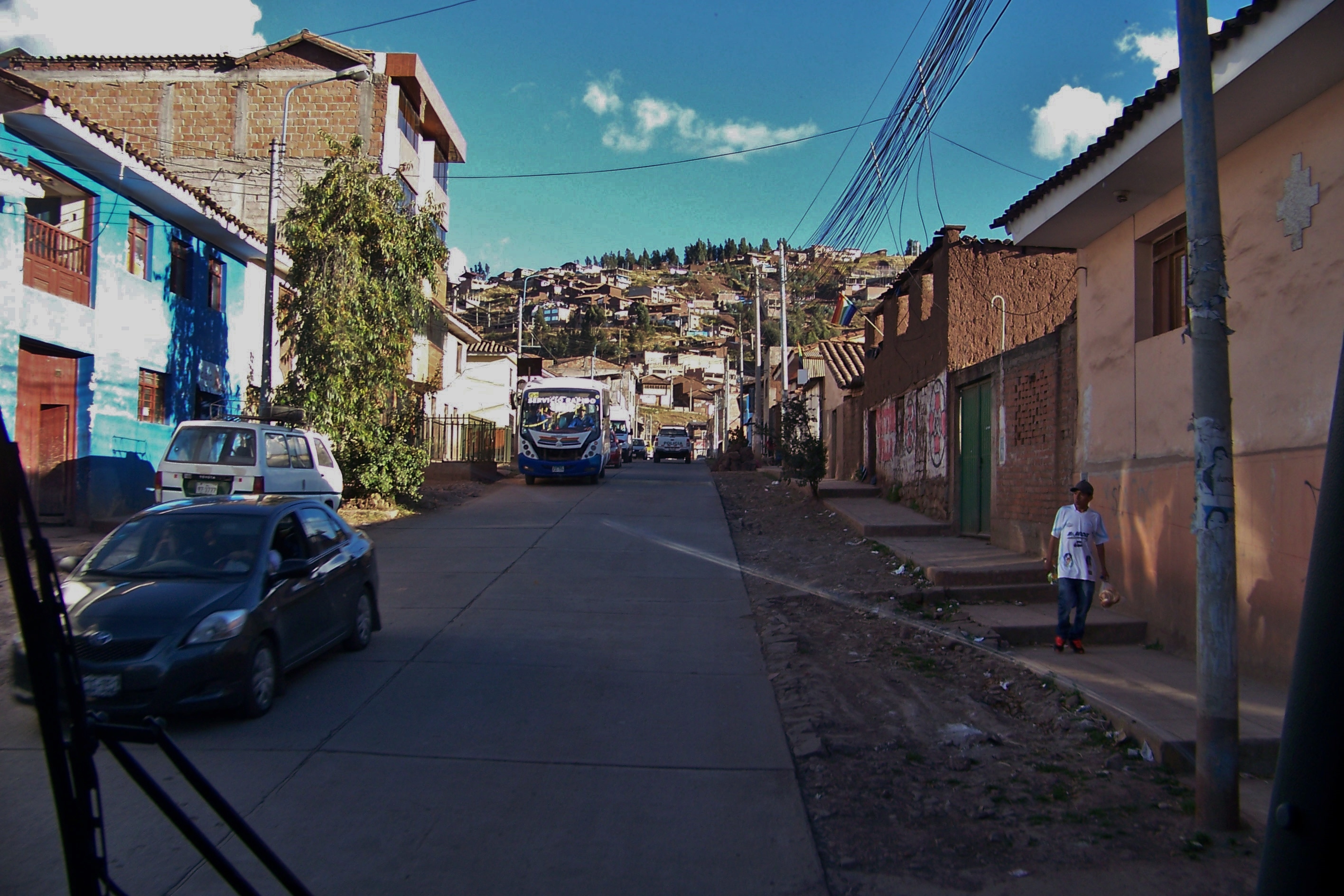
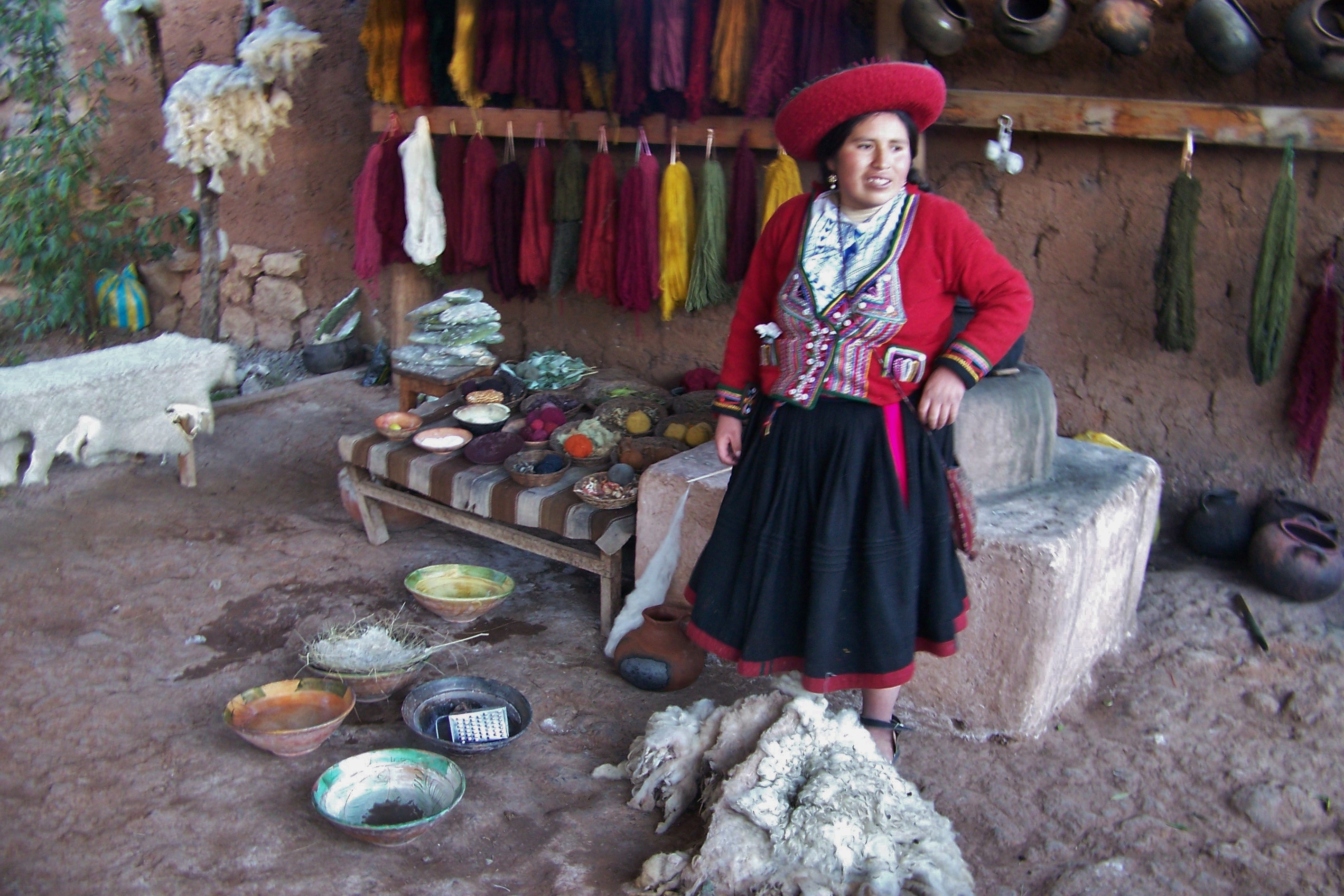
In the late afternoon the bus labored up the steep, windy streets out of Cusco onto a highway and through a gap into a increasingly rural setting. The highway wound from there ever down through a steep-sided valley with occasional leveler spots where villages cling to the side of hills. Chencheros is one such village with walled adobe courtyards along both sides of its streets and no appearance of significant prosperity or poverty. The bus stopped at an open gate in one of the 7 to 8 feet walls. Here is a tourist market for the woven goods of the village, a village where the real things are made. A short distance beyond the gate are pens for llama and Guinea Pigs, the latter having come over from Africa many centuries ago are now a food delicacy and a source for fine wool. Further in young and old Quechua women were weaving various textiles and a pavilion was setup for the demonstration of cutting, washing, carding, spinning, dying, and drying yarn. Leaves and roots provide for many colors but the most fascinating is the Cochineal insect that inhabits cacti of Latin America that provides deep, crimson red colors. The woman demonstrating crushed the white remains of one she had dug out of a prickly pear cactus fruit between her thumb and forefinger. Swirling the contents into her palm revealed the deepest, purplish red. Boiled in water with the yarn these produce a very permanent dye.

Leaving Cusco

Leaving Cusco

Moving Upward

Moving Upward

Wool on Hoof

Wool on Hoof

Cutting, washing, carding, spinning, dying, drying

Cutting, washing, carding, spinning, dying, drying

Weaving Alpaca Wool

Weaving Alpaca Wool

Sacred Valley Downstream of Temple Site above Ollantaytamba

Sacred Valley Downstream of Temple Site above Ollantaytamba

  Dusk was upon us as we left Chencheros.

   It was time to head down to Urubamba.

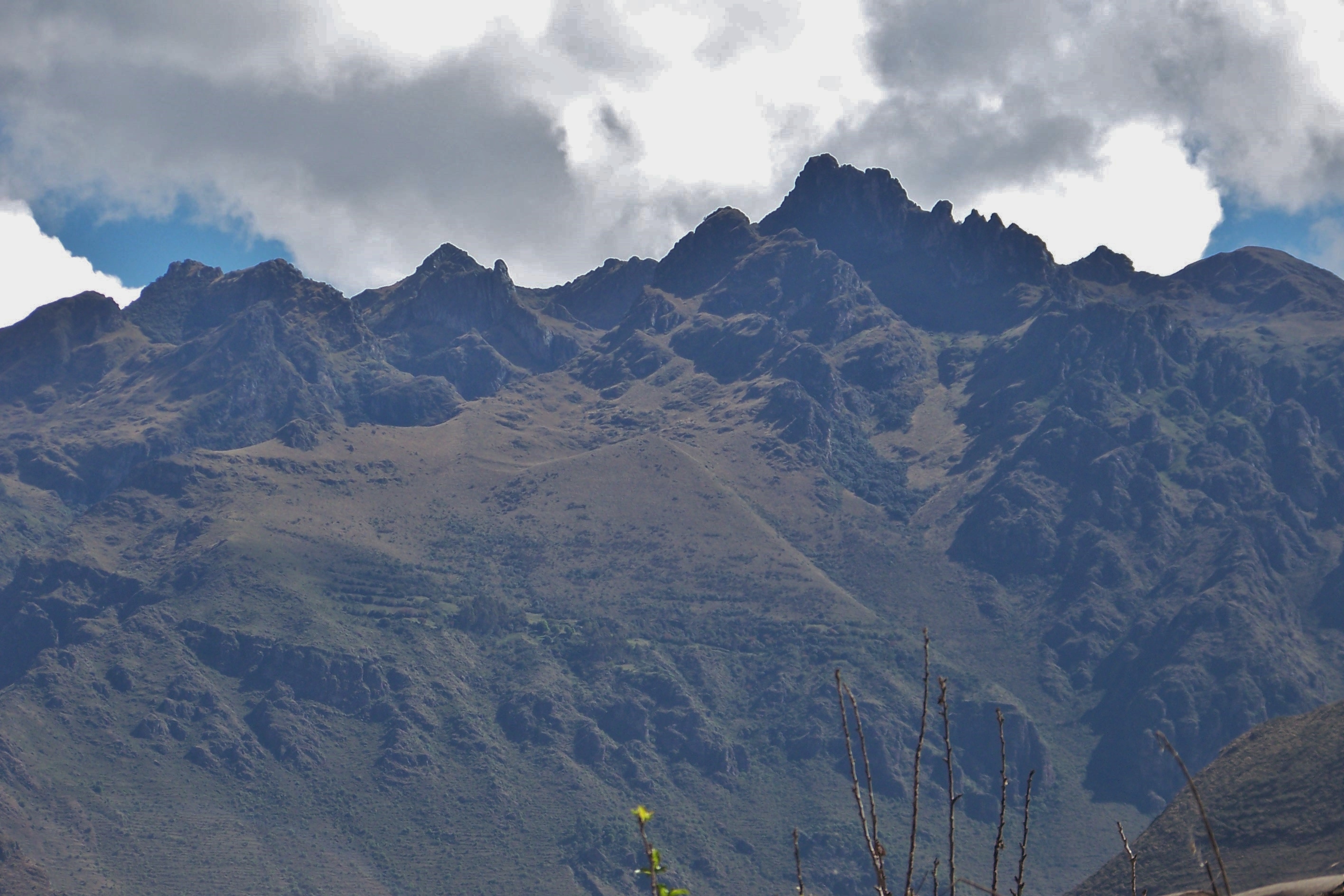
I saw a most beautiful sight as the bus cruised across the upper reaches of the Sacred Valley of the Incas. A high, rugged peak to the west combed the rays of the setting Sun into golden strands while a sliver of the Moon looked on from the deeply violet background. A picture would have trouble doing the scene justice even if I could have stopped and attempted a time exposure, much less my words, for it was profoundly beautiful. By upper reaches of the valley I mean that it is much higher than the part down by the Urubamba River. As the twilight dimmed we came to a set of switchbacks 1000 feet above the provincial capital of Urubamba, shining by electric lights in the dark valley below, while the snow capped peaks loomed darkly above pressing down on the small village below.

Peaks 'feel heavy' on the small valley below

Peaks ‘feel heavy’ on the small valley below

Peaks to Comb the Sun's Rays

Peaks to Comb the Sun’s Rays


The next morning we headed further downstream to the village and temple site at Ollantaytamba. The temple site has pottery and stonework evidence of pre-Inca terraces and temples. The Incas never finished their temple site here because the Spanish interrupted their 100 year empire and building spree. This fact actually left abundant evidence for how it was being built. Boulders of the acceptable type to the builders (gray basalt) were quarried several thousand feet upslope on the other side of the valley and rolled down. The Urubamba River was divided into two channels by a central levee and half at a time blocked off so the blocks could be pulled across half the river at a time. A ramp on the near side of the valley provided the route up to the temple site. It was perhaps a 9% (~5 degree) slope. We were told that experiments with a 1 ton block required 180 men to drag across smooth, rounded stones lubricated with wet clay up such an incline. The estimate was that 2000 men would have been needed to pull some of the blocks resident to the site!

Ollantaytamba Temple site, terraces, and village

Ollantaytamba Temple site, terraces, and village

Temple of the Sun at Ollantaytamba with quarry site in the background

Temple of the Sun at Ollantaytamba with quarry site in the background


While we were at the temple site the local tour guide was telling us about the various foci of Inca worship: sun, moon, stars, earth, water, the underworld, fertility of land, animals, and wives, and more. Solstices, equinoxes, planetary conjunctions, and the like were times for worship. In their pantheon of gods and means of worship they recognized the invisible god who created all things. At this temple site they believed that this god had left them a representation of himself in the rock formations across the valley. They built a small, four parapet structure on top of this formation as a crown. Why with all of their worship of created things did they recognize an invisible god, utterly different from all of their other objects of worship? But remember what Paul said to the men at Lystra who tried to worship Barnabas and him: “We…preach the gospel to you that you should turn from these vain things to a living God, who made the heaven and the earth and the sea and all that is in them. In the generations gone by He permitted all the nations to go their own ways; and yet He did not leave Himself without witness, in that He did good and gave you rains from heaven and fruitful seasons, satisfying your hearts with food and gladness.” (Acts 14:15-17) What was this witness that He left? What the text lists is the very things that the Inca culture worshipped, physical sources of life. And God left further witness: “The heavens are telling of the glory of God; and their expanse is declaring the work of His hands. Day to day pours forth speech, and night to night reveals knowledge. There is no speech, nor are there words; Their voice is not heard. Their line has gone out through all the earth, and their utterances to the end of the world. In them He has placed a tent for the sun, Which is as a bridegroom coming out of his chamber; It rejoices as a strong man to run his course. Its rising is from one end of the heavens, and its circuit to the other end of them; and there is nothing hidden from its heat.” (Psalm 19:1-6) All that those priests were worshipping in the ridge top temples were witnesses to the very God they acknowledged exists but did not worship. How could they have known of His existence? Was it a long forgotten tradition? Perhaps it was but it need not be. They may have figured out the evidence: “…that which is known about God is evident within them; for God made it evident to them. For since the creation of the world His invisible attributes, His eternal power and divine nature, have been clearly seen, being understood through what has been made, so that they are without excuse. For even though they knew God, they did not honor Him as God or give thanks, but they became futile in their speculations, and their foolish heart was darkened. Professing to be wise, they became fools, and exchanged the glory of the incorruptible God for an image in the form of corruptible man and of birds and four-footed animals and crawling creatures.” (Romans 1:19-23) Wow! The object of their worship became the snare that prevented them from worshipping the true God that all of those things clearly pointed to. This perspective on their knowledge and lack of worshipful acknowledgement of God helped to inform my understanding of all that I saw of Inca culture in Peru.

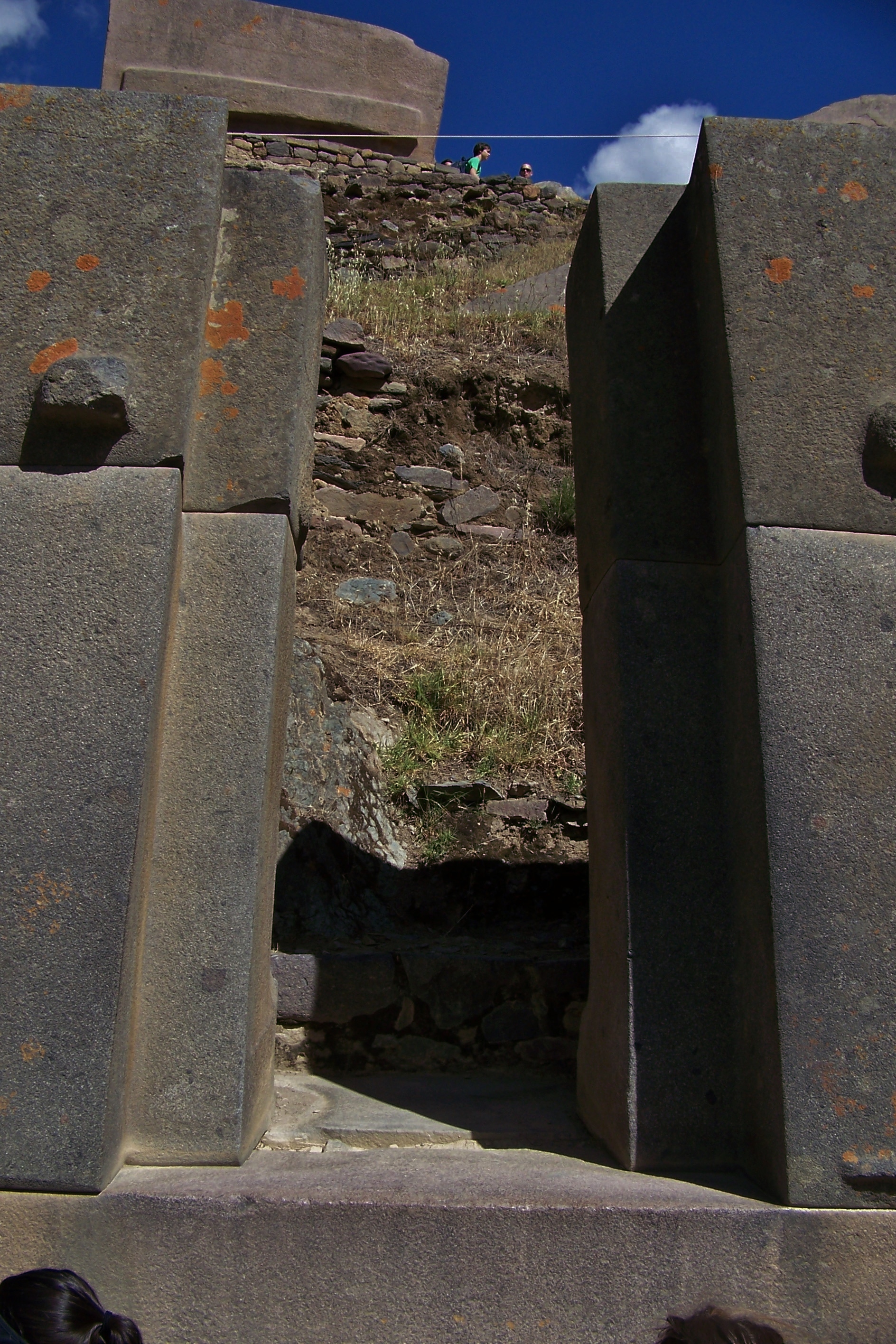
Unfinished Entryway

Unfinished Entryway

A Block left just short of its destination

A Block left just short of its destination


The ancient way still practiced

The ancient way still practiced


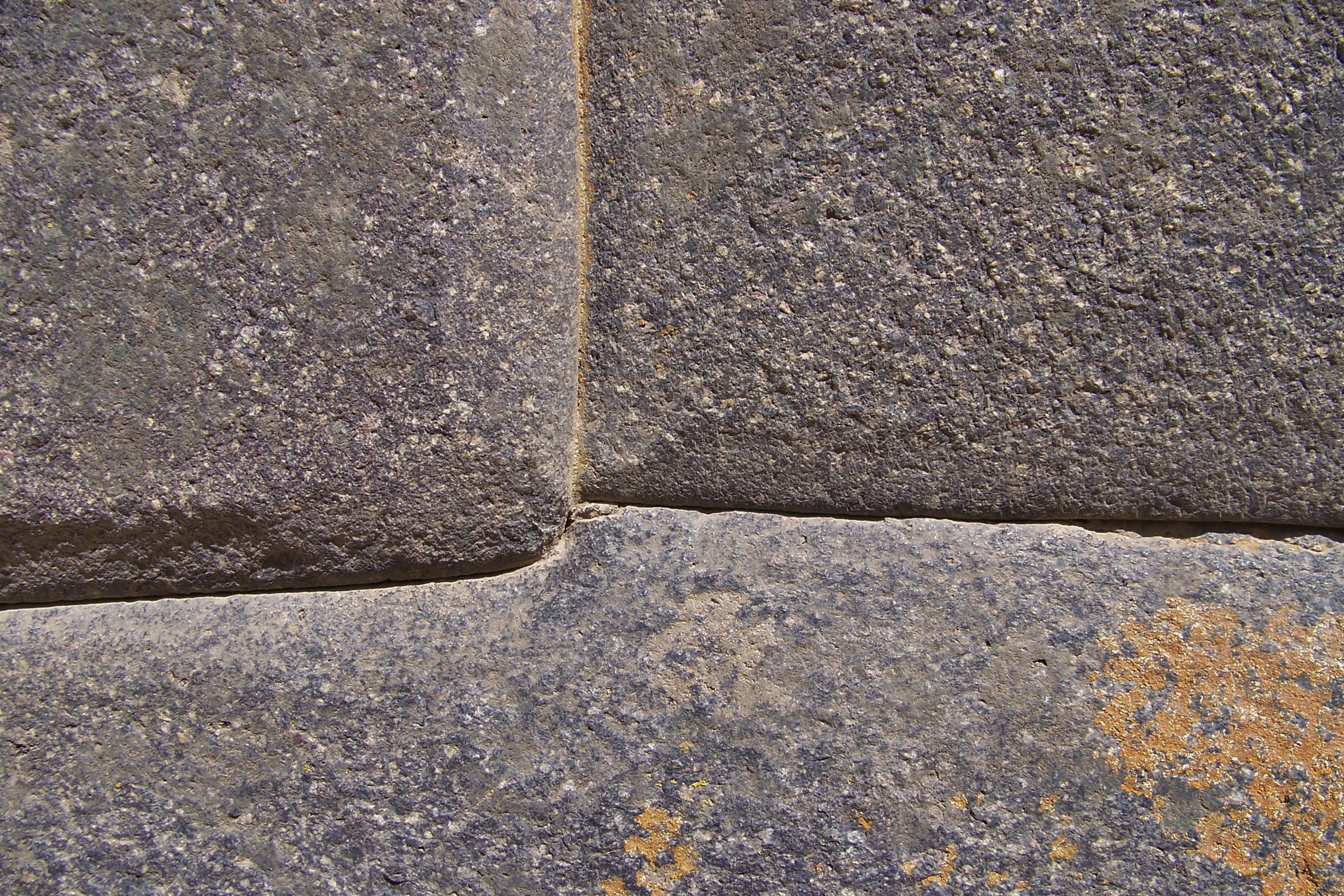
No cement, no gaps, highly earthquake resistant, not eternal

No cement, no gaps, highly earthquake resistant, not eternal


If you care to come along I will explore another strand of this thought in the next Peru entry on Machu Picchu. Until then, blessed truth hunting.


Read Full Post »

Peru 2

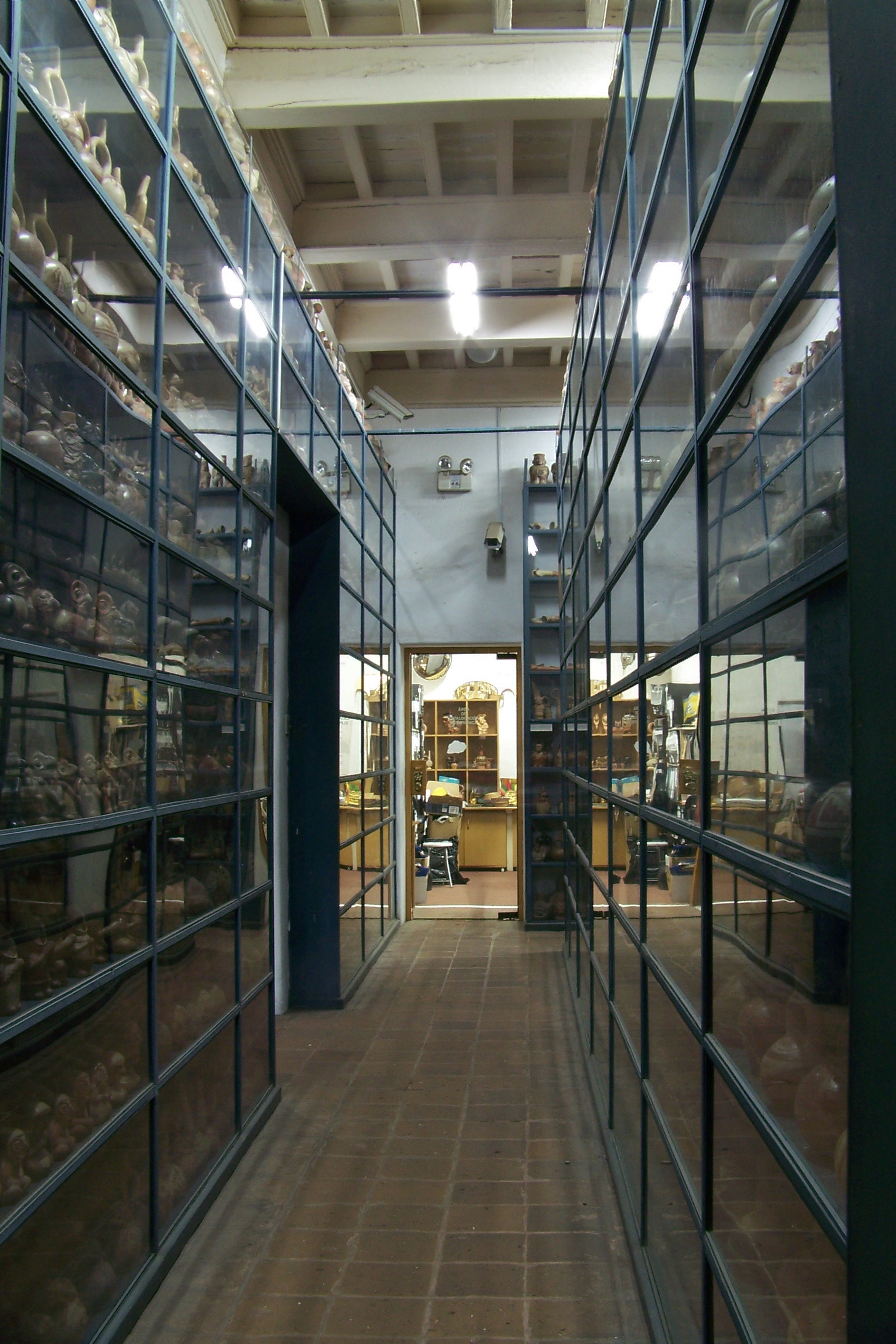
An American educated Peruvian named Rafael Larco Hoyle opened a museum of Pre-Columbian pottery in 1925 after his father gifted him 600 ancient pieces of pottery and his uncle suggested a museum should be set up. For the rest of his life Larco added to his collection which is now the Museo Larco tesoros del antiguo Peru. [tesoros- “treasure”] There is evidence of 43 Pre-Incan cultures who were sophisticated metalworkers and weavers and farmed and hunted arid and semi-arid landscapes successfully.

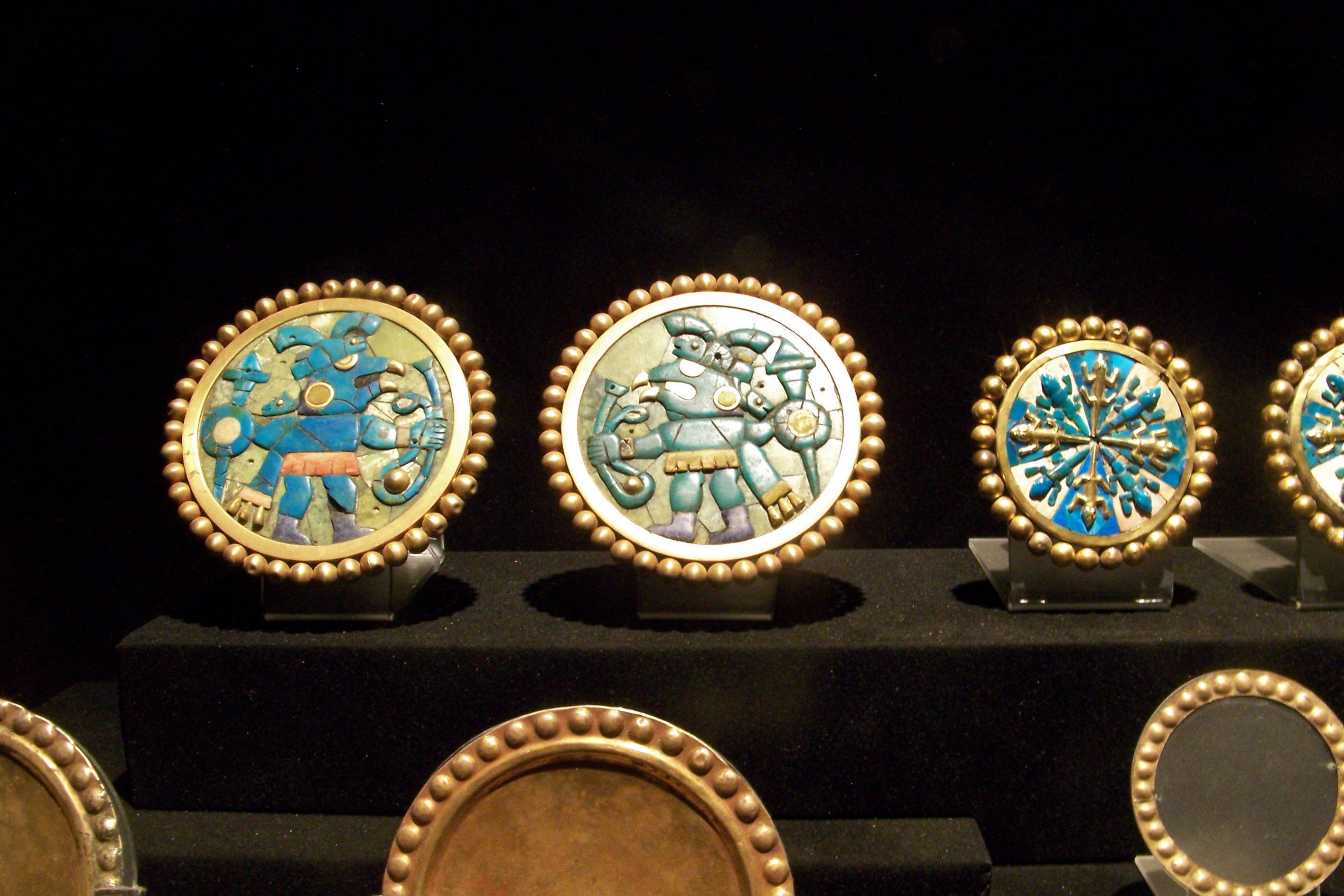
Earrings

Earrings

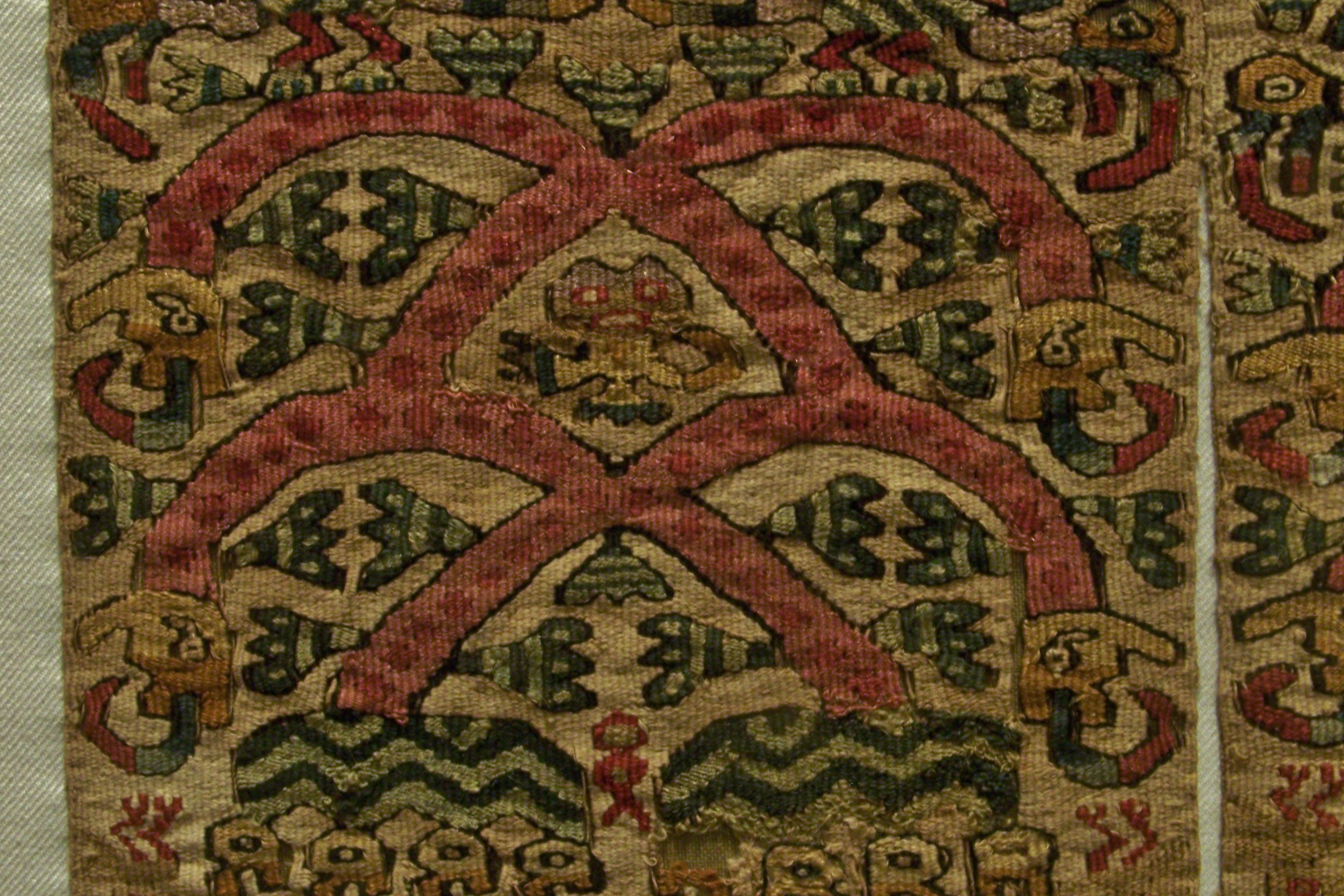
Weaving

Weaving

Royal Decorations

Royal Decorations

Amazingly Lifelike

Amazingly Lifelike

A Small Part of the 'tesoros'

A Small Part of the ‘tesoros’

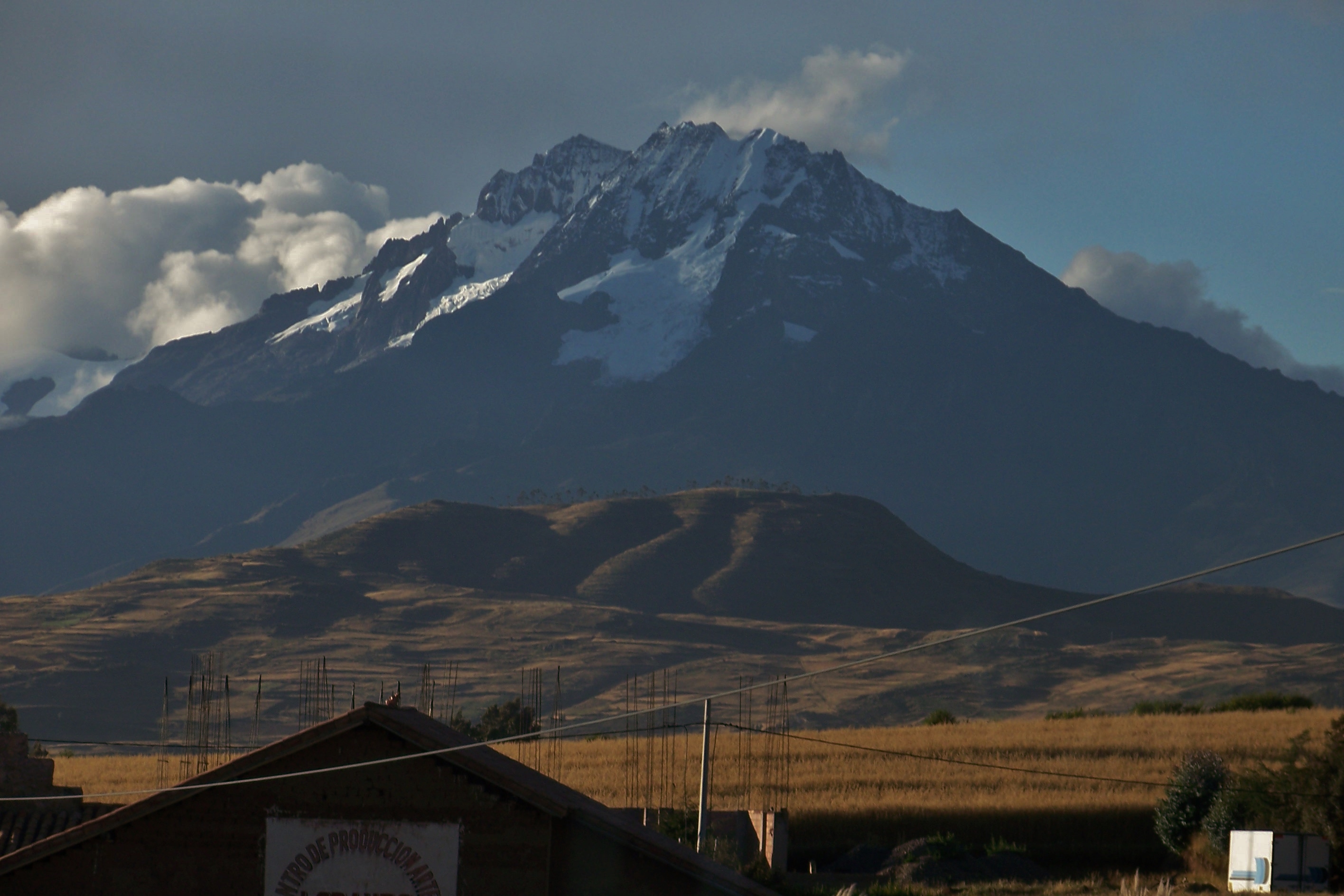
Possibly Cerro de Salantay west of Cusco

Possibly Cerro de Salantay west of Cusco

Flight from Cusco to Lima

Flight from Cusco to Lima


The Andes Mountains beyond Patagonia are little considered as significant mountains by most North Americans and yet Peru features 9 peaks over 20,000 feet.

Salantay, which is west of Cusco standing 6271 m (20,574 ft.), waters much of the area of the Sacred Valley of the Incas by its melting glaciers. Without these glaciers a large part of Peru would be barren. Flying into Cusco, the one time capital of the Incas (kings of the Quechua), is impressive. The airplane has to snake its way in between high mountain peaks all around and drop fast to land at 11,000 feet. The air is crisp and dry. A certain smell persisted the first half an hour until I was used to it. I finally figured out it must be the smell of ozone that forms at higher elevations. You quickly learn that the sunny side of the street is just barely uncomfortably warm while the shady side of the street requires a sweater if you are not active. Sunscreen or a covering hat is advisable.

A Higher Plain (~11,000 ft)

A Higher Plain (~11,000 ft)

Welcome to Cusco, Royal City of the Incas

Welcome to Cusco, Royal City of the Incas


Watch next time for forays into the Sacred Valley of the Incas.

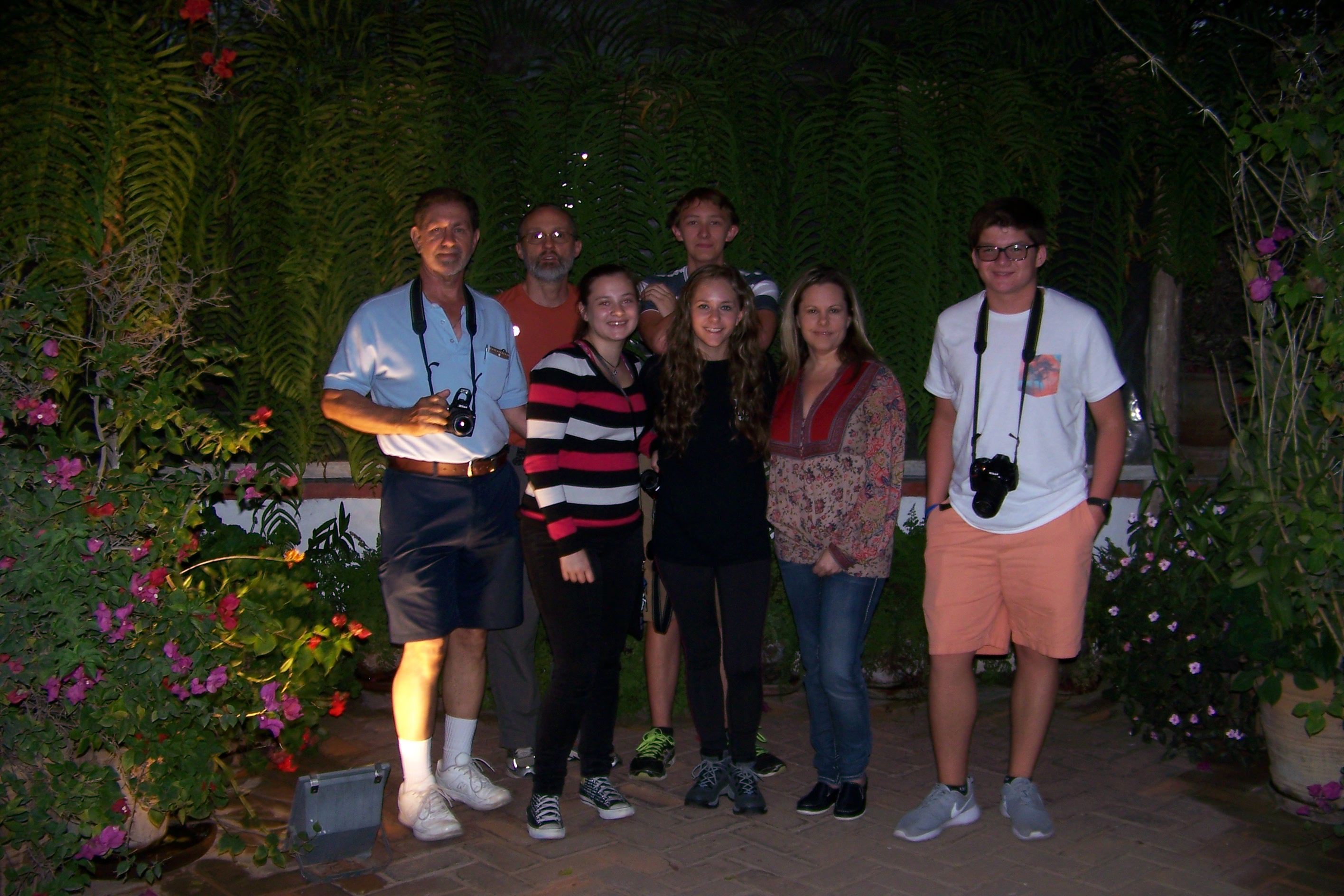
Traveling Buddies

Traveling Buddies

Read Full Post »

For 8 days four of my students, a mother, a grandfather, and I learned about culture and history, and observed wonderful beauty of the unique and diverse country of Peru. 

Launch Complex 39 Assembly Building

Launch Complex 39 Assembly Building

   But first we had to get   there. The flight from Charlotte to Miami flew right over Kennedy Space Center at Cape Canaveral. Looking out the window for a glimpse of the coast now and then, I looked at just the right time to see Launch Pads 39A and B. At 36,000 feet the 10 story Assembly Building and trackway to the launch pads look like diminutive LEGO constructions. I was surprised by the airport code for Miami-Dade International – MIA. That means something else to me, but I must confess that layovers in airports can feel just like what I thought that codes means.

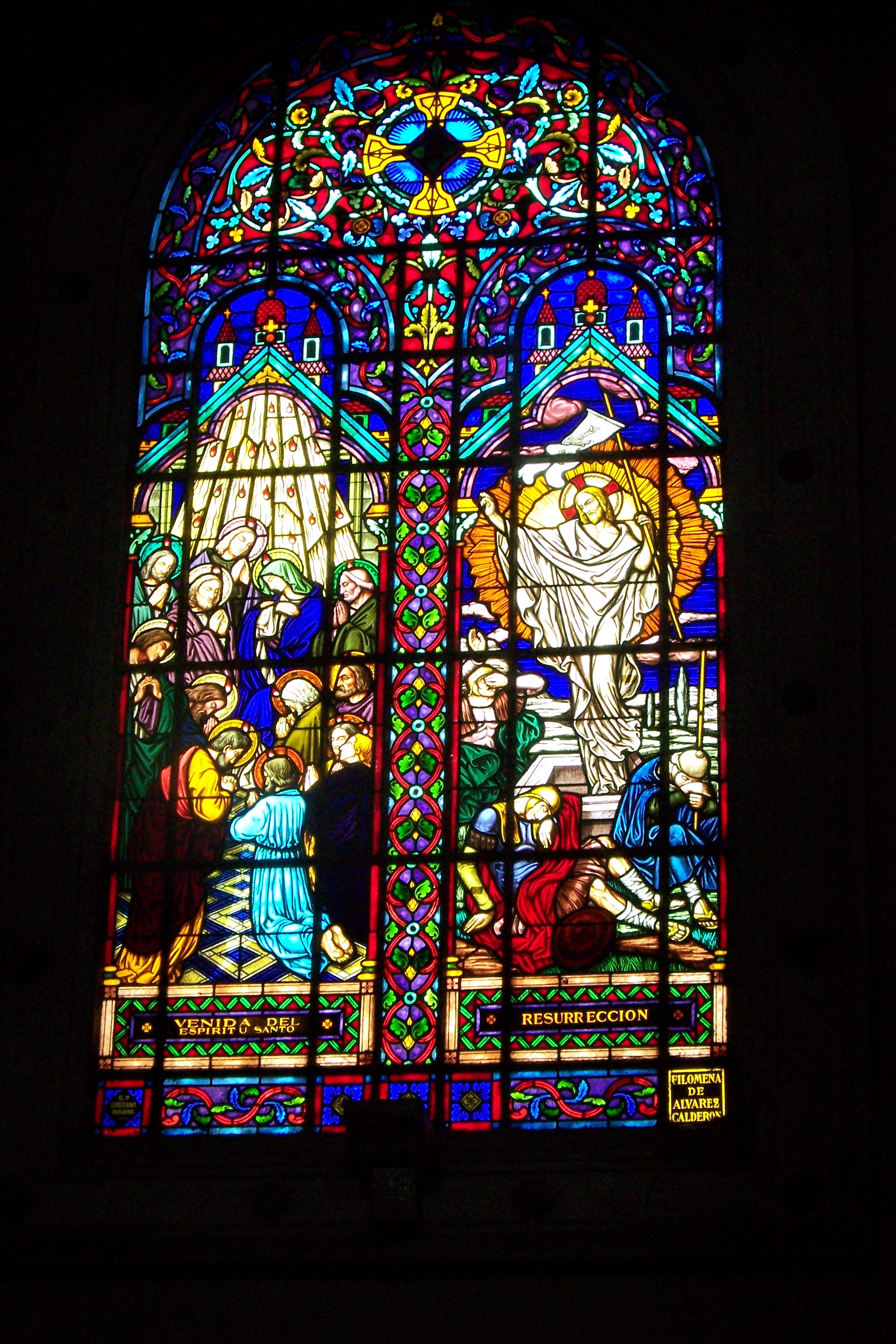
Stain Glass in Lima

Stain Glass in Lima

Because of clouds I did not see land again until we turned to make our approach on Lima. I must confess that big cities are a bit intimidating, stressful, and dirty to me. I like people but not so many at once. Lima has its own differences. At 10 million people, it constitutes a full 1/3 of the population of Peru. One native told me that this proportion was largely a result of people escaping the Shining Path during the 1980’s and 90’s. Because of cold ocean currents offshore Fall and Winter are almost entirely cloudy and rainless. This combination results in a dreary, humid, polluted, pleasantly cool climate with very little variation at night. How so many people have enough water from rivers flowing from the mountains is amazing to me. Downtown Lima has numerous churches. Most of the ones I went into on this trip disallow pictures, but I did get some in a basilica near our hotel.

Statue and Hotel of Bolivar on the Main Square

Statue and Hotel of Bolivar on the Main Square

The two heroes of independence in Peru, Jose de San Martin and Simon Bolivar, figure in numerous statues and place names in Lima. San Martin proffered partial independence in 1821 and Bolivar completed the task in 1824. Two other tumultuous periods figure largely in the abbreviated Peruvian history that I received: The War of the Pacific (1879-1883) and The Shining Path Insurgence (1980-~2000). During the former, Chile seized territory from both Peru and Bolivia over a mining treaty dispute via naval and desert battles. Peru lost three ports and Bolivia lost access to the ocean. A tour guide explained that the most northerly port city was returned after 10 years by referendum. The Communist Party militant arm, The Shining Path, committed many atrocities in an attempt to gain control of the government. Desperate times require desperate measures, so that President Fujimori from 1990 to 2000 committed atrocities of equal if not greater intensity to rid the country of this scourge. He succeeded and failed; he is now in jail in Peru.

Kennedy Park ("Park of the Cats")

Kennedy Park (“Park of the Cats”)

After hostilities calmed down I am told that Peru experienced a period of phenomenal economic growth, the best in South America until a few years ago. One reason may be the large number of government employees. Every park and sidewalk has workers who sweep, wash, plant, water, weed, in a word, beautify, and the same spaces have provincial and national police.

Peruvian National Police

Peruvian National Police

Beautification Committee

Beautification Committee


Construction and Prosperity

Construction and Prosperity

Shine and Decline

Shine and Decline


The view from our hotel window told a variable story of economic stability. Even in the downtown area many building are in decline while others shine.

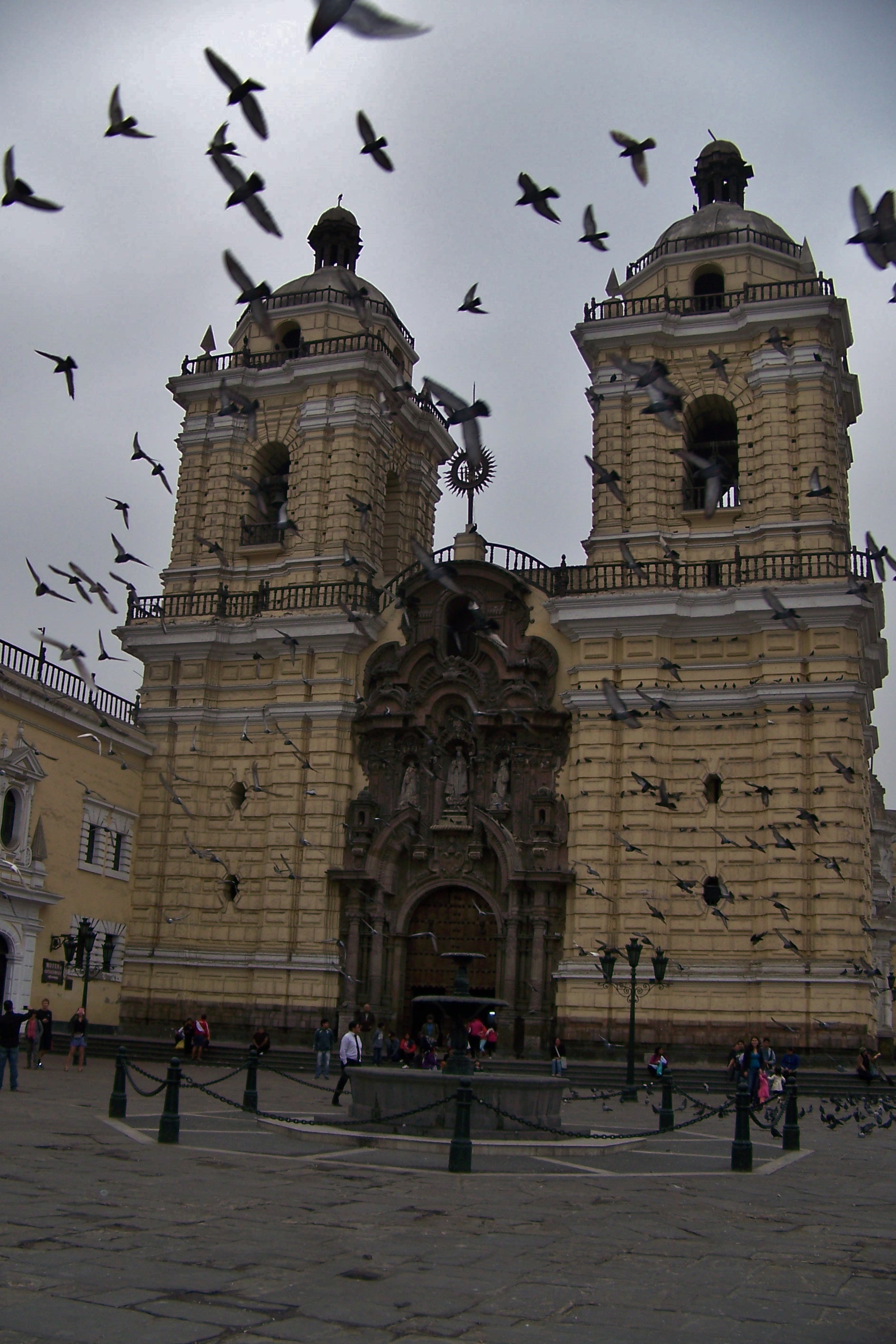
Franciscan Monastery

Franciscan Monastery


A Franciscan Monastery that we toured was more interesting to us for what was under it than what was in it. When the archeologists were allowed to survey the catacombs in the 1990’s they carefully estimated that 25,000 people had been buried there. Bones and skulls in every compartment and such superior structure as has survived several major earthquakes. The tour guide pointed out a “well” said to be 10 meters deep in bones. Everyone wanted to be buried under the church. Believing in the invisible church as the actual body of Christ, many of these bones will not arise at the resurrection, but the magnitude of this scene gave new meaning to the excitement on resurrection day- bring it quickly, Lord Jesus.

Next time I want to discuss the Larco Museum of Archeology in Lima and the flight and first impressions of Cusco. (Note: I find it nearly impossible to orient the text and pictures just as I want them. Oh well, hope you enjoyed my discoveries anyway.)

Read Full Post »

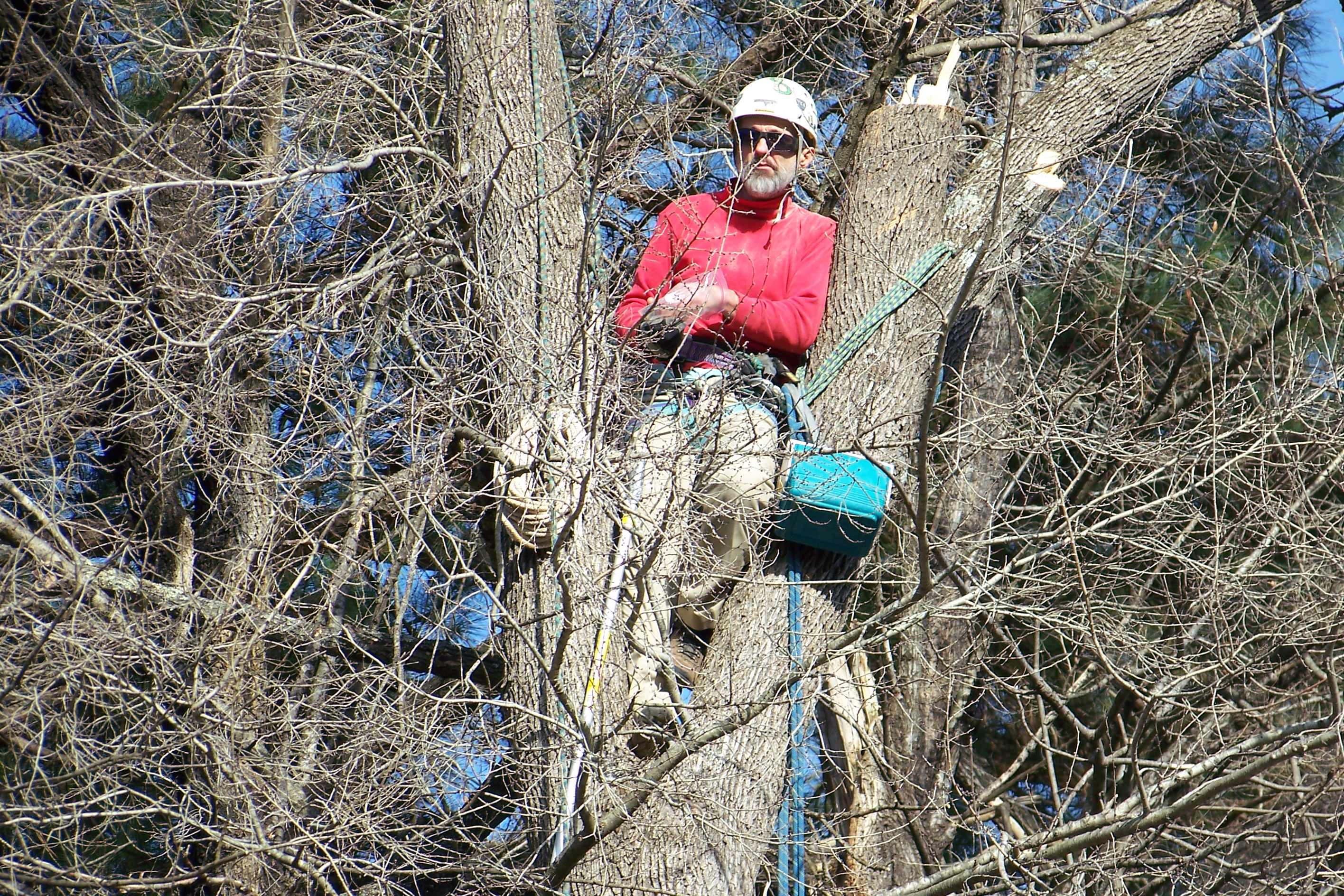
I hope that doing hard things on New Year’s Day will not become a trend. There was a white ash tree in my side yard that leaned significantly toward my neighbor’s house and about 25 feet away from the corner of his house. The tree had split half of its main trunk into our yard about 5 years ago during a drought. There was very little wind when it happened, just hot dry air. That left the other half of the trunk leaning predominantly over his house. Recently I gave him permission to take down the largest limb that extended halfway across his roof. I did not want to risk removing it and perhaps felling it on his roof. With three friends pulling on a rope he climbed 10 feet up into the first fork and fell the limb, completely missing his house. The tallest part of the trunk, some 60 or 65 feet tall still leaned over his house. The day he removed the one limb I noticed the end approaching. On one side of the bottom most fork were large white patches that I determined must be fungus eating away at the moist rot in the fork. If I didn’t take it down it would come down on his house for sure and the other half could reach my house as well. Weather and health and sons to help did not come available until 1/1/15. The most time consuming part of the job all the way through was getting rope over the appropriate forks for me to prusik up or for the truck to pull the branches down. The first two pictures show me standing in a fork about 40 feet up just after felling the first high limb successfully.

Upthetree2 Upthetree3

I don’t know which makes me more nervous, getting involved with the chainsaw that is near or above my head or the limb that I’m removing with the saw. Two of my boys did an excellent job yanking the limbs away from me and my neighbor’s house and even the other trees in the yard. It took nearly 8 hours to climb, rope a limb, cut, move, and repeat, and finally descend. Proper tree climbing and removal equipment would, of course, make this all go more quickly with less risk. This is the third time that I have done this operation and almost certainly the most risky. I really think that should quit now. Coming down was fun though.

Uptree8

We took down the main trunk just above the bottom fork before quitting for the day. That left just the left most branches. We took down the left most branch one evening after work. There was only this large, hard leaning middle branch on the left fork. I knew it would be hard. We planned and deliberated and tried the next Saturday. Notch, pull, back cut, pull harder, and then it fell on my house. The tops of the branches were all that reached but they could have done damage had it not been for the large limb on the Catalpa tree that took the brunt of the blow and eased it down onto the gable end as it came to the ground. No harm was done to the house but it uglified the Catalpa real fine. With the huge success of the first two days of cutting and the moderate success (no hospital, no repairs needed, no equipment breakage, just a branch down we hadn’t wanted down) the last day we only had the last 15 feet of double trunk to raze. Given the risks and the fact I like trees in my yard I had second guessed myself several times during this project, but when I fell that last trunk section it split in half when it hit the ground. Out came water and it was coated with mud inside. There was a reason for the fungus patches on the bark. We had with the prayers of friends and help of God, the pickup truck and my two sons’ help, and various pieces of equipment gotten the tree safely on the ground. Considering how ash splits when stuck wrong, it makes me wonder why bats are made from it. I guess I’ll have to research that. Perhaps I should take a easy stroll in the woods next New Year’s Day.


Read Full Post »

Tradition has frequently gotten a bad rap and frequently with good reason. Tradition as an excuse not to move forward, not to learn and grow, is a hindrance to be done away with. But tradition that strengthens relationships and belonging and remembering what is good and right and passing these on to the next generation is good. I think where this good kind of tradition goes wrong is when it is not explained to the new people (children in this case) and when it becomes more important than the truth it is supposed to point toward and when it becomes an excuse to be lazy and not grow. My family’s Thanksgiving traditions have changed slowly over the years growing into a 2 1/2 day event. Wednesday night is soup dinner and games. Several people usually run and race on Thursday morning. As many brothers (there are 4) as can come to the eldest brother’s house with children (8) and grand-children (12 + 1 on the way so far) to eat at 1 PM. In the late afternoon the willing and able (male and female, young (about 6) and old (oldest this year was 54) play flag football. On Friday we go for a hike and then meet again for one last dinner of leftovers. Those able to come, willing to participate, and able to participate changes from year to year and each event within the set of events and some sit and talk rather than participate, but the general way of things remains the same. Conversation is lively and involves catching up. It is a good constant in my life and I am thankful for the stability of my extended family. God has been good to us in so many ways; a godly heritage is much to be sought after. It is good to hear conversations about God’s provision and elements of our faith. It is good to celebrate and have fun.

100_8655 100_8656 100_8657 100_8659 100_8661 100_8663 100_8666 100_8669 100_8674 100_8676 100_8677 100_8678 100_8681 100_8682 100_8686 100_8690 100_8693 100_8700 100_8712 100_8705

Read Full Post »

Spring has significantly sprung in our neck of the woods. We may yet have another wintery storm but the bluster is mostly out of that season. Flowers seem particularly profuse this season: carpets of red trillium, bluets, grape hyacinth, and violets. The hardier varieties of Daffodils have already shown their glory. Leaves are sprouting rapidly on the trees.

Neighbor's Redbud

Neighbor’s Redbud

Violets and Grape Hyacinth

Violets and Grape Hyacinth

Violets and Ground Ivy

Violets and Ground Ivy

Variety of Heal All?

Variety of Heal All?


As the transformation has occurred, when not out in the yard or woods,  I have been watching from the dining room window as I eat. One sight in the last two weeks has arrested my attention, however, and it is of my own doing. I’ve long wanted fruit trees that produce. I lived for six years across a dirt road from a pear tree that no one cared for or seemed aware of. It would produce a few pears each year that were the old style: hard and sweet- moon glow pears I think. One year just before we moved the spring and summer conspired together with a perfect combination for this old pear tree. It produced so many large pears that it bent over with some of the pears touching the ground. Even more fascinating was the almost total lack of worms or other insects. I ate pears for lunch every day and most usually with yogurt after super. I ate them with my cereal for breakfast. We froze some and I ate them relentlessly. My wife ate her share as well. The tree produced for 3 1/2 months until heavy frost. It was simply amazing. The next year the pear tree produced a few worm eaten pears just like it had in all of my previous notice of it. Soon afterward we moved to our present house. One of the things that drew us to the house we bought was the trees: oak, redbud, catalpa, pitch pine, white ash, chinese chestnut, and two apple trees. I was too busy with house repair and job to prune them the first several years, but I read up on pruning and pruned them later on. I believe that it was the season a year and a half after that they produced some decent sized and number of apples. A fair number were without worm. They are probably what is referred to as cooking apples because they lack much firmness, and much sweetness or tartness desirable in an eating apple. Since then frost has gotten the flowers and worms have rotted the fruit. I sprayed them one year with soap just after the blooms fell off, to no avail. I’m not a pesticide kind of guy and I haven’t figured out the natural ways of preventing apple worms. I have pruned them somewhat since then but finally let them go. My son pruned them heavily last year but they are so tall that you can’t reach half of the apples and those that fall are severely damaged. There is a point to all of this story. I went out to try again this spring and found that the larger tree had several rotten places in the trunk. If there was any possibility of producing apples, it seemed to me, this problem must be dealt with. I cut most of the rot out. Now I sit and look at the sad results of my decisive action.

Ouch!
Ouch!

 I was immediately reminded of two Scripture passages: John 15:1-11 and Luke 13:1-9 Hear a little of each passage:

I am the true vine, and My Father is the vinedresser. Every branch in Me that does not bear fruit, He takes away; and every branch that bears fruit, He prunes it so that it may bear more fruit… he who abides in Me and I in him, he bears much fruit, for apart from Me you can do nothing. If anyone does not abide in Me, he is thrown away as a branch and dries up; and they gather them, and cast them into the fire and they are burned.”      John 15:1-2, 5-6                   And He began telling this parable: ‘A man had a fig tree which had been planted in his vineyard; and he came looking for fruit on it and did not find any. And he said to the vineyard-keeper, ‘Behold, for three years I have come looking for fruit on this fig tree without finding any. Cut it down! Why does it even use up the ground?’ And he answered and said to him, ‘Let it alone, sir, for this year too, until I dig around it and put in fertilizer; and if it bears fruit next year, fine, but if not, cut it down.’” Luke 13:6-9

Perhaps it is a parable for my life just now. No, by God’s grace, I do not believe I will be burned up because I belong to Him, but does cut down mean eternally separated or ‘fallen asleep’ as those who were disobedient (I Corinthians 11:30)? I have been severely pruned or cut; difficulties with career, health, loved ones. Has my life been unfruitful and full of rot so that it needed a major pruning? Am I too apt to be content, complacent when I have orders to fulfill? There are other ways to look at the reasons for these trials but I don’t want to be oblivious to the obvious. I certainly feel like this tree looks. And I don’t see it or mean it as complaining. I just want to learn the lessons that are here and serve my Lord better rather than have to recycle remediation. The flowers bloom all around; the sun shines brightly; the soil is warming and wet; the grass is greening. Am I connected and abiding in the vine (trunk and root) so that I may bloom, leaf, and bear fruit. I want to be a fruit tree that produces. I want to be pruned, not cut down.

Read Full Post »

« Newer Posts - Older Posts »

Myrela

Art, health, civilizations, photography, nature, books, recipes, etc.

Overflows from the Heart

"But the things that proceed out of the mouth come from the heart…" Matthew 15:18

CreatorWorship

Pointing to the One who made, saved, and sustains