Feeds:
Posts
Comments

Archive for the ‘General’ Category

          I have long known from the second law of thermodynamics that all systems involving energy are less than 100% efficient. As I would say to students, “The good news is that you can’t get something for nothing [1st law of thermodynamics or law of conservation of energy], but the bad news is that you can’t even break even [2nd law of thermodynamics]” Emotionally that only discourages people with an engineering turn of mind. To show you just how little the idea penetrates many people’s thoughts, I almost always get a “How about a machine that produces energy that it can use to run…[perpetual motion machine]?” question from one or more students immediately after explaining the laws and sharing the good news/bad news. We have come so far that some have a blind faith in the ability of human ingenuity and technology to overcome the most formidable barriers to progress, even laws of Physics.

         Evolutionists have a similar resiliency in their emotional attachment to what Dr. John C. Sanford calls the Primary Axiom: “man is merely the product of random mutations plus natural selection”. Dr. Sanford, retired plant geneticist of Cornell University, presents an altogether formidable opposition to the Axiom: genetic entropy. Robert Carter simply defines genetic entropy as “…mutations (spelling mistakes in DNA) are accumulating so quickly in some creatures (particularly people) that natural selection cannot stop the functional degradation of the genome—let alone drive an evolutionary process that can turn apes into people.” Dr. Sanford says that useful information in DNA is degenerating; living organisms are degenerating; populations of organisms are degenerating. He referred to Darwinian believers as those who think that populations are getting better by natural selection, but based on his research, they are not. He said that he once also believed that natural variation (arising from mutations in DNA) plus natural selection (of the fittest through conflict resulting in death and survival) equals all that we see biologically. I believe that evolutionists are asking the wrong question based on their false presuppositions: How are species progressing from simpler to more complex? Instead, they we should be asking how species are able to resist extinction in light of genetic deterioration.

         In a recent Facebook discussion one person claimed to have observed modern examples of evolution through bacterial mutation. I pointed out that these adaptations are not species-changing evolution. But Dr. Sanford presents a more damaging argument of the devolving of species by viral and bacterial mutation. One of his examples is the flu pandemic from 1918 to 1920 that killed about 3% of the world’s population. When the frozen body of a soldier who died from that flu was exhumed for research purposes several years ago there was fear of the accidental release of the virus and a return of the epidemic, because it was known that the older strains were stronger. The newer strains of H1N1 are weaker due to genetic entropy. “A key point is that because of the high reproductive rate and the documented phenomenon of genetic entropy, the influenza virus is degenerating rapidly by accumulating 14.4 new mutations per year… It seems that when they leave their proper winged hosts and infect humans, they run out of control and go downhill rapidly because of mutation accumulation, which will lead to their extinction.”

          But doesn’t high mutation rate mean that natural selection has more material for driving evolution forward? This idea could only be true if there were sufficiently more beneficial mutations to increase an organisms’ long-term (mutli-generational) survival than destructive mutations. “Far more mutations are deleterious than advantageous,” says Dr. Sanford. These bad mutations degrade the genome at a much faster rate than good ones could possibly benefit the organism.

          The genetic conclusion of this discussion is that species are definitely not evolving and could certainly not have been around for millions of years at the rate their genome is deteriorating. The belief that “the creation was subjected to futility” and “we know that the whole creation groans and suffers the pains of childbirth together until now” (Romans 8:20,22) because of the sin of man fits with the evidence far better than the belief that natural selection through mutation is evolving species.
Read Full Post »

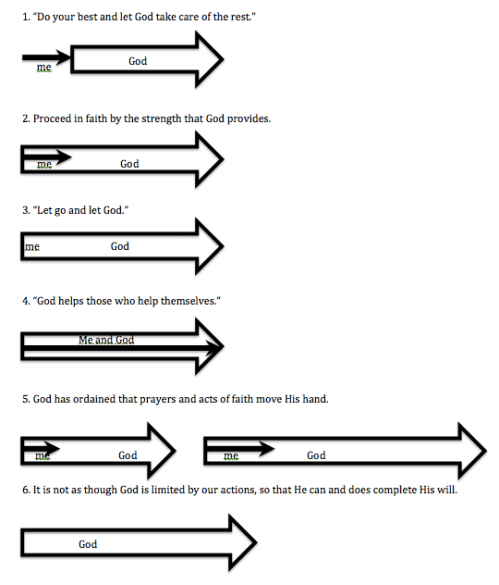
He said, “Do your best and let God take care of the rest.” I had heard this and similar phrases many times, but I went off on a mental tangent of evaluating it in the light of Scripture. I think that I understand the intent of the saying, namely that we have an active part to play in growing righteousness in our life and God completes what is lacking in us. Thus far I have no problem, but I think we may do better in our understanding and representation of the interplay of our effort and God’s empowerment. Toward a theology of effort and empowerment consider the following diagrams with their perspectives on the topic:

effort-empowerment-arrows

The arrows are somewhat self-explanatory, but I want to clarify them for my own benefit and yours. Though, as I said, the #1 was stated with right intentions, I believe that at face value it is really saying that I exert effort to the extent of my ability and then God kicks in for the rest. But the Scripture says,“for in Him we live and move and exist” (Acts 17:28), and “I am the vine, you are the branches; he who abides in Me and I in him, he bears much fruit, for apart from Me you can do nothing.” (John 15:5) We cannot even breathe apart from the grace He provides, but the “nothing” here seems to me to be ‘nothing of eternal significance’. As Paul teaches in I Corinthians 3:11-15, For no man can lay a foundation other than the one which is laid, which is Jesus Christ.  Now if any man builds on the foundation with gold, silver, precious stones, wood, hay, straw, each man’s work will become evident; for the day will show it because it is to be revealed with fire, and the fire itself will test the quality of each man’s work. If any man’s work which he has built on it remains, he will receive a reward. If any man’s work is burned up, he will suffer loss; but he himself will be saved, yet so as through fire.” 

I think that #2 is closer to the right perspective. God wants us to be involved and tells us through Paul to work out your salvation with fear and trembling; for it is God who is at work in you, both to will and to work for His good pleasure.” (Philippians 2:12b-13) Our part is working with God by faith that He provides all we need to obey Him. He is actually the one willing and working and He receives all the glory as only He should. We receive no glory for effort, seeing that His divine power has granted to us everything pertaining to life and godliness, through the true knowledge of Him who called us by His own glory and excellence. For by these He has granted to us His precious and magnificent promises, so that by them you may become partakers of the divine nature, having escaped the corruption that is in the world by lust.” (II Peter 1:3-4) The “magnificent promises” and “divine nature” afforded believers far exceed our efforts. For this reason I have the ‘me’ arrow inside the ‘God’ arrow. God is in, through, and around all that we do and amplifies it to a magnificent and divine level, “abundantly beyond all that we ask or think, according to the power that works within us” (Ephesians 3:20).The result is that “Christ is all, and in all” (Colossians 3:11) and “to Him be the glory in the church and in Christ Jesus to all generations forever and ever. Amen.” (Ephesians 3:21)

#3 is not only lazy but detracts from the glory of God by not proving His purpose and plan as revealed in such passages as Ephesians 2:10: For we are His workmanship, created in Christ Jesus for good works, which God prepared beforehand so that we would walk in them.” We are not to be idle. Our flesh will consume us the moment we stop clinging to God and moving forward in the strength He provides, for “the heart is more deceitful than all else And is desperately sick; Who can understand it?” (Jeremiah 17:9) Conversely, “I can do all things through Him who strengthens me.” (Philippians 4:13)

#4 may seem like a statement of working with God, but I have seen consistently that the people who use this phrase are just trying to be good in their own right and have little concern for godliness or God’s glory. He intends and expects of those whom He is saving and the whole world as well that they acknowledge Him in all things: ““Fear God, and give Him glory, because the hour of His judgment has come; worship Him who made the heaven and the earth and sea and springs of waters.” (Revelation 14:7) 

Our hearts tend to be lazy when it comes to spiritual disciplines, but I believe that God has ordained that His will is frequently accomplished and His kingdom built by enabling the efforts He orchestrates within us (#5), as we said above from Philippians 2:12-13. So we work hard and bring God glory as you see Paul and the Thessalonians did: For you recall, brethren, our labor and hardship, how working night and day so as not to be a burden to any of you, we proclaimed to you the gospel of God. You are witnesses, and so is God, how devoutly and uprightly and blamelessly we behaved toward you believers; just as you know how we were exhorting and encouraging and imploring each one of you as a father would his own children, so that you would walk in a manner worthy of the God who calls you into His own kingdom and glory.” (I Thessalonians 2:9-12) It is right and proper that we should work hard at spiritual progress in the strength God provides in order that others might be drawn to God and God be glorified.

And with all of this effort, remember that God needs nothing from us and can accomplish His will without us whenever and however He pleases (#6). “Behold, I am the Lord, the God of all flesh; is anything too difficult for Me?” (Jeremiah 32:27) But He has made us involved in so much of what He is doing, “for this reason I bow my knees before the Father, from whom every family in heaven and on earth derives its name, that He would grant you, according to the riches of His glory, to be strengthened with power through His Spirit in the inner man, so that Christ may dwell in your hearts through faith; and that you, being rooted and grounded in love, may be able to comprehend with all the saints what is the breadth and length and height and depth, and to know the love of Christ which surpasses knowledge, that you may be filled up to all the fullness of God.” (Ephesians 3:14-19) For  “I have been crucified with Christ; and it is no longer I who live, but Christ lives in me; and the life which I now live in the flesh I live by faith in the Son of God, who loved me and gave Himself up for me.” (Galatians 2:20)

Read Full Post »

Yeah, man, my life motto, “Life is Good”, “livin’ the dream!” Good vibes, positive outlook, need plenty of that, right? Not so fast. What about when you are sick and you just lost your job and the dog got run over and taxes went up and there is another war and…you get the idea. So, does that mean life is bad then? Is that what I’m saying? Let’s take a closer look. If the phrase, “Life is Good” was the end of the thought, it has limited utility to help us along in life perhaps, but as used in our society at this time it has modifying thought that follows. This implied extension of the thought is also explicitly stated in places like the “Life is Good” Facebook page. It goes something like this: Life is good because I’m doing what I like and liking what I do. The implication is a totally self focused or humanist view of life and it doesn’t work on several levels. First of all, you can’t always do what you want to. Secondly, in a more narrow sense, if doing what you want to do refers to your vocation, it is an economic impossibility for everyone to have the job of their dreams. And as just pointed out, many times life is hard. The idea may well turn into life is good for some subset of the population for whom everything is falling into place, but that must surely imply that I don’t care what happens to the other half or I think they just need to get their life together, think positive, and make it happen. Or maybe we are being urged to follow blind optimism: Let’s pretend life is good and that will somehow make it better. All of these possibilities seem a bit depressing unless you happen to be riding the wave, and even then it probably won’t last.

Rather than just burst your bubble and leave you hanging, I would like to suggest a more meaningful and purposeful phrase and explain why it is not just wishful thinking: “Life is good because God is good.” Stated this way the fact that life is also at times hard is not ignored or denied. God is working blessings deeper and more lasting. In the midst of hardship God is training us to trust Him (Proverbs 3:5-6,12) and look for what is honorable, pure, and good (Philippians 4:8). He is building, reserving, and guaranteeing future blessings (1 Corinthians 2:9) that outweigh these present difficulties (Romans 8:18). Through His gifts of goodness to us and as we praise Him we are given value, comfort, and provision (Psalm 34). Our lives are filled with meaning (Romans 8:28) and purpose (Psalm 67:7); He is given glory (John 15:8). These reasons that life is good will seem foolish to those who do not know Him (1 Corinthians 1:18), but I invite you to find the peace, joy, and purpose in serving God through the knowledge of His Son, Jesus (Psalm 34:8; Colossians 1:9-13), for He is the way to God (John 14:6). “Life is good because God is good”, which means that all of life is life gained from God and lived unto God (2 Peter 1:2-4), to His glory and for our benefit.

Read Full Post »

Hebrews 1:3 is a deeply insightful verse about our God: “And He is the radiance of His glory and the exact representation of His nature, and upholds all things by the word of His power. When He had made purification of sins, He sat down at the right hand of the Majesty on high.” I have long been fascinated by the phrase “radiance of His glory” and have written about it once upon a time here (Radiance Check out the poem, too.). “Radiance” is translated “brightness” in several versions but seems to fall short of conveying what Jesus accomplishes by revelation to us of His Father. He shines forth His glory, that is, we could not know of God without seeing His glory in Jesus’ representation of Him. You only see the sun because of the light radiating from it. Analogies can be taken too far, in this case to make Jesus out to be something or someone separate from the Father. That is heresy and not at all my intention in explaining radiance. Rather, hear what Jesus said, “Don’t you know me, Philip, even after I have been among you such a long time? Anyone who has seen me has seen the Father. How can you say, ‘Show us the Father’?” (John 14:9) That verse, of course, bears on the phrase “exact representation” also. In the ESV it reads, “exact imprint”. As an illustration I pressed my truck key into Play-Doh. I pointed out that plastic could be poured into the imprint, harden and used to open my truck door. Again, you could get into positive/negative imprint or representation being a facsimile rather than the original but that is not what the Scripture is saying. These analogies fall short because of the mystery of the Trinity, meaning our inability to understand the essential nature of God, but He gives us insight to extend our understanding even though we fall short of full understanding.

The next phrase is the one that has caught my attention most recently. I am now going to indulge in some manifest musing (or “thinking out loud” as we usually say if I were talking to you). Heupholds all things by the word of His power.” “Word of His power” is an odd construction in English. NASB, KJV, NKJV, and ESV use this phrase. NIV, HCSB, and NRSV say, “His powerful word”, and the RSV says, “his word of power”, both phrases which seem to me to have a different meaning from “word of His power”.  I suspect the three newer translations (NIV, HCSB, and NRSV) made interpretative decisions for the purpose of clarity. Is this change justified? The Greek Interlinear Bible (http://www.scripture4all.org/OnlineInterlinear/NTpdf/heb1.pdf) has the literal English word order as “declaration [word] of the ability (power) of Him” (“[]” being my addition and “()” being theirs). Not claiming to know more than the slightest inkling of Greek grammar, I can at least say that the majority translations are going with the more literal wording. The interlinear translation and Strong’s help us with what the particular words mean. “Word” here is not logos, the expression of God, but rhema, a declaration. And “power” is dynamis, which means ability or potential for power or action.

The “of” is important. It denotes possession. If I say, “son of mine” I mean the same thing as “my son”. The shade of difference is the emphasis on son in the first phrase. So the reason I don’t think “word of His power” and “His powerful word” mean the same thing is that “powerful” is not possessive, but a descriptive modifier. It says His word is powerful. “Word of His power” says His power’s word. The power is expressed in a declaration (word). Rather than saying His word has power, it seems to be saying that His power has word. His power proceeds forth as that which communicates what will be (be that static (“upholds”) or dynamic (“created” Isaiah 40:26)). Word modifies power rather than power modifying word. If we had the word it could read, ‘His wordful power’. The emphasis is on declaration (word) that upholds all things but the source of that word is His power. From His power proceeds forth a word which upholds. The way his power is being exhibited is through efficacious declaration.

Read Full Post »

Bibles and spiritual discussion involving Christianity have largely been expunged from public discourse, politely ignored at best or ridiculed as archaic. So we as a society try to convince ourselves of how enlightened we are by studying various religions and philosophies, all the while being open only to human autonomous naturalism. Even many church-goers acknowledge God as no more than a concept of good behind the scenes rather than a personal, involved, just and loving Sovereign Creator, a real person to whom we are responsible. It is quite ironic that the most Bibles are to be found where the least acceptance of its content is given. In just such a room I stood recently, silent, considering the lack of Bibles elsewhere in the building and the multitude of them here.

Comparative Religion and Philosophy Class

Deep irony in our midst
The most Bibles in a room
On a shelf with all the rest
Equal texts as they assume
Thoughts of men believed the best
Ridicule of God will bloom
Putting God's Word to the test
Sweep away truth with a broom
Of poor logic or mere jest
Scoffers conceived in this womb
Birth unbelief in this nest
Many young skeptics to groom
And others their faith arrest
Sending belief to its tomb
Extract self from this class lest
You take part in death and doom
Instead, set out on a quest
In each context truth exhume
That society be blest

Read Full Post »

If you hold to objects close together with a small gap between them and peer through toward a bright light you can see the bending of the light around the two edges as an interference pattern. The result makes the two object appear to grow together if they are at the correct distance apart. You may find an example at the following link: https://www.meteoros.de/blog/pics/blackdrop2.jpg The parallel lines of dark and light are called a diffraction pattern even though the sight of them results from light interference. Seeing Venetian blinds lit up by sunshine today with blurry edges reminded me of this pattern. If you ever see the old movie “Sergeant York” you may remember him moistening the front sights of his rifle. This disturbs the diffraction pattern making for clearer sights. As I stood taking in this familiar sight on the blinds the thought of a metaphor for moral ambiguity came into focus.

At the edge of light and shadow
Is where the challenge of life is
Ambiguous scenario
Time to have a real life pop quiz

Diffraction pattern blurs the line
Blinds by alternate light and dark
Fuzzy scheme in the contrast cline
Right and wrong seem no longer stark

Are there exceptions to the rule?
Dismiss the law and moral code?
Sparse view, the way of the fool
To quit the way for your own road

There is good and bad in the gray
Right and wrong all mixed together
God has not left us with no way
To discern, know, and do better

When life does not seem black and white
Then pray to God and search His Word
Don't give up on doing the right
Don't give in or follow the herd


Read Full Post »

My pastor taught on Jesus’s warning in the Sermon on the Mount concerning false prophets found in Matthew 7:15-20. He asked, given the teaching of 7:1, “Do not judge so that you will not be judged“, and theme of how to live in the Sermon, why is this passage about false prophets (and teachers) here? He concluded that there is a balance to not being condemningly judgmental in 7:1 that emphasized being discerning and discriminating. False Prophets destroy the church from within frequently before their presence is detected. They must be recognized and ousted. The pastor showed from the passage that they have three characteristics: 1) Inwardly Corrupt (outward appearance with no inward experience), 2) Bad Fruit (coming from deeds of the flesh), and 3) Destined for Destruction (true belief includes growth in righteousness). On the second point the pastor describe a bad tree with bad fruit. As happens on occasions my mind drifted off into a parallel illustration.

Eastern Black Walnut (Juglans nigra (I actually remembered that without looking it up, but I can’t remember people’s names. I have poor skills at people name association.)) is an easy tree to identify in the woods. As you approach it you know what it is before you can discern leaves or bark. Very little grows under a walnut tree. The fruit (really the hull of the fruit surrounding the nut) has a poison that prevents other trees and many herbaceous varieties from growing under it. A tree given wide berth by other trees in the eastern forest is rare. More frequently trunks are quite close and roots intertwine each other if sunlight is sufficient for both. When I arrived home I found that the leaves and twigs, but especially the roots, also have the poison,“juglone” (5 hydroxy-1,4­ napthoquinone) (https://hort.purdue.edu/ext/HO-193.pdf). The information I read says that many trees and plants are tolerant to juglone, but my observation in the woods tells me that though tolerant in the sense that their leaves don’t turn yellow or the plant die, the plants do not evidently sprout well under walnut trees since the ground most usually looks almost as if it is mowed.

 The spiritual metaphor here is the same as that of a fruit tree but more caustic perhaps? Green, developing walnuts look nice enough and are certainly abundant. The False Teacher may have the appearances of fruitfulness in quality and quantity, but they inhibit life and growth. And the source is the roots which one source said can poison the ground for several years after the tree is removed. Wow! This happens in churches so that they are still reeling years after the false teachers has been run off. “You have seen their abominations and their idols… so that there will not be among you a man or woman, or family or tribe, whose heart turns away today from the Lord our God, to go and serve the gods of those nations; that there will not be among you a root bearing poisonous fruit and wormwood. (Deuteronomy 29:17-18) And Jesus said, Either make the tree good and its fruit good, or make the tree bad and its fruit bad; for the tree is known by its fruit. You brood of vipers, how can you, being evil, speak what is good? For the mouth speaks out of that which fills the heart.” (Matthew 12:33-34) May God multiply to His Church the grace of discernment to recognize and biblically deal with false teachers in their midst so that the sheep are not led astray and poisoned. May He strengthen and refresh those churches who have fallen prey to the poison root and fruit of false prophets that have inhibited growth among its members. May God purify us and build us up in the knowledge of Him so that we may worship Him in spirit and truth and share His glory accurately in the world.

Read Full Post »

Favored Pearl

Our 4th grandchild arrived recently. I have gotten in the habit of writing a poem as a blessing on these new arrivals. I would like for them to read their poem some day, but even more so I pray that God will bless these children far beyond the blessing I am saying over them, that they may know Him and make Him known.

May God grant His favor
Know soon salvation's plan
Infinite grace savor
Love the Lord deeply, Anne

Seek the heavenly pearl
In Jesus be complete
Love Him best, precious girl
Above all, Marguerite

Beauty in all you do
Prudence each act begin
Persevere and stay true
Pray until answers win

May you stand for God's truth
Much evil may you stem
Clinging to God like Ruth
God your strength, Favored Gem

If in God's Word you trust
No word of His dismiss
His direction your must
All success, Miss Francis

Read Full Post »

After a fire in 1925 the stumps of the recently logged area appeared as grave markers to some and the eroded soil and shallow bedrock prevented the forest from coming back in places, thus the name. 100_9964100_9963

100_9957

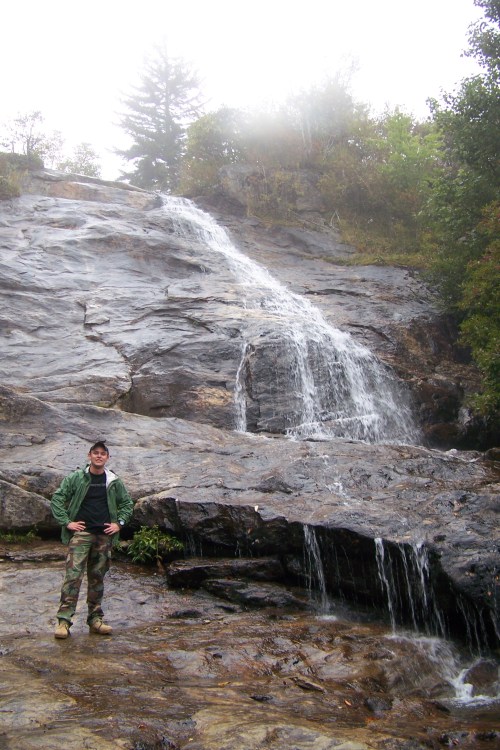
Upper Falls

100_9961

From the top of the Upper Falls

100_9962

Light rain, fog, lush spruce and wildflower growth

100_9965

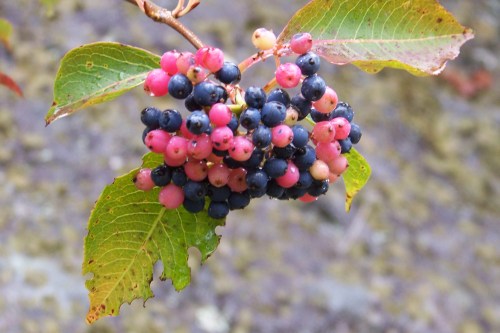
Viburnum sp?

100_9966

Any idea which species?

100_9968

Just above the Lower Falls

100_9969

Looking down over the Lower Falls

100_9971

Lower Falls

100_9977

Enjoying some time together

The day could have been a wash, driving 2 hours to see it rain. Upon approach, the fog seemed unavoidable. The light rain started soon after we started walking and continued almost the whole time. When we got to the top of the Upper Falls, thinking to just take a  quick look and head for the car, we found a spruce tree, rhododendron combination that was keeping the rock at creek’s edge dry. We sat down for a lunch and snooze. I walked upstream a bit while my son snoozed on. It was a quiet time together with no one on the trail all the way back. In route to the Lower Falls we crossed the “fields”, heather thicket really, with scattered wildflowers. The hike was shorter than we had planned because we didn’t really want to get up on bare, Black Balsam with the possibility of heavier rain or lightning, but it was pleasant and relaxed. We both agreed it was an enjoyable time together and in the woods (fields).


Read Full Post »

Early in 2001 my father passed on to the next life after a slow decline resulting from many and various ailments. I believe that it was a grace that he passed without knowing of 9/11. He fought in WWII receiving a bullet and multiple pieces of shrapnel near the German border. Every 4th of July he would hang a copy of the Declaration of Independence and an American flag on the living room mantle. As the years went on he added more evidence of his love of America and its freedoms, things like a small Statue of Liberty. I used to think how much the world changed during his lifetime. Afterall, TV had not been invented when he was born in 1922. Polio was a major killer; the War to End All Wars was a fresh scar; the roaring twenties had not succumbed to the Great Depression. During my formative years airplanes, bridges, skyscrappers, atomic energy, and space travel were among the top of the list of items and ideas that he talked about and learned about and visited. How the space race had resulted in a handheld calculator was amazing to him. The world had changed so much in one lifetime.

Now we hear that the world was forever changed by 9/11. In one sense, of course it was! We collectively look over our shoulder as a nation, wondering when or if it will happen again. But did it really change the world? Hasn’t every generation had at least one event that so penetrated the minds and hearts of the populace such that each person knows where they were when it happened? If you are old enough, do you remember where you were when JFK was assassinated? For my father’s generation the event that riveted their attention was Pearl Harbor. News traveled much slower the further back you go but there were terrors and plagues and perplexities for centuries. In 79 A.D. when Pliny the Younger described the flaming bombs of Vesuvius sinking ships in the harbor off Herculaneum while Pompeii was covered in noxious gases and pyroclastic flows, the world must have seemed to be at an end.

Do I attempt to diminish the severity and pain of 9/11? Do I not see the ways in which it changed how we do freedom in our land? By no means. But the cause of terror and pain has not changed. Because of sin there is stark evil and natural disaster in the world as there has been since the Fall of Adam. These adversities should call us as a nation back to God. We deteriorate; our nation’s demise is at hand, yet we see 9/11 and Antietam and Hurricane Katrina and Pearl Harbor as totally disconnected from our spiritual condition and God’s call to repent. Evil exists in the world because there have been and are evil people in the world. We must confront the evil in ourselves so that our enemies have no excuse for their evil acts against us and we have no compunction about attacking it when it comes.

I remember where I was on 9/11, watching the screen in my classroom as the first building hit earlier was burning and as the subsequent one was hit and the towers collapsed and students came into my room who wanted someone to make sense out of the chaos. In those first moments during my planning period before that screen I prayed that God would have mercy upon us as a nation. In many respects He has and He is but we must cry for it and act in ways commensurate with receiving mercy now more than ever because we drone on in our mundane, garden variety evils as if 9/11 never happened. God have mercy on us!

The world has changed but not so much.

Read Full Post »

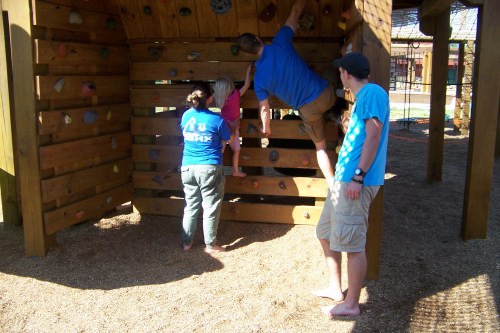
Labor Day Play

After a good sleep in we went to the park. It has all kinds of things to climb on and swing on. Active but chill, that’s my kind of holiday.

Read Full Post »

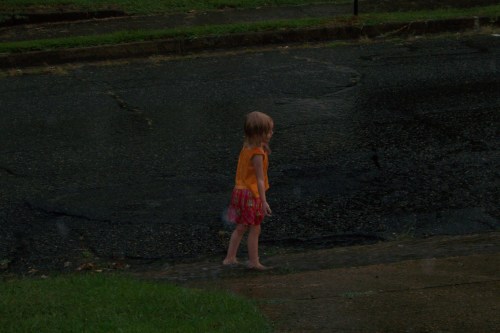
To paraphrase, children and grandchildren are a gift from the Lord. As distance and years pass it is harder to have quality time with either. My daughter commented that with a child you can do things that most adults (so called responsible adults) wouldn’t do. It is good that my grand-daughter has a mother who will play with her in the rain. It has been an exceptionally wet summer where I live, but 4 hours away where my daughter lives it has been an exceptionally dry summer. I’m thinking, “Oh, rain again.” My daughter is thinking, “Oh, rain again!” You have to supply intonation based on context.

Read Full Post »

Before I ever started rock climbing I used to hike… alot, thousands of miles over the years. In high school and college it was backpacking with day hikes to get in shape. I continued after marriage but increased responsibilities as time went along resulted in reduced overnight trips. Not to worry, because I used to take my green daypack, a child on my shoulders, and go. Summer, winter, it made little difference. About 15 years ago I scrambled into the more vertical sport so that the majority of hikes were approaches. I still climb but I see that climbing may have to be set aside in a few years (not slowing down at the moment, though). The time off from hiking just warms my desire to do some more. I like new places but I’m not shy about visiting old haunts. I have hiked (in a day or overnight) to Hump Mountain on the Tennessee/North Carolina border nearly 30 times since 1977. It has been my go to when someone wants to experience backpacking for the first time. I have hiked several times this summer, once to Purchase Knob (see previous blog entry). Several weeks before that hike I went with some new friends to South Mountains State Park. It has one hike that most anyone would enjoy and is not too overwhelming- High Shoals Falls.

The water was low at the falls, which is odd considering how much rain we have had. I guess the water level drops fast after just a few days of no rain. That didn’t dry our enthusiasm a bit. There was plenty to talk about and plenty to see along the way.

I enjoy getting to know people on a hike. You can talk about nature which leads to many subjects you might not otherwise find out about a person. They certainly learned some things about my spider research in college. I studied Agelenid intraspecies competition in the lab, the woods, and the desert. (Curious side note: As I am composing the number of spiderlings that just left their egg sack and are moving back and forth across my computer screen is growing. They are too small for my unaided eye to discern variety although P. tepidariorum (“common house spider”) is the most likely candidate.) There are about a baker’s dozen of Agelenid species in the US. I remember that most of my study involved the A. aperta from New Mexico and Arizona.

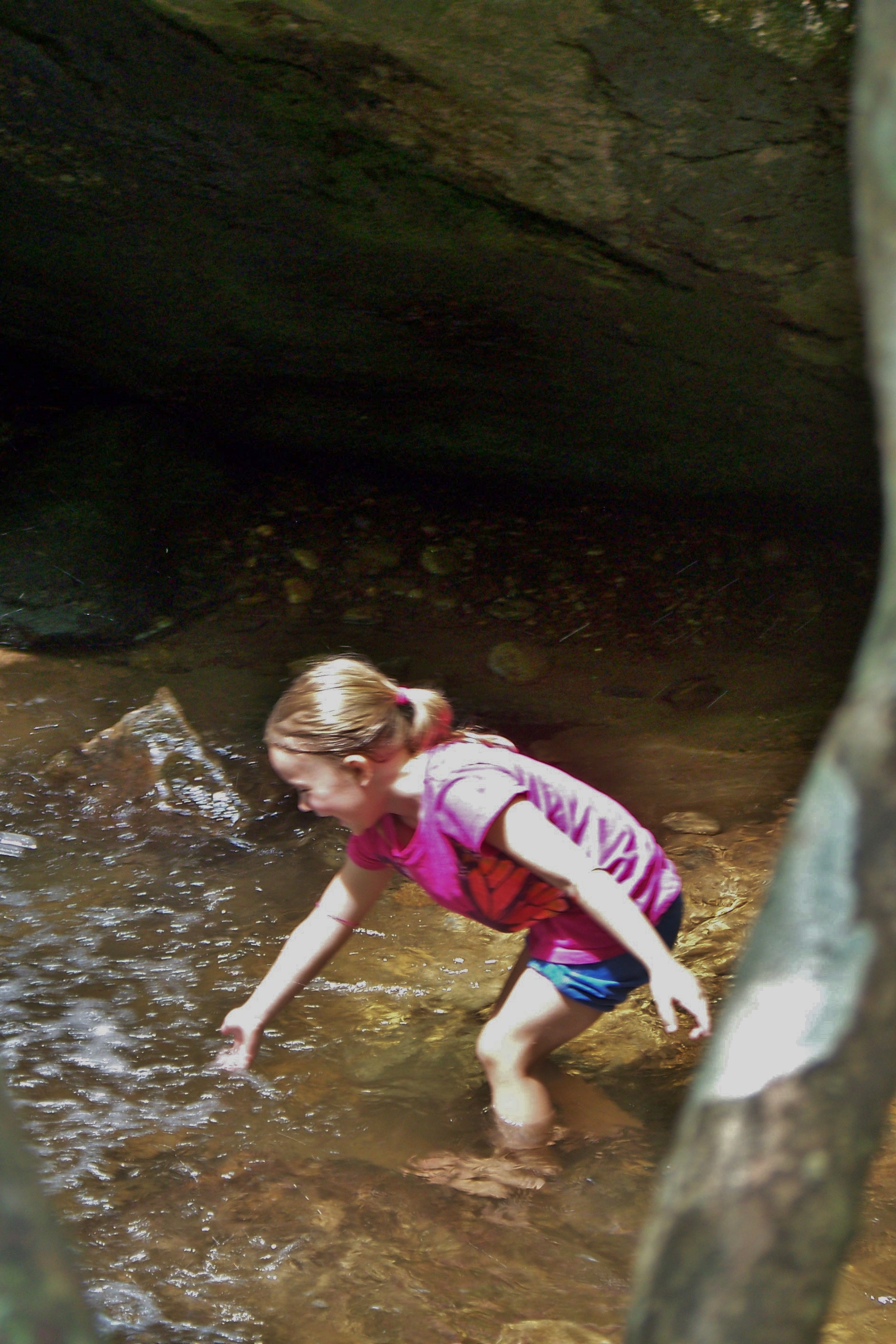
The picnic meal was particularly good- Mexican on the grill. I had hiked with the father and young children several other times to mountain tops. This was a nice change. We played in the creek several places, seeing crawdads and minnows. We talked about plant life along the trail both herbaceous and arborescent. It was an enjoyable day, the likes of which I’d like to repeat. We even left just before it began to rain. God gifted us with a beautiful day and good conversation.

Read Full Post »

Purchase Knob

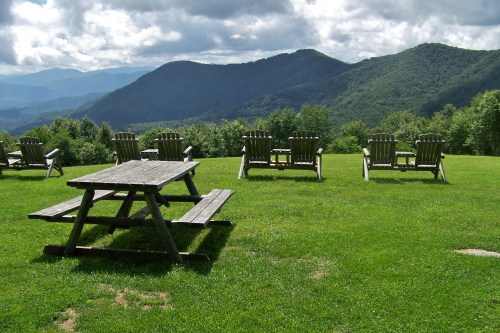
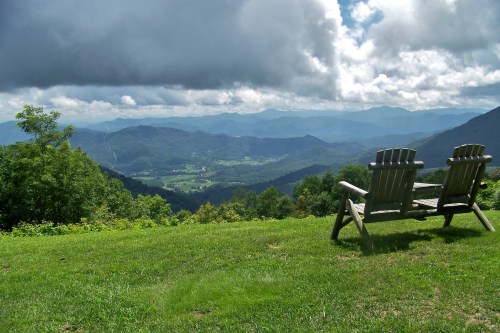
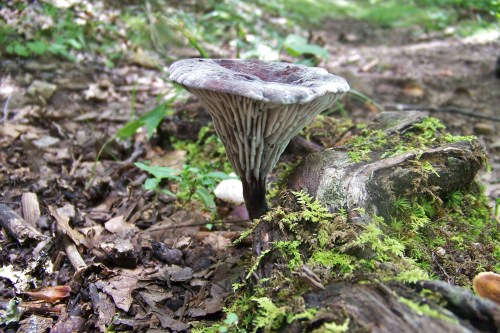
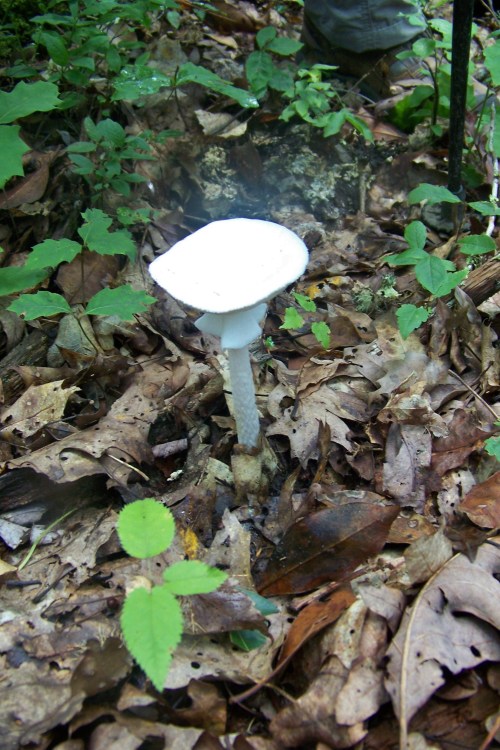
Before two weekends ago I had not seen any of my brothers for a year and a half, some for much longer. We had a cookout at my youngest brother’s house with spouses and a few children and grandchildren. During the conversation we planned a hike for Friday to the Purchase Knob area of the Smoky Mountains National Park. It is the location of the Appalachian Highlands Science Learning Center. The hike we took went along the border of “The Swag”, a Bed and Breakfast that allows hikers to visit their viewing lawn. The weather has been moist for a month and the fungi are out. With more time and patience I could have gotten some really good pictures of the abundant and colorful fruiting bodies of diverse mycelia. One of my sister-in-laws is known for her love and identification of wildflowers. She said she wants to know fungi better. Here’s a place to start.

000_0327

Cep or Penny Bun?

000_0328

Lush creek side

000_0331

Green Cracking Russula (Russula virescens)

000_0332

Students coming down from the Learning Center

000_0333

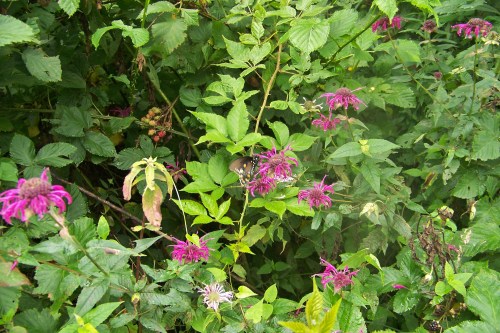
Bee Balm soothing a Pipevine Swallowtail

000_0335

Winesaps?

100_9815

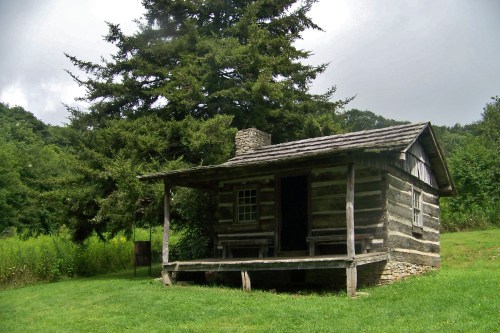
Furguson Cabin

100_9819

Black Earth Tongue

100_9824

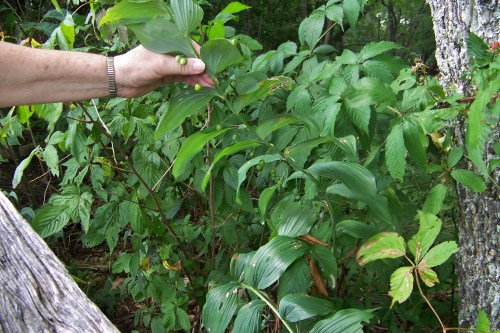
Doll’s-Eye or White Baneberry

100_9829

Yellow Wart (Amanita flavoconia)

100_9832

“Good Fences Make Good Neighbors”?

100_9843

Orange Peel Cup Mushroom

100_9847

White Coral Fungus

100_9854

Earth Cup Mushroom?

100_9856

Catch some rays and relax

100_9858

Maggie Valley

100_9859

Nice smiles! OK, I was trying to make sure the camera was working.

100_9866

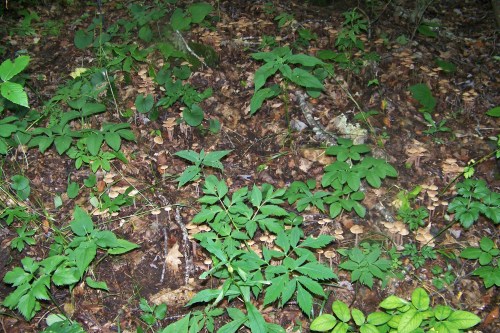
Great Solomon’s Seal (Polygonatum biflorum)

100_9867

Insulation, flight, camouflage, mating, ….versatile… not by chance!

100_9874

Coral Fungus

100_9876

Chanterelles?

100_9878

So many colorful varieties

100_9893

Death Angel

100_9896

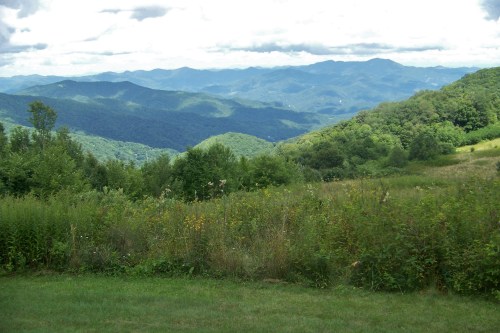
Taking in The Swag view

100_9899

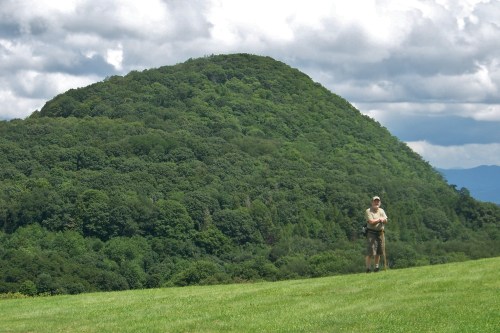
The Real Purchase Knob

100_9905

Hiding under a rock on top of the knob

100_9910

Do you see the fairy ring that I found near the top of Purchase Knob?

000_0320

Elegant Stinkhorn

The variety and beauty of God’s creation! I could go out every weekend and never get tired of learning and looking.

Read Full Post »

Rocking Chair

To and fro, there and back
I love a rocking chair
Floor and chair creak and crack
As back and forth I tear

Back and forth hard I go
I like to rock with flare
Recurved tips stem the flow
Making mishaps so rare

I can rock fast enough
To stir surrounding air
Long enough, plenty rough
To make a carpet bare

Mom rocked me on her knee
And yet she would declare
Mark my word, wait and see
His rocking all will wear

I rocked babes fast asleep
Secure in arms that bear
No crying, not a peep
Disturb babe, don’t you dare

Rocking is relaxing
Relieves the mind of care
Time for intense praying
Turns darkness into fair

Some prefer a TV
Recliner in man lair
Me, a rocker you see
Where I can grunt and stare

Write a poem rocking
Eat a bowl of soup there
Some essay concocting
Or read the Word and prayer

Worries come a-knocking
Decisions like sun’s glare
Before considering
To rocker I repair

When red flags go flying
As false ideas blare
Search for truth while rocking
And find where it does err

Slow, easy, day is done
Sort thoughts as combing hair
Hard, easy, sorrow, fun
Like runners are a pair

I decided that I wanted to write a poem that was on a different subject than my usual several favorites. I had come across Robert Louis Stevenson’s
“The Swing”, which I quite like. And I like swings very much, too, but most of
my motion while sitting pivots about a rocking chair. Here is how I write a poem.
Firstly, an idea for a poem comes to me, as reading “The Swing” had provided in this case,
or the first line or two of a poem rolls off my mind as I am considering an
idea. This first line or two or the first verse form the basis for the challenge
(perhaps game is a better word) that I begin. I constrain myself to writing
the rest of the poem with same rhyme scheme (number of syllables per line) at the very least. Frequently I use the same sound ending for the same lines in each verse, as in this poem. Sometimes I even constrain myself to the same tenor of the lines in each verse. For example, the following verse illustrates this idea:

Each new day God provides our need
He our bodies and spirits feed
Sometimes it feels like we are starved
It is then we are apt to plead

Lines 1 and 2 in this poem either communicate a blessing or command of God or a demand placed on our lives. Line 3 in each verse of the poem conveys a doubt or other faith struggle followed in line 4 by the solution or provision God gives. I know that my self-placed constraints are not necessary but it is part of the challenge that keeps wanting to write poetry, that plus a real strong feel that poetry should rhyme. A humorous side note to this poem is that I had written seven verses minus one line without much difficulty, but the last line would just not yield itself. So I did an exercise I generally like to avoid, partly because it seems like cheating in the game. I wrote out all of the words ending in the “-are” sound that I could think of. At this point I thought, “Wow, all of those expressive terms and I’m not using them.” That’s when the poem ballooned into eleven verses. Oh, there is one other constraining “rule” I place upon myself that is a higher priority than the rest. The lines must tell the truth. Certainly I mean philosophically, but also I mean personally. For example, my mom did rock me on her knee, and though I am not quoting what she said about my rocking wearing on people, she did comment many times about how I wore her out watching me and I how could wear out a rocking chair. So the crazy thing about you reading this poem, if you understood all that it says, is that you know more about me than many people that I have spent years around.

Read Full Post »

All the political hubbub with no real solutions. All the anxiety ridden news reports without real hope. All the suggested intrusions on freedom with no real security. We are not going to make progress and are going to regress rapidly without turning to the one and only solution. 

This poem actually began as two conflicting thoughts and considering the circumstances under which they came about. It seems to me now the first verse does not even go with the rest of the poem so I will separate it with extra space. See what you think:

I write poetry to keep from being bored
Focus mind when feet are nailed to a floorboard
Teasing out thoughts that are both far flung and near
Sorting through the hurtful and that which is dear

When I think of all the wrong that’s in the world
Murders and abuse and war banners unfurled
My mind grabs for solutions to bring to bear
All beyond reach in a world cruel and unfair

There’s the pain to loved ones from me and others
Scarred relationships start with father, mothers
Friends and neighbors had words and are offended
Words out, actions done, cannot be rescinded

Is there no hope for mankind, is it all gloom?
Tearing down self and others, is this our doom?
No, there is hope, but it’s not in self-help plans
Nor is it in the police state or gun bans

Our hope is in God’s Son through His sacrifice
His death on the cross for sin paid the full price
By trusting in His work we have peace with God
Relationship growing in place of the rod

Repentance and forgiveness we have in Him
We may pass to others as a precious gem
When seeking to forgive and be forgiven
We have with sin and disharmony striven

This makes possible reconciliation
Moving past hurt beginning restoration
Extending peace to strangers and enemies
Doing right by neighbors knowing that God sees

Hope for the future and for the present too
Pointing people to purpose both real and true
Spending time and resources to relieve pain
Pointing to the Savior in Whom is real gain

Read Full Post »

In danger of living as mere men
Calling survival a win
We were meant for more than bear and grin
In our fight with self and sin

But the mundane creeps in day by day
And we lose sight of the way
To walk in the Spirit and to stay
In His Word and ceaselessly pray

To be bold in witness to the lost
Kind, no relational frost
Not by every wind of doctrine tossed
In holy living count the cost

Recall we’re not the vine but the limb
More than conquerors through Him
Each dead work from the vine He must trim
The source of all life is the stem

Walk by the Spirit, quit the flesh race
All of life is lived by grace
At God’s behest and at His own pace
With His help we finish the race

Read Full Post »

     On July 7th The Ark Encounter opened in Williamstown, Kentucky, as a full-sized representation of the biblical description. Bill Nye said he wished that the ark in Kentucky had never been built because it would “indoctrinate children into this extraordinary and outlandish, unscientific point of view.” What many public school science classes have been doing for years is this very type of indoctrination in Big Bang Cosmology and Evolution, rather than in biblical literacy. The result has been that either those people who trust secular science (i.e. Scientism-the belief that science answers all questions that can be answered) have written off the Bible as Bill Nye has done, or many who believe the Bible have written off Scientism and all science, resulting in the science illiteracy Bill Nye decries. But there is a real alternative that does not oppose the methods of experimental science nor deny the literal truth of God’s Word. Science is a very good tool for exploring the world and solving problems, but it has its limits in explaining truth. The Bible points to realities that may be known beyond empirical data while not contradicting plain evidence. For instance, the apostles were eyewitness to evidence concerning the resurrection of Christ, which no longer can be tested other than historically. They recorded what they saw and experienced (I John 1:1-4; I Peter 5:1; Acts 26:12-18). Christians accept their eyewitness authority.

     If the alternative of a Biblical Worldview coupled with useful science is to be considered, it must be able to predict what we should find in the world and explain what we see. I believe that a literal reading of the Bible actually does that better than Scientism (a subset of Naturalism which encompasses Big Bang Cosmology and Evolution). Dr. Robert Carter of Creation Ministries International presents examples of how these statements are true. I intend in the few words I have left to present some of the evidence he outlines. These evidences answer the following question: What would we observe and what would be our understanding of the world if the biblical text is true? As a first example, if God created Adam and Eve and languages resulted from the confusion at Babel, then races do not exist. Adam and Eve could have had the genetic diversity that results in every skin and hair color and facial characteristic. Is it true? There have only been about 150 generations since Noah and his wife and people of all colors and locales have 99+% DNA in common. Thoroughly biracial parents have had fraternal twins, one significantly darker and one significantly lighter than the parents. If we really believed the Bible, racism would be an immediate non-point.

     What would we expect to see if the Flood was real and worldwide? There would be evidence of worldwide destruction from massive hurricane winds, massive erosion and deposition episodes, and volcanic action. Sedimentary Rocks show evidence of these things. For example, fossils are frequently formed in alternating layers with volcanic flows and ash. Also, large amounts of sediments needing large amounts of water, dead plants and animals all dumped on the continents and later turned to rock do exist. The catastrophic and sudden nature of fossil and sediment formation is seen in polystrate fossils (fossils through numerous layers), tightly folded rock layers that must have been soft when they folded or they would have cracked, and sediment layers of continental extent (that is, spreading over the whole continent as with the Tapeat Sandstone in North America). As the flood progressed, amazingly large erosion events should be expected. We indeed see these in the great canyons of the world, which show evidence of being remnants of catastrophic events rather results of slow river erosion. The suddenness is further indicated by the lack of erosion within the fossil record and conformities (interfaces (meeting and interaction) of two differing rock layers). One such interface in the Grand Canyon (Hermit Shale and Coconimo Sandstone) has no erosion even though secular geologists claim there is a 12 million year gap where they meet.

     There is far more that could be said on the deposition and erosion of layers and fossil formation alone and on cosmology, biology, and the rest of geology, but these give a few telling examples. A literal reading of the Bible is a much better and more powerful predictor of the world as we see it than Scientism. It is amazing, credible, scientific, and far more Mr. Nye.

Read Full Post »

Await the Fall

It is perhaps an odd subject for a midsummer’s evening, or maybe not after another day of sweating profusely at chores and listening to the day’s thunder rolling over the mountain. The oddity really comes down to how it came about. The first two lines I wrote last fall one morning looking out the window by my desk before work was to begin. The pleasant thoughts that it brought to me caused me to think it was the beginning of many more thoughts but I laid it aside on  my desk until a break. I found it when cleaning up papers at the beginning of summer. I took it home and laid it next to my rocking chair where I read and pay bills and think. It laid there for a month. The next time I saw it I thought, now or never. Don’t construe the poem to mean that I dislike summer. There is much to like about summer, but we all have preferences and mine is Fall. I am thankful to God to live in an environment where there is a definite change of seasons and deciduous trees to mark the occasions.
A fair, crisp morning
Grass glistens with frost
Birds' feathers fluffed up
That heat not be lost

Chill braces the lungs
Nips at nose and cheeks
Rescue from summer's
Many draining weeks

Oh, how I love Fall
When insects retreat
Reptiles slow and stall
Dry mildews defeat

No more sweat required
Only now by choice
Humidity low
Lightens heart and voice

Skies are clearer now
Leaves have joyful hues
Stars are brighter, too
Grander mountain views

Change is in the air
Every front attests
Animals store food
For their winter rests

Crops have all matured
Bring the harvest in
Celebrate bounty
With neighbors and kin

Yellow blooms abound
Earth tones more I see
Dried herb fragrances
Nature's potpourri

Outdoor things to do
Cool air is the best
All await the Fall
For change and for rest

Read Full Post »

In the book “10 Questions to Diagnose Your Spiritual Health” by Donald 
Whitney, the second question he asks is, "Are you governed increasingly 
by God’s Word?" Following is an outline Bible study that I put together 
based on that chapter. In parentheses are my thoughts and partial answers
to questions.
1. What is the most valuable object in the world?
   Rare, beautiful, large, or necessities of life perhaps
   Bible- likened to the basic of life
       Amos 8:11, Jeremiah 15:16, Matthew 4:4
(Without the Bible we would have no purpose, direction, or explanation 
of salvation and godly living.)
2. Psalm 119:72 Do you value it that highly?
   (My evidence of valuing the Bible comes with reading, studying and 
    heeding what it says.)
3.Does the ready availability of God’s Word cause you to de-emphasize 
  its importance in your thinking and priorities?     
  Prov. 29:18, Hebrews 4:12, I Peter 2:2
  (I would value it more if it were about to be taken away or even if 
   I had to hide it and read it in secret.)
4. What practical ways do you value the Word of God on a daily or 
   regular basis?
   (I value God’s Word by reading, studying, memorizing,hearing it 
    preached, sharing it with others, seeking to live by it, and 
    changing my views based on its words.)
5. Do you consciously inquire as to what the Bible says about specific
   areas of life? If so, what are some areas?
   (I do inquire about what the Bible says about His will for me, what
    is right and wrong, how I should interact with my family, neighbors,
    church members, fellow citizens,the lost, and people I am offended by,
    and seek to live by it.
6.Do you ask spiritual leaders to help you apply Scripture in particular
  situations? Do you literally open the Bible to search for God’s will?
  (A quote by Octavious Winslow on p.31-32 may be summarized as "nothing 
   perhaps more stongly indicates the tone of a believer's spirituality,
   than the light in which the Scriptures are regarded by him.")
7. What is your response to spending time in God’s Word?
   Psalm 119:47, 48, 97, 113,119, 127, 163
   “Indifference to truth is a mark of death.” John Piper
   (David says numerous times that he loves God’s Word.
    Indifference to God’s Word is little different than hatred.)
8. Jesus, the Living Word, quotes and obeys the written Word of God 
   because it…
   a. contains truth   John 17:17
   b. contains the Father’s will and words   John 14:23-24
   c. is sufficient for all life and godliness   2 Timothy 3:16
   d. is an example for us Luke 10:26; 1 Corinthians 10:11
9.The human Jesus lived by and memorized the written Word of God
  Matthew 4:4
  (Can you imagine Jesus as a boy memorizing Scripture? OK, I'm not
   too into "sanctified imagination when it comes to Scripture, but
   seriously, when He was running over a verse, did He ever muse, 
   "Did I say that before (a long time ago)?"
Isaiah 8:20: "To the Law and to the Testimony"
             (is like saying “What does the Bible say?”)
10. How important is Scripture? Deut. 32:47
    (“no dawn”, “no light”- spiritually dead Is 8:20
     “it is your life” Dt 32:47)
11. What does the Bible say?
    Example: “God helps those who help themselves.”
              No, Romans 5:6-8 and Galatians 3:2-5
    (Rom 5:“helpless”; sanctification the same Gal 3;
     An argument could be made that helping yourself is like being 
     careful “walk and please God” and lead a “quiet life” (I Thess 4:1-12)
     and God blesses your obedience and diligence, but helping yourself
     instead of clinging to God to even do good works is humanism.)
12.  Other examples to explore: How should my child be educated?
     How would God have me vote in the next election?
     Should I make a purchase (What is its purpose?)?
     What should I be doing and not doing in my church?
     Do we have qualified biblical leaders?
     How should our church reach people with the gospel and what is my part?
     What should I do with my life when I retire?
     (In other words, “all of life-events and choices great and small-
      should be governed by the Word of God.” p.35)
13. Psalm 119:105, Acts 18:26 Have you within the last several years
    revised your beliefs and actions based on what you learned in 
    God’s Word?
    (I believe I have gained a balance in my understanding between the
     importance of covenants and times in God’s economy for the end.
     I value relationships more now than formerly.
     I crave and take more opportunity for witness as I become more
     convinced of the judgment to come.
     I have a different view of divorce and remarriage.)
14. How might you deepen your desire for God’s Word?
    (Deepen your desire for God’s Word by
     reading it, listening to sermons, meditating, praying Scripture,
     seeking out promises, searching Scriptures for life’s answers,
     training yourself to ask,“How does the Bible speak to this?”)
15. Examine your spiritual health by asking yourself,
    “Am I governed increasingly by God’s Word?"

Read Full Post »

« Newer Posts - Older Posts »

Myrela

Art, health, civilizations, photography, nature, books, recipes, etc.

Overflows from the Heart

"But the things that proceed out of the mouth come from the heart…" Matthew 15:18

CreatorWorship

Pointing to the One who made, saved, and sustains