Feeds:
Posts
Comments

Posts Tagged ‘God Thoughts’

Somewhere recently in my blogging, I described some of the process for my writing of poetry. Not evidently being so well organized as I would have liked, I cannot find it. Oh well, I can focus on the one thought I had pertaining to this present poem. The structure of the poem is sometimes intentional and other times comes about in the writing of it. This poem represents the latter. Once the structure is revealed, I make every effort to stick to it and rhyme to boot. The structure of the poem ended up being chiastic in form and meaning. I urge you to utilize the three middle verses in order to meditate on the “far more of them”.

One yet three
How can this be?

One in His essence
Three person presence

Language and logic cannot avail
To understand or explain or tell

Father God reigning
Creator, sustaining

Son Divine Savior
Purchased God’s favor

Spirit indwelling
Righteous enabling

Far more of them does the Bible tell
Its truth over falsehoods will prevail

In concert they act
Not from three detract

Believe and see
One yet three

Read Full Post »

What does the Bible teach and who is it written for?

These questions are covered in questions 6 and 7 of the Baptist Catechism:

Question 6: May all men make use of the Scriptures?
Answer: All men are not only permitted, but commanded and exhorted, to read, hear, and understand the Scriptures.
Question 7: What do the Scriptures mainly teach?
Answer: The Scriptures mainly teach what man is to believe about God and what duty God requires of man.

It is at moments like these that I have to remind myself that the catechism is a concise question and answer format. That format has its significant advantages, making the main things the main things, but it does leave some holes that are hard to not comment on. The one detail I feel compelled to add about question 6 is “believe”. All men are commanded and exhorted to read, hear, understand, and believe the Scriptures. Examples include the command to the Philippian jailer to “believe on the Lord Jesus, and you will be saved” (Acts 16:31), “there is salvation in no one else” (Acts 4:12), “Jesus said to her, “I am the resurrection and the life; he who believes in Me will live even if he dies” (John 11:25), and “unless you believe that I am He, you will die in your sins.” (John 8:24)

The succinct answer to question 7 is spot on. It is very God-centered rather than emphasizing what the sinner will get out of trusting God. The Scripture does list many benefits to trusting and obeying God, but these point also to His goodness and justice. I only feel compelled to clarify that our “duty God requires of man” is as follows: “This is the work of God, that you believe in Him whom He has sent.” (John 6:29) since “by the works of the Law no flesh will be justified in His sight.” (Romans 3:20)

Take note of the fact that the Bible does not look to any external source of authority or truth. Truly, Scripture alone properly understood by the guidance of the Holy Spirit is our source of truth and practice. We plead with all men to submit to it as such, because it brings life and godliness, peace and joy, purpose and direction.

Read Full Post »

Can you think of anything infallible? There are certainly things that are trustworthy and consistent, but only two things are truly infallible, God and His Word.

Question 4: What is the Word of God?
Answer: The Scriptures of the Old and New Testaments, being given by divine inspiration, are the Word of God, the only infallible rule of faith and practice.
2 Peter 1:21; 2 Timothy 3:16, 17; Isaiah 8:20; Matthew 5:17- 18; 1 Corinthians 2:13; Psalm 19:7-8.

Contained in a limited 66 books of Old and New Testament as witnessed by internal evidence (1), these were then confirmed by the church fathers and counsels as the whole of the Bible, the Word of God (2).

This communication from God is most narrowly declared to be the “only infallible rule”. Only is quite the exclusive word and declaration. Cannot experience or conscience or reason or observation or evidence also be used? These may only be used as they agree with and confirm what the Word of God says, but all of these other rules are fallible. They do not hold a candle to the brightness in trustworthiness of God’s Word. We must submit to this Bible as our rule, our guide, our instructor and manager, the very words from our King.

To what part of life does the Scripture apply? It should have full reign over “faith and practice”, belief and conduct, which includes perspective, intention, speech, emotion (3) Right practice arises from right belief and right belief arises from right teaching which arises from truth which arises from the Word of God. If you base your faith and practice on any other foundation, you will be led astray and ruined.

God’s Word is declared to be truth by Jesus: “Your Word is truth.” (John 17:17b) The source of God’s Word is the inspiration of God resting upon the biblical authors (2 Timothy 3:16), directed or moved by the Holy Spirit (2 Peter 1:20-21).

In a world awash with truth claims from Empiricism to Historicity to Existentialism to Spiritism, the Bible stands out by boldly claiming to have an exclusive corner on truth. Jesus, as its author and defender, claims Himself to be “the way, the truth, and the life, no one comes to the Father except through Him.” (John 14:6) All other truths, for the devout follower of Christ, are considered true to the extent that they line up with the Word of God.

May our practical (actual lived out) theology grow in alignment to our stated (what we argue for) theology.

  1. “Thus says the Lord”, 2 Peter 3:14-16, “The word of the Lord came to me saying”, John 5:37, 12:49, etc
  2. https://www.historyinthebible.com/supplementary_pages/church_fathers.html, https://en.wikipedia.org/wiki/Development_of_the_New_Testament_canon
  3. In all of this list, our ability to perfectly align our faith and practice to God’s Word is beyond our capabilities, and no more so that in our short-term emotional responses, but we can do as David did, pour out our woes and come around to declaring God’s goodness, righteousness, and provision.

Read Full Post »

A brother in Christ was laughing with me about how I make lists. It set me to thinking about how I organize, deal with, and convey information. I do make lists, either numbered or bulleted (1), often indented much like outlines I enjoyed in school, and metaphors. Somehow, those seem worlds apart, lists and metaphors, but they seem to delineate the two most divergent (2) types of human thinking, analytical and creative.

So, when I run across lists or metaphors in the Bible, my mind and emotions sit up and take notice. Reading through the Psalms recently I came to the following verses in Psalm 84:5-7:

“How blessed is the man whose strength is in You,
In whose heart are the highways to Zion!
Passing through the valley of Baca they make it a spring;
The early rain also covers it with blessings.
They go from strength to strength,
Every one of them appears before God in Zion.”

Heart as highway is certainly metaphorical, but initially I struggled with what it meant, how it represented the heart. Two sources of confusion were 1) What is the antecedent of “it”? and 2) What is the meaning of the metaphor in light of the change from inanimate, singular “it” to personal, plural “they” and “everyone”? Further, confusion arises from how to end verse 5. Many translators believe that “to Zion” is implied because verse 7 ends “in Zion.” Translations without this phrase struggle to make sense out of the words. The context of the psalm is the temple in Zion.

Clarity came to me by zooming out to see what the overall message was before making inroads (3) into the details of the metaphor. How does one gain strength in God? He is a believer, a follower, a disciple, a worshipper. These children of God are blessed because each one makes his heart to contain multiple highways for God, to God, to and for blessing, to and for worship, and to and for righteousness.

When these hearts pass through the valley of weeping (“Baca”), they make them into springs. The early rains (those needed to sprout the crop) make blessings (literally, pools (4)). These highways in the blessed ones’ hearts are wet, initially with tears, but ultimately with life-giving springs and pools. The antecedent of “it” is valley of Baca. The antecedent of “they” is the ones’ whose hearts are highways.

“Strength to strength” reminds me of the phrase in Romans 1:17, “faith to faith”, which I find to be very confusing words. I don’t know exactly how to interpret it, but the passage certainly conveys a transition from the strength of trusting in God through the trials of the valley of weeping to the triumphant appearance before God for worship (5).

And what is the ultimate point to be understood? Those who trust in God have strength and blessing even in the midst of sorrow, and they mark the world with that blessing, being enabled (strengthened) to appear before God for worship. So, “direct your hearts to the Lord and serve Him alone” (1 Samuel 7:3 (6)), and He will bless and strengthen you.

  1. https://clearlyscientific.com/best-practice-writing-formatting-bulleted-lists/#:~:text=Sub-bullets%20should%20be%20indented%20further%20in,%20and%20it%E2%80%99s%20worth
  2. I am using the word divergent, not as opposed to convergent thinking, but in the usual way of considering the distance between the two, as in right and left brain.
  3. I hope that you didn’t miss that one.
  4. https://biblehub.com/interlinear/psalms/84.htm
  5. I keep assuming worship because Zion is where the temple was and that was where the children of Israel worshipped. The wider context of the psalm is about worship before God in the temple.
  6. 2 Chronicles 11:16-17, Isaiah 51:1, Hosea 6:3

Read Full Post »

His Voice

Psalm 29 exalts the glory of God revealed through the voice of the Lord. When I am giving praise to Him, I think to praise His attributes, His works, His name, and His mercy and grace, but not His voice. His voice is a metaphor for His communication, His Word, which is audible and written and the very essence of His Son (Hebrews 1:1-2, John 1:1, 14). His voice, i.e. His Word, is eternal, powerful, life-giving, efficacious, and instructive.

So efficacious is His voice that it spoke all things into existence from nothing. He spoke man into existence (Genesis 1:26), completing the task with His hands and His breath (Genesis 2:7), His very Spirit.

His voice has given manifestation to His will, His very intentions which are accomplished (Isaiah 55:11). He spoke audibly to Moses in the cloud and in the tabernacle, instructing Israel in His statutes and ways. He spoke to Jesus in the hearing of the people in order to exalt and confirm His Son. He, Jesus, spoke many words of healing, salvation, condemnation, and instruction for the purpose of revealing who He is and His power. He spoke again to Saul on the road to Damascus in order to ordain him to build the church among the Gentiles and extend God’s communication to His people.

He will speak again to raise the dead, judge the wicked, reward those who He has declared righteous, and institute His personal and eternal rule.

The psalmist emphasizes the glory and sovereignty of God’s voice, but he concludes by proclaiming that God will give strength and peace to His people. Praise God for His mighty voice!

Read Full Post »

Psalm 65 is a tremendous call to worship. It highlights the marvelous abundance of God toward people and the earth. It emphasizes both His spiritual and physical abundance.

Having been asked to read Psalm 65 as the call to worship this morning, I read through it several times. Then I read it in several different translations. It was with difficulty that I got past the first phrase of verse 1. It reads variously as follows: “There will be silence before You, and praise in Zion, O God” (NASB), “Praise is due to you, O God, in Zion” (ESV), “Praise awaits you, our God, in Zion” (NIV), “Praise waiteth for thee, O God, in Sion” (KV), “Praise is rightfully Yours, God, in Zion” (HCSB), “God, you will be praised in Jerusalem.” (NCV). To my reading, there are three interpretations of whatever is going on in Hebrew concerning praise of God: Praise of God 1) comes through silence, 2) is due Him, or 3) awaits or will be coming.

Seeing that these three translation routes are significantly different, I was somewhat confused. Then I found a commentary online (1) that shed light on the source of the confusion. The literal Hebrew translation of the phrase reads, “to you silence praise Oh God in Zion.” (2) Unlike English wherein adjectives precede nouns, Hebrew adjectives and articles follow nouns (3) So, in English, I understand the phrase to read “praise silence”. In my everyday way of thinking, that sounds like “calm before the storm”. In other words, waiting to praise, anticipating praise, praise that should momentarily happen (is due), and praising by silence (meditating, considering) do all make sense.

Verse one concludes with praise acted upon through performing vows made. Given what follows, it occurs to me that contemplative silence is praise intended and thought, vows performed is praise acted out, and the rest of psalm is praise pronounced.

Then David pours out praise. In verses 2-5a, he praises God for the following spiritual blessings to believers: 1) hearing prayer, 2) forgiving sin, 3) choosing His own, 4) bringing them near, 5) satisfying them (4), and 6) answering prayer by awesome works.

Verses 5b through 8 praise God for His sovereign control of earth and its peoples, a great blessing in what otherwise would be chaos. David uses some illuminating and endearing word pictures throughout the rest of the psalm. Consider the ones related to His sovereignty. How far do people trust God? Answer: to the “ends of the earth and the farthest sea”. That pretty much covers everywhere. God controls the roaring seas and waves is an apt word picture for the “tumult of the peoples”. What is the full extent of where people are who are in awe of His signs? Answer: “the dawn and sunset”. And these “shout for joy”, meaning the peoples are overjoyed at His wonders.

The description of God’s provisioning through the earth’s abundance in verses 9-13 is not hyperbole. Water, grain, pastures with their flocks “overflow”, “greatly enrich”, “full”, “abundantly”, “bounty”, “drip with fatness”, “drip”, “gird themselves”, “clothed”, “covered”, “rejoicing”, and “shout for joy, yes, they sing”. David had been a shepherd, but he knew of farming. I enjoy his word picture of the furrows watered abundantly, settling and softening its ridges, so that its growth is blessed (v. 10). For a plowed field hardened by sunlight and lack of rain this is a reality, but the word picture conveys a sense of how the plants (grains, vegetables, or grass) are watered without ever mentioning them.

We are not an agrarian society, so that our praise may go in other directions, and yet, no one may prosper if the agricultural pursuits do not prosper. They are primary to all other life pursuits. We can all understand how God blesses us through His benevolent provision of food. Certainly, His kind providence extends to all of our needs and many of our desires. Life is good, because God is good.

Being largely concrete and tactile when it comes to our desires and feelings, I pray that God would enable us to gain a deeper conceptual understanding and trust of His attributes, yes, of His person through His works on our behalf. His great name which represents all that He is and does is to be praised.

  1. I did and you should read the statement of faith for any commentary online before you start accepting any significant counsel from online sources. It was solid.
  2. https://www.bibleref.com/Psalms/65/Psalm-65-11.html
  3. https://www.hebrewpod101.com/blog/2020/08/07/hebrew-word-order/#4 Any comments that I make about translation in Hebrew or Greek do not come from study of those languages, but rather from references I seek out for understanding.
  4. 4) and 5) are accomplished through His temple, symbolizing God’s presence with His people and their worship of Him.

Read Full Post »

I was raised to do the very best at anything that I attempted. That is good and agrees with the Scripture that says, “Whatever you do, do your work heartily, as for the Lord rather than for men, knowing that from the Lord you will receive the reward of the inheritance. It is the Lord Christ whom you serve.” (Colossians 3:23-24) In context that is speaking to slaves, but it must surely include employees, and in reality, all who belong to Christ. As it says in 1 Corinthians 10:31, “Whatever you do, do your work heartily, as for the Lord rather than for men, knowing that from the Lord you will receive the reward of the inheritance. It is the Lord Christ whom you serve.” We cannot do less than our best.

But my upbringing extended beyond that. I was put under considerable pressure to be really good at all that I did.

My little brain and emotions interpreted that to mean that I was supposed to be the best at whatever I did. Then, because I never seemed to meet my father’s expectations, I strove to be the best at a good many things and did not accept less than excellent or even perfect in all that I attempted. It is obvious where this is headed. I was frustrated, angry, and depressed because I didn’t meet up to my own or my perceived expectations from others. I had a deep-seated fear of being found out to be a fraud because I didn’t know how to do something.

Praise be to God that I have been rescued from the guilt and shame of that thinking. But old habits and patterns die hard. I was on a walk today, enjoying the exercise and the beauty of the view from the hill I was surmounting, when a tune came to me, Minuet in G Major by Bach. I was joyously pacing my steps by it. Then a sudden flash of sadness came across me and I felt as if tears would well up within me. I took piano lessons for seven years when I was a child, deeply desiring to succeed at it. I could in fact play quite hard pieces, but I was never able, though I try real hard, to sit down and play most hymns from a hymnbook so that others might sing along. It frustrated me that I was not really good at the piano and here all these years later there was still this tinge of regret and sorrow.

But God has been rich in His grace toward me. The next thoughts that came to my mind as I neared the top of the hill were of a thankful sort. Most of what I had desired and dreamed of attempted and pursued and trained for, frustrated over, and failed at had fallen by the wayside. In its placed He has developed other talents, pursuits, compassions, joys for which He has made me and with which He is pleased. I still try my best to do my best, but I don’t need to be the best and far less than perfect is acceptable and pleasing. I am more content with who I am and what I can do than ever in my life, and that is better than best. In those moments when I regress, I have opportunity to repent and find rest in who He has made me to be. All glory be to His name. He is a loving, patient, kind, and caring teacher and guide.

Read Full Post »

Recently I have learned a new hymn, which is really not new having been published in 1850 by Aaron R. Wolfe. It so affected me that I sang it at home several times and began to add words. You may listen to the hymn at Complete in Thee and read about it at Hymnary.org. Following are the words that I added:

The tempter oft does me accuse
By Christ’s great strength I may refuse
The tempter’s snare and rather see
Christ’s victory, complete in Thee

When hardship causes me to fear
Inadequacies* then appear
No condemnation now I see
Christ all in all, complete in Thee

No longer now a slave to sin
Over the flesh and world I win
Your sacrifice has set me free
Fully absolved, complete in Thee

Understanding and accepting my inadequacies, without allowing them to define me, keeps me humble and focused on God’s all sufficient grace, my only hope. I want to triumph through Him and by His grace to His glory. Do use the links above to learn this good hymn.

*In the second line of the second verse, “Inadequacies” is just the term that explains my go to reaction, but it doesn’t sing well. So, for the sake of singing, “My failures frequently” serves as a decent substitute.

Read Full Post »

Our eighth grandchild arrived on March 9th at just after 4 AM, weighing 8 lbs 2.5 oz and 19″ long. He and his mother are healthy. I write blessing poems for my grandchildren (“Blessing of ERB”, “Be Strong”, “The LORD Has Remembered His Love and Truth”, “Work With God”, “Favored Pearl”, “Joined to God”, “Little Miss Bountiful”). This one, due to my physical and mental fatigue I suspect, took longer to come. May God bless this child for His purposes.

Joel praise the God who is
And was and ever will be
‘Yahweh is God’ this name His
Covenant Keeper is He

Trust early God’s saving grace
Pursue Him with all your might
Unencumbered run the race
By laying aside the trite

Valiant for eternal truth
Defending it by His Word
Brave to stand up from your youth
With discernment early gird

This world is no friend of yours
Trust always in God’s great strength
Its siren songs bring no cures
His rewards will come at length

Master Francis be alert
Act like a man and be strong
Stand strong in faith, sin avert
His coming will not be long

Read Full Post »

I read the book of Titus recently and came away reflecting on the contrasts of our sinful past, our God altered present, and our glory bound future. Paul speaks some ugly things about Cretans but makes it clear that all we sinners share the same ground. The difference for believers is that Christ, “to rescue me from danger, interposed His precious blood.”* Paul wanted Titus to silence the “empty talkers” and “liars” who “deny Him”, so that they will not “upset whole families” on the one hand, and “be sound in the faith” on the other. This reminds me that we must stop soft peddling the Gospel because it is not true to God or His Word and because sinners need to hear the truth of the desperation of their condition in order to be saved. The following poem came slowly with much labor, but I think the result communicates the essence of the passage (Titus 1:10-16, 2:11-14).

Lazy and rebellious
You know the kind
Hateful and pugnacious
A good one hard to find

Foolish, godless, enslaved
And such were we
Deceivers and deceived
Who truth refused to see

Defiled, unbelieving
Claim to know God
Worthless for well-doing
Perverse things get the nod

God’s grace has now appeared
Salvation come
Ungodliness denied
We more righteous become

For blessed hope looking
Glory of Christ
Savior and God stooping
His redemption sufficed

From every lawless deed
To purify
For Himself His own breed
Ardent good works thereby

*from the hymn “Come Thou Fount of Every Blessing”

Read Full Post »

20200713_155431

Blue Ridge Parkway Milestone

I enjoy the occasional foray into the realm of etymology. Word origin provides insight into the many and varied meanings and connotations of words and metaphors. There is a humorous twist on the origin of the terms mile and milestone. I assumed that since mile is a thoroughly English measurement of distance that the word, though perhaps not the concept, came from bloody ole England. Afterall, the U.S. is the only major country in the world to still be using the English system. But no, when traced back, mile comes from the Latin mil, or one thousand, which is quite base ten, or metric. Milestones then were stone markers called mille passus, meaning one thousand paces (1), along Roman roads. They were first placed every one thousand steps along the Apian Way out of Rome. Even then they would not have actually paced off the distance, but would have used a standard chain or rope length, the stade (eight stades to a mile). (2)

Etymology was only a small part of why I’m writing this blog entry, but it is fascinating. Metaphorically, milestones are visual, emotional, mental, or group markers for significant events or changes. Milestones typically include salvation, graduations from educational institutions, marriage, arrival of children, job changes or promotions, retirement, lifestyle changes, or significant personal goals reached like weight loss or the first marathon. The term can be overused, particularly in the business and education worlds it seems to me, and there is definitely a difference in significance levels from eternal to trivial. Nonetheless, the idea is solid and shows up in Scripture, even promoted by God (Joshua 4:1-7), and used by prophets (I Kings 18:31, I Samuel 7:10-12).

I have been privileged to have many profitable and enjoyable  milestones in my life, and a few significant ones of late. All five of my children are now married and I have just recently retired.

I passed a small milestone in blogging, which I only inadvertently realized while rereading a few blog entries. This very entry is my 500th blog entry. Having written in this blog since July of 2007, it is quite an accomplishment for me to have continued with only a few months in all of that time of not publishing at least one entry. In fact, the average number of blog entries per month over the that period of 13 years has been just over three entries. It causes me to muse upon why I would be so consistent for so long. The obvious answer is a love and a need of the this forum. I need an outlet for my thoughts and love this particular one that is potentially interactive (3). It gives me a voice, an influence, if ever so small, and a sense of not forgetting what experiences and insights God has so graciously given to me, that is, an online journal. It may hopefully be part of my intellectual inheritance to my children and grandchildren.

But a question arose in my mind: Would a milestone be a milestone if we were unaware of it? I don’t think that this is the existentialist argument about a tree falling in the forest (4), because we are talking about a metaphor for the perception rather than a physical mile marker. When I consider this idea, it reveals to me how dull and fickle our perceptions are. They are dull because we do not perceive significant events that have eternal consequences for good or for ill (John 3:7-8), and they are fickle in that we may see them as significant in one situation and for one group or person but not for another or not at another time. What revealing of missed opportunities and privileges may be ours when our lives are reviewed in eternity. I am thankful for God’s grace to test all things by fire and reveal those works which were by and for Him (I Corinthians 3:10-15, 21-13), for I will come forth as gold (Job 23:10).

So, I conclude this 500th mille passus of sorts with one further testimony to God’s goodness in my life. He has been and will be at work in my life to bring it to a good and completed conclusion (Philippians 1:6), not because I am deserving or always willing or cooperative or able, but because He is good and powerful and has attached me to His riches by His grace. To Him be all praise.


1) How our mile got to be such an odd number, 5280 feet, is more complicated, though the origin of the whole measurement seems to have been the Roman’s copying of the distance around a Greek stadium track for running events, and thus the unit stade.

2) I wonder if they had workers who held signs for travelers to avoid collisions in construction zones?

3) Oh, that it were more so, that I had to moderate multiple comments, questions, reprimands, and encouragements on each entry. Alas, life is busy.

4) If a tree falls in the forest and no one is there to hear it does it make a sound? Being a Christian and a student of Science but not an Existentialist, I would retort that of course it makes a sound. It vibrates air particles, following God’s physical laws.

Read Full Post »

My pastor asked me if I would share about my writing and how it has benefited me spiritually. I have been writing for many years by many means. I have journaled with pen to paper and fingers to keyboard in order to capture my thoughts. I have written newspaper articles and research papers supporting God’s view of Creation and salvation. I have written poetry and songs and short stories about struggles and joys of everyday life. I have written about family, friends, and colleagues. I have designed diagrams to explain ideas. Writing has been a long-term blessing in my life.

But why writing? Speaking to friends is easy. It’s real time, interactive, and engaging. You clarify and correct as you go. Facial expressions and voice intonations make understanding easier. Writing is harder. It has to make sense without the opportunity to correct misunderstandings. Writing speaks long after you are gone, for posterity or ridicule. Therefore, writing forces the writer to be more careful with words.

Why do I write? I write to focus, organize, and deepen my thoughts. I write in order to understand better and to make myself better understood by others. I write to hone arguments for truth and simplify complex ideas. I write to remember what I thought when God imparted understanding and wisdom to me. I write to quiet fretful, fearful, and frantic thoughts, to put my mind at rest by musing on truth. I write to plead with God, praise God, and thank God.

Psalm 139: 17-18a says, “How precious also are Your thoughts to me, O God! How vast is the sum of them! If I should count them, they would outnumber the sand.” His thoughts are indeed precious and numerous. The more I consider His thoughts, His works, His beauty, and His person as seen in Scripture, in Creation, and in my experience of Him, the more I realize the truth of Johannes Kepler’s words: “I was merely thinking God’s thoughts after Him. Since we astronomers are priests of the highest God in regard to the book of nature, it benefits us to be thoughtful, not of the glory of our minds, but rather, above all else, of the glory of God.” So, I write to record and mull over observations I have made of God and His work in His Word, the world, and my life.

Writing may help you to think more biblically, more deeply, and more clearly. I would urge you to give it a try. If writing seems distasteful to you, it may be because it is difficult for you to do. I don’t claim to be a very good writer, but I have considered what has caused me to improve. Following are my tips for writing. (“P” is such a handy letter for the the tautograms and alliterations of poets and preachers. I went a little wild.)

1) Practice. Focused attempts to write will bring improvement.

2) Write with a purpose. Writing simply to record information is useful, but there are better reasons to write. Tell a story. Organize thinking. Simplify complex concepts with new analogies. Pursue your interests.

3) Pretend you have an audience. This procedure forces you to make yourself understood and tends to induce you to put more effort into delivery.

4) Be precise. Choose words and turns of phrase that convey what you intend. It takes effort.

5) Prune your writing. Concise thought is more organized, better understood, and better remembered.

6) Proof-read your writing several times and have others proof-read it. Make at least one pass for grammar and spelling, one pass for clarity, and one pass for readability.

7) Make your writing personal. Even if you are explaining difficult theological or scientific concepts, tell how it matters to you, why you want to know, what prompted your search, and how it will effect you.

8) Give praise to God for His providence in pleasant and problematic circumstances so that His goodness and power will be seen as active in the present as it was in the past.

Read Full Post »

The sky was so blue you would have thought we were out West. The day was just barely long sleeves cool in the shade and balmy in the sun. With the low humidity rock friction was good. The wall pictured has very obvious ripple marks which were probably laid down during the Flood in loose sand, lithified then tipped. It is the type of climb that is challenging because of the small holds rather than the need for significant strength. It is not really that hard since it is on a positive slope, but you never quite feel like you are secure because the holds are small. I would not attempt to lead it for that reason. For me this has been a year of recovering from injury, so climbing at all is amazing and climbing decently is even better. I picked my way up this climb and completed it in one try. By contrast, on a later climb I struggled with strength moves up half way and then the holds became so small I didn’t even know what to reach for next. I was totally shut down. I find climbing to be both exhilarating and humbling. I always enjoy the conversation with my climbing partner, who is a growing, young believer in Christ, an avid outdoor enthusiast, and an intelligent engineer.

Noel Rap BF

Rappelling after a climb. Deep blue skies!

sunny mushroom2

In the moss of my backyard

The trees in my backyard usually sustain moss green until the heat and shade of June, but this year it has remained green even until late October. As I write it is raining hard yet again. The miniature scene above shows a recent mushroom popping up through the moss into a spot of sunlight even as leaves begin to fall off of the willow oak. I don’t remember seeing this type of mushroom before with the yellow rim. It was bright yellow when the fruiting body first began to open. I readily understand the attraction of bonsai scenes. The small detail of lush greenery is fascinating and beautiful. 

I am so thankful for eyes to see dark blue skies, ripple marks on rock, moss and mushrooms and all. The Creation is only a dim shadow of the beauty of our God and one day we who belong to Him will see Him.

Frederick Faber says it well in his hymn “My God How Wonderful Thou Art”:

“How beautiful, how beautiful,
The sight of Thee must be,
Thine endless wisdom, boundless power,
And awful purity!…

Only to sit and think of God—
Oh, what a joy it is!
To think the thought, to breathe the name—
Earth has no higher bliss!.

Father of Jesus, love’s reward!
What rapture it will be
Prostrate before Thy throne to lie,
And gaze and gaze on Thee!”

Read Full Post »

I like the beach. I like the mountains better. I like change of pace, newness, different, interesting. It is the beach this summer since I have to go there four times this summer for training. I don’t really get to spend large amounts of time at the beach (which is OK (See sentences 1 and 2.)), but it has been enough mostly because it has been varied and beautiful.

101_1080

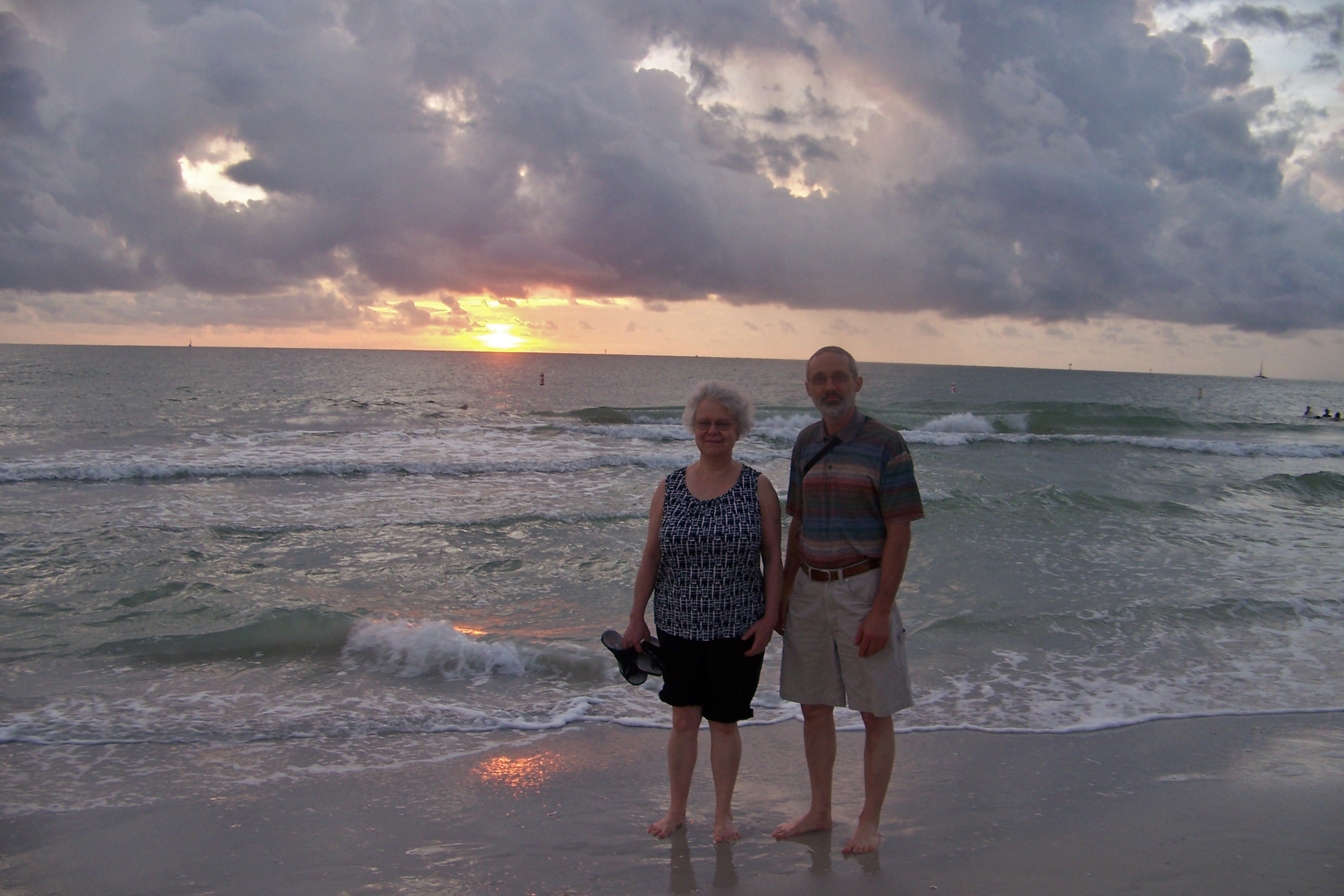
Sunset at Sand Key Park, Clearwater, FL

101_1081

Almost looks like smoke coming out of chimneys

101_1086

Small craft upon the main

101_1087

The sunset years?

101_1090

A moment of quiet contentment

101_1091

Real crusin’

101_1092

Practicing or Protecting or Both

101_1094

The warm glow and cool breeze

101_1097

This scene reminds me of a William Cowper hymn (see below)

101_1099

Taking it all in

101_1100

Glow

101_1101

Afterglow

101_1103

The Airbnb where we stayed

101_1107

Eyeing each other

101_1109

Florida Softshell Turtle (A. ferox)

101_1111

Shade is good

101_1113

House of William Horton

101_1120

Ready to make a stand

101_1127

Hiding out in the shade

101_1135

It’s alive

101_1136

Driftwood Beach, Jekyll Island, GA

101_1145

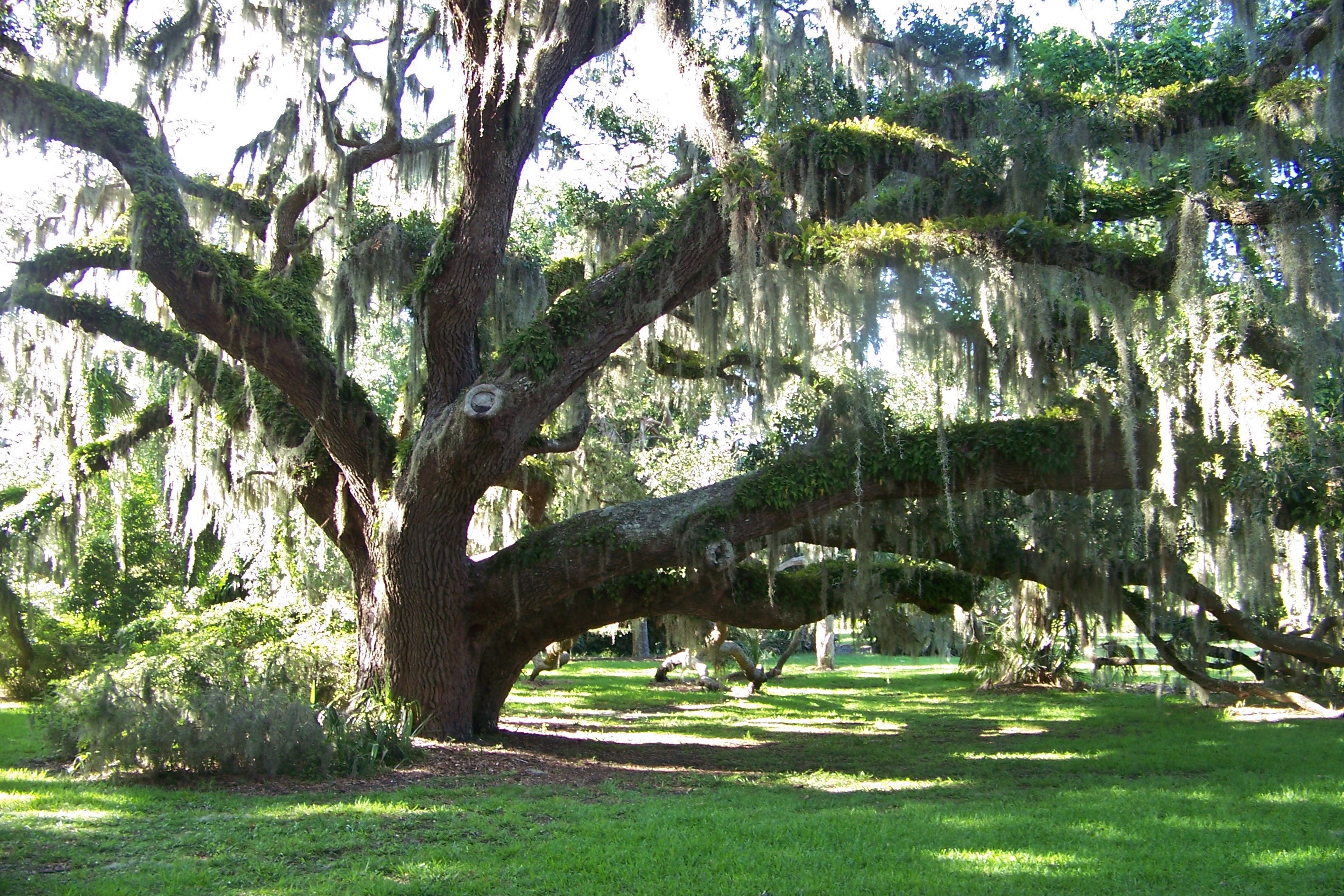
Old Plantation Live Oak

101_1153

Sidney Lanier Bridge

Following is the hymn by William Cowper that I referred to in the picture caption above. When all you see is the rain pelting down, remember both that it waters the soul and bespeaks of God’s kind and bright mercy:

God moves in a mysterious way
His wonders to perform;
He plants His footsteps in the sea,
And rides upon the storm.

Deep in unfathomable mines
Of never-failing skill
He treasures up His bright designs,
And works His sovereign will.

Ye fearful saints, fresh courage take,
The clouds ye so much dread
Are big with mercy, and shall break
In blessings on your head.

Judge not the Lord by feeble sense,
But trust Him for His grace;
Behind a frowning providence
He hides a smiling face.

His purposes will ripen fast,
Unfolding every hour;
The bud may have a bitter taste,
But sweet will be the flower.

Blind unbelief is sure to err,
And scan his work in vain;
God is His own interpreter,
And He will make it plain.

The glow of the sunset high up in the clouds is exhilarating. You most usually can’t see thunderstorms from a distance and entirely in the wooded mountains where I live. The beach affords a wide view. You can watch the rain and lightning and billowing heights and still get to your car before it hits. Frequently in the woods a thunderstorm is on top of you before you know it. Reflection upon God is similar; it requires distance from all that obscures reflection on Him. We need to find perspectives from Scripture, in meditation, surrounded by quiet, reflecting on God’s providence in our circumstances in order to again absorb His beauty and peace in our hearts.

William Horton came to Jekyll Island in 1736 with a land grant of 500 acres, 50 of which was supposed to be in cultivation within 10 years for him to retain the deed. This ‘big house’ was, no doubt, built years after first arriving. There are many more big houses of the rich who owned most of the island in the late 1800’s until WWII when it was evacuated. In 1947, Georgia acquired the whole island and administers it as a state park with natural, historic, and commercial areas. It seems to have a good balance. We may have much to learn by this experiment about how to administer other parts of the planet sustainably. We are, afterall, stewards on God’s behalf, and not owners of this Earth.

There was an old plaque under the ‘Old Plantation’ Live Oak that must have been at least 50 years old. It said the tree was estimated to be 350 years old. That means it was a fair-sized tree when William Horton arrived, very possibly a young tree when the settlers came to Jamestown, and definitely a maturing tree when the Declaration was signed. It helps to withstand the hurricanes that must have hit over time that the branches grow back to the ground to support the whole tree and that the tree grows on the inland side of the island. I want to be an oak firmly planted by the waters of His grace (Psalm 1).

The Sidney Lanier Bridge that spans the Brunswick River was named after the former bridge, which was named after the Georgian musician and poet of the Civil War era. The bridge is cable-stayed where all deck supporting cables come straight from the towers as opposed to a suspension bridge where the cables hang vertically from larger cables hanging in a catenary between towers. More frequently the cable-stayed design is used now because it is lowered cost initially and maintenance than a suspension bridge and now possible for long spans with new, large equipment to set it up. Man loves to design and order things, a characteristic that points to God’s image in him.

All of creation from thundercloud to beach to ancient tree to crab to the designs of mankind give glory to the Great Designer-Beautifier God, Our Creator. We may take great joy in enjoying and working in His grand terrarium/aquarium (Earth). He has put us here to acknowledge Him in doing so.

Read Full Post »

The Lie that was promulgated in the garden is persistent and pernicious. The enemy knows it is the most subtle way to destroy us, and it is persistent because it is part of our nature. “You will be like God” (Genesis 3:5) is a Lie with many iterations. It is the basis of all works salvation whether it be the religions of the world, the self-assured atheist, or the nominal, legalist Christian. Such an ominous enemy to our soul must be regularly and rigorously opposed. The remedy for me is focusing on the grace of God brought to us in the Gospel of Jesus Christ.

To that end, I asked my pastor recently if he had a book that would refresh my focus on grace. He loaned me the little book, “All of Grace” by C. H. Spurgeon. He leaves no stone unturned in his pursuit of convincing the reader that God “justifieth the ungodly” (Romans 4:5).

The persistence of the Lie most frequently resides here: “We stubbornly believe that there must be something in us in order to win the notice of God” (p.14) But “God, who sees through all deceptions, knows that there is no goodness whatsoever in us.” (p.14) Our pride rises up against this thought, but salvation is for those who realize “He makes those just who are unjust. He forgives those who deserve no favor.” (p.14) Those who are closest by training to what is right and good can sometimes be the fartherest from salvation because they have become self-deceived into thinking that the rightness and goodness resides, even if only partially, in them. On the other hand, some who reject the very existence of God are equally self-deceived about their own goodness. For this reason, what Spurgeon says is profoundly true: “The law is for the self-righteous, to humble their pride. The Gospel is for the lost, to remove their despair.” (p.21) To those already broken by their sin, we preach the good news of God’s grace. To those self-assured of their own goodness, we convey the law so that they will come to a point of despair over their sin and grow in desire for a solution only found in the Gospel. Though the witness is a messenger of these things, the Holy Spirit through the Word of God is the means of this grace. “When He [the Holy Spirit] comes, will convict the world concerning sin and righteousness and judgment” (John 16:8) and ” the Law has become our tutor to lead us to Christ, so that we may be justified by faith” (Galations 3:24).

So why must I, who have long been in the grace of God, refocus on that grace? As I have already said, the Lie is persistent and pernicious. My old nature would have me believe that afterall there is some measure of works I must provide to be satisfactory to God. No, I must continue in “simple reliance upon Jesus” (p.89), cling to Him, turn constantly for a view of His goodness, love, and power, all given to me by His grace. Herein is joy and peace; hence is purpose and hope. The quicker and more deeply I can become totally convinced of the grace of God, the more readily I can love others and point them to that all sufficient grace.

Read Full Post »

On October 31, 1517, the Protestant Reformation began when Martin Luther nailed his 95 theses on to the Wittenburg Castle Church door. The Protestant Reformation was a movement in the 16th and 17th centuries in Europe, which tried to reform the Roman Catholic Church, because of perceived doctrinal and moral corruption that undermined the Christian gospel. The result was excommunication and the Protestant movement. These Latin phrases; sola scriptura (Scripture Alone), sola gratia (Grace Alone), sola fide (Faith Alone), sola Christus (Christ Alone), Soli Deo Gloria (for the glory of God Alone), were the fundamental principles of the protestant reformers. They were developed over time, to summarize the theological conviction of the reformers and are central to the doctrine of salvation. -John Piper

In April of 1518, the head of the Augustinian Order called for a formal disputation of the ideas that Martin Luther had put forth. This gave Luther an opportunity to expand upon his concerns. At the meeting, Luther put forward a “theology of the cross” as opposed to a “theology of glory.” -Editors Introduction to the Book of Concord

A theology of glory expects total success, finding all the answers, winning all the battles, and living happily ever after. The theology of glory is all about my strength, my power, and my works. A theologian of glory expects his church to be perfect and always to grow. If a theologian of glory gets sick, he expects God to heal him. And if he experiences failure and weakness, if his church has problems and if he is not healed, then he is often utterly confused, questioning the sufficiency of his faith and sometimes questioning the very existence of God. -Gene Edward Veith

To better understand the theology of glory, one need only look at the adjective included in the five Latin phrases. Alone. The use of this simple term suggests that the theology of glory, understood God’s work of Scripture, Grace, Faith and Christ were insufficient.

The Catholic Church adhered to what Martin Luther called the “theology of glory” (in opposition to the “theology of the cross”), in which the glory for a sinner’s salvation could be attributed partly to Christ, partly to Mary and the saints, and partly to the sinner himself. The reformers responded, “No, the only true gospel is that which gives all glory to God alone, as is taught in the scriptures.” -Monergism.com

This true and Biblical gospel, proclaimed by the reformers, was about how man can be justified before a holy God. Not by any merited favor, but by grace alone. Not any works a man can do such as the confession, penance or indulgences, but by faith alone. Not by any other sacrifice, such as mass, but only in Christ alone. Not found in the church, papacy or tradition, but in Scripture alone. And not for the veneration, worship or glory of Mary, Saints or Angels, but to the Glory of God Alone.

For Luther, the bottom line was the bondage of the will, or the deadness of the human soul. The Bible tells us that we are totally helpless. Ephesians 2:1-3, “And you were dead in your trespasses and sins, in which you formerly walked according to the course of this world, according to the prince of the power of the air, of the spirit that is now working in the sons of disobedience. Among them we too all formerly lived in the lusts of our flesh, indulging the desires of the flesh and of the mind, and were by nature children of wrath, even as the rest.” We were dead in our trespasses and sin and by nature children of wrath. Only grace can raise us from the dead and only Christ could be our punishment. Those two miracles, life from death and wrath removed, can only be received as a gift. Thus, it is to the glory of God alone. -John Piper

When reflecting on today’s subject of God receiving all glory, you may have thought, “I am a Baptist. I know that we do not glorify Mary, Saints or Angels.” This, I’m sure, is true for many of us here. However, these two verses may shed some light on our weakness and who we do glorify instead of God alone.

Proverbs 14:12, “There is a way which seems right to a man, But its end is the way of death.”     2 Timothy 3:2, “For men will be lovers of self, lovers of money, boastful, arrogant, revilers, disobedient to parents, ungrateful, unholy…”                            

The Bible tells us:

  • Scripture is from God. 2 Timothy 3:16, “All Scripture is inspired by God…”
  • Grace is from God. Ephesians 2:8, “For by grace you have been saved through faith; and that not of yourselves…”
  • Faith comes from God. Hebrews 12:2, “looking to Jesus, the founder and perfecter of our faith”
  • Christ was sent by God. John 3:17, “For God did not send the Son into the world to judge the world, but that the world might be saved through Him.”
  • Genesis 1:1, “In the beginning God created the heavens and the earth.”
  • Proverbs 16:9, “The mind of man plans his way, but the Lord directs his steps”
  • Psalm 103: 19, “The Lord has established His throne in the heavens, And His sovereignty rules over all.”
  • Psalm 19:1, “The heavens are telling of the glory of God; And their expanse is declaring the work of His hands.”
  • Romans 13:1, “Every person is to be in subjection to the governing authorities. For there is no authority except from God, and those which exist are established by God.”
  • Ephesians 1:11-12, “also we have obtained an inheritance, having been predestined according to His purpose who works all things after the counsel of His will, to the end that we who were the first to hope in Christ would be to the praise of His glory.”
  • Colossians 1:16-17, “For by Him all things were created, both in the heavens and on earth, visible and invisible, whether thrones or dominions or rulers or authorities—all things have been created through Him and for Him. He is before all things, and in Him all things hold together.”
  • Hebrews 1:3, “And He is the radiance of His glory and the exact representation of His nature, and upholds all things by the word of His power. When He had made purification of sins, He sat down at the right hand of the Majesty on high…”
  • Hebrews 11:10, “for he was looking for the city which has foundations, whose architect and builder is God.”
  • John 3:16, “For God so loved the world, that He sent His one and only son, that everyone believing in Him should not perish but have everlasting life.”
  • 1 John 1:9, “If we confess our sins, He is faithful and righteous to forgive us our sins and to cleanse us from all unrighteousness.”
  • Philippians 1:6, “For I am confident of this very thing, that He who began a good work in you will perfect it until the day of Christ Jesus.”
  • Revelation 4:11, “Worthy are You, our Lord and our God, to receive glory and honor and power; for You created all things, and because of Your will they existed, and were created.”

Soli Deo Gloria

Read Full Post »

Our pastor has encouraged us to look at the 5 solas of the Protestant Reformation. The first Sunday was Scripture alone. The second Sunday was Grace alone. Today we look at faith alone.

When Paul explains the gospel in Romans, he says that in that gospel “is the righteousness of God revealed…as it is written, The just shall live by faith.” (Romans 1:17)

I want to begin by looking at how the Catholic church obscured the gospel, then move to how the Reformation recovered the gospel, and finally give an implication of this gospel for us today.

The Catholic church obscured the gospel of faith alone by tangling up regeneration with justification like a really bad game of twister. Biblically, Regeneration is being born again—having eternal life infused into our souls. Justification is God the judge declaring us to be legally righteous in his sight (instead of guilty). The mixing up of regeneration and justification resulted in the Catholic church teaching that in baptism a man receives an infusion of righteousness into his soul. And this infusion of righteousness is what makes a man inherently righteous before God. Consequently, the Catholic church went on to teach that the fruit of righteousness flows from divine life experienced in baptism so that a man may merit by his gracious works justification. So, the foundation of a right standing before God is what a man becomes at his baptism and what a man does after his baptism. That baptism often being an infant baptism.

This was the thinking that Martin Luther was plagued by. If there was ever a monk who could have been saved by his monkery, it would have been Martin Luther. Vigils, prayers, reading, spending much time confessing, and fasting were performed by Luther. But all of this work failed to give him the peace with God that he was desperate for. And that’s because Galatians 2:16 says “a man is not justified by the works of the law.” So, the Catholic church obscured the gospel of faith alone by tangling up regeneration and justification and in this way tortured Martin Luther.

But what the Reformation did was untangle regeneration and justification. And this resulted in clarifying what justification means: Justification is not progressive, but the instantaneous declaration of God that a sinner is righteous instead of guilty. And the instrument by which a man is justified is not man’s work, but faith alone in Christ and his work at Calvary.

Romans 4:5 says “ But to him that worketh not, but believeth on him that justifieth the ungodly, his faith is counted for righteousness.” Worketh “not”. Justifieth the “ungodly”.

But how can God declare an ungodly man righteous? He does not do this by infusing righteousness into a man’s soul (as the Catholic church taught), but by imputing the righteousness of Christ to a believing sinner. In other words, when a man believes on Christ, God considers the righteousness of Christ as belonging to the sinner.

Think of it this way—when a poor woman marries a rich man, that woman enters into a union with him so that she shares in his wealth. The poor woman becomes rich. Similarly, when a sinful man believes in Christ, that man enters into a union with Him so that he shares in His righteousness. And in this manner God considers Christ’s righteousness as belonging to the sinner and thus declares the sinner to be righteous. This is the only way that a sinful man may have peace with God.

We have seen how the Catholic church obscured the gospel of faith alone and how the Reformation recovered that gospel. Now, an implication for the church today is this: we had better get justification by faith alone right before we do any work. Another way to say it would be to say, the church had better get the gospel right before she gets to work.

When Paul reveals what the gospel means in Romans, he talks about justification by faith alone.

When the Catholic church obscured that gospel, it gave rise to an unhealthy religiosity. Germany was not being taken over by secularism—it was very religious, but it was an unhealthy religiosity that arose from the burial of justification by faith alone. Contrastingly, we here in America do see secularism taking over. And what a temptation it would be for us in our day to say “We need to get back to being religious!” But if that religiosity does not arise from justification by faith alone, then we are not standing on the gospel.

What revolutionized Europe was not increasing religious activity. It was the recovery of justification by faith alone. May it be so in our day.

Read Full Post »

In this third installation of the 5 solae, we come to what another brother had to say about grace alone:

I want to begin with a personal testimony from January of this year…

After a brief explanation from the Lutheran pastor, I followed the funeral procession into the church—deeply moved. Why? For sure I was going to miss my wife’s aunt, who had been a dear family member to us.

But more importantly, what impacted me was the symbol on her casket that illustrated a truth most dear to me. You see, the casket was covered in a white cloth, symbolizing righteousness, which would be the only thing God would accept from her as she would be presented to Him for judgment. But…whose righteousness?

The symbolism goes further—on the cover was the shape of a cross, and the Greek symbols for Christ. Whose righteous works is God accepting?   Would He see ANY of my aunt’s works?

No, for He would not accept them!

She was being presented to God, covered by the righteousness of our blessed Christ! And THIS was our family’s comfort in our loss.

Eph 2:8-10: “For by grace are you have been saved through faith, and that not of yourselves; it is the gift of God; not of works, lest anyone may boast. For we are His workmanship, created in Christ Jesus for good works, which God prepared beforehand, that we should walk in them.”

In this short statement is the sum of the Biblical teaching of the work of grace. It begins with God-working in us faith which justifies us (giving us Christ’s righteousness), which results in good works which please Him—according to His working in us.

Over time, as the Church of the Middle Ages abandoned the supreme authority of Scripture—“Sola Scriptura” in favor of traditions, other doctrines began to emerge—not only those absent from the Bible, but also changes to the understanding of grace itself.

The Medieval Church’s teaching gradually drifted to the assertion that God’s grace would help us produce the works that He would accept for justification, rather than the grace of Christ’s finished work of cross and resurrection for us.

It is in this world that Martin Luther sought to be right with a Holy God.

In keeping with church traditions, he followed the rules of the monastery, and did penance–all to a radical extreme (and even the annoyance of his fellow clergy)—all the time being under condemnation in his heart because of the majesty of God’s holiness and perfection overwhelming him.

At this point, as he studied the Bible, he discovered that it is not his righteousness that God will accept, but Christ’s, and that he should by faith abide in Him! Luther received God’s gracious gift of eternal life.

Luther and the other reformers returned to the Biblical, apostolic understanding that good works and a changed life flow from Christ’s righteousness given to us, instead of leading to it. God will not have his glorious gospel assisted by human works.

Our Christ, as God in human flesh, takes on Himself ALL of our sin and sinfulness on the cross, and gives us ALL of the righteous obedience of His perfect life.   We call this teaching Sola Gratia, or “grace alone.”

In short, God’s grace justifies us completely in Christ’s work, and gives us a heart of repentance, rather than demanding we “do penance.”

Church Historian Stephen Nichols tells us that Ulrich Zwingli, the Swiss reformer, is portrayed in a portrait with an open Bible.

In an illustration of this grace to us, the Bible was opened to Matt 11:27-30:

“All things have been handed over to Me by My Father; and no one knows the Son except the Father; nor does anyone know the Father except the Son, and anyone to whom the Son wills to reveal Him.

Come to Me, all who are weary and heavy-laden, and I will give you rest. Take My yoke upon you and learn from Me, for I am gentle and humble in heart, and you will find rest for your souls. For My yoke is easy and My burden is light.”

This is Christ’s gracious invitation to us—then, and now.

On this 500th anniversary of the Reformation, we celebrate our salvation in Christ, Sola Gratia, by grace alone—in the words of the Apostle Paul: “…to the praise of the glory of His grace, which He freely bestowed on us in the Beloved…”

Read Full Post »

Several weeks ago my brother in Christ shared this about the sufficiency of Scripture:

“Sola Scriptura is a reminder that God has always worked and will always work on this side of eternity through His word the Bible. Sola Scriptura deals primarily with the issue of authority. It is not a base claim that says that nothing except Scripture is helpful. It is not a claim to Scripture only in all cases. That would not be Biblical. Recognizing this is to distinguish between Sola Scriptura and Scriptura Nuda. Sola Scriptura does not argue that there is no value in anything except for Scripture standing on its own. It is an argument that Scripture is the only basis of authority.

I think a couple of verses would help us frame this discussion. Psalm 138:2 captures the sentiment of Sola Scriptura in a poetic way, but it also stresses a note of praise and worship which seems very appropriate when we are remembering God’s faithfulness over the 500 years since the Reformation. The psalmist here says:

“I bow down toward your holy temple and give thanks to your name for your                       steadfast love and your faithfulness, for you have exalted above all things your                   name and your word.”

Several translations say this slightly differently, but the idea is clear: God exalts his Word. And God exalts those who exalted his word, and God will be exalted when his word is exalted.

The Reformation, which was a great turning from the time when doctrinal error was pervasive in the church, to a time when the church was based much more on the truth of Scripture follows clearly a line or trajectory of a return to Scripture. Every individual who had a hand in the Reformation of the church was a person who had first learned to see the Scriptures as their sole authority. You can back up to 200 years earlier and look at the life of John Wycliffe in England, who was persecuted for his position on the authority and importance of Scripture. You can look in the 1400s at John Huss, who was also persecuted for a similar stand. He was martyred for his belief in Scripture. But he is the one who famously said, “you may cook this goose.” His name Huss meaning goose, “but in its stead God will raise the Swan who will sing his praises.” That Swan came 100 years later, just a few miles away, in the person of Martin Luther. Martin Luther, was ironically induced into the priesthood in the same church that the bishop who condemned Huss was buried in. And so we see consistently through history, God superintending to bring about his own glory and the reform of his church through the honoring of Scripture. Each of those men engaged in the great task of putting the Scriptures into the language of the common man of their day. Each one of them understood that one of the great tasks of their life was to put Scripture into the language of the common man, so that the English plough boy could read Scripture in English, and the German peasant could read Scripture in German.

Simply put, Sola Scriptura is the cause of the Reformation. The other principles, or rally cries of the Reformation; the other solas, whether it is Sola Gratia, Solus Christus, Sola Fide, or Soli Deo Gloria. We could not and would not have any of these were it not for return to Scripture only. Scripture is the foundation; it is the foundation upon which God’s work will always be built.

Peter reminds us in II Peter 1:16. In this passage Peter reminds us of a pivotal time during the life of Christ. A time where Peter and two other disciples are alone with Christ on a mountaintop, and there in that Transfiguration moment they see the Lord in His glory. But Peter tells us in verse 19:

“And we have the prophetic word more fully confirmed, to which you will do well to          pay attention as to a lamp shining in a dark place, until the day dawns and the                    morning star rises in your hearts.”

The King James translation express this as “we have a more sure word of prophecy”. One of the things Peter is reminding us of here, is the fact that even if God were to reveal himself physically to us, as Christ was revealed to the disciples on that mountain Transfiguration, that appearance would not and should not be as authoritative or as significant to us as the physical pages of the word of God that we have in our hands. Peter says that what we have is a more sure word; it is a word more fully confirmed, which we do well to pay attention to. Sola Scriptura thus speaks to the authority and sufficiency of the word of God.

The threat to Scripture in the time leading up to the Reformation, came from an approach to Scripture which claimed that we could not know for sure what Scripture was saying. The scholars and some church authorities the time said that we could look to tradition and Scripture, we could look to reason and Scripture, we could look to the great leading voices of the church and Scripture, and we can look to experience and use that to temper our understanding of Scripture. And out of that mixture of endless qualifications and piles of meaningless footnotes maybe we can come up with something that in some way we could call true. Martin Luther said that that approach to truth, and approach to truth that is merely tentative, an approach to truth that denies the absolute authority of God’s word, an approach that says truth is only possible, is an approach to truth that paves the road to hell. Martin Luther said we do not need possible truth. We need therefore truths; truths that are absolute and unequivocal. We need truths that come to us with the thunderous certainty of Romans 5, “therefore there is now no condemnation for those that are in Christ Jesus.” We need truths that are absolute! And our only hope, our only source for that kind of truth comes in the revealed Word of God, Sola Scriptura.

Sola Scriptura is thus the basis of our confident joy. Every commemoration, every anniversary, every celebration, should ultimately be characterized by gratitude. A gratitude that shows that we are thankful to God. God is the only reason why good things live long. On the 500th anniversary of the Reformation our heart should be hearts that are filled with gratitude that God has kept his word. We can say with the hymn writer:

         “How firm a foundation the Saints of the Lord

          Is laid for your faith in His excellent Word

         What more can He say than to you He has said

         To you who to Jesus for refuge have fled.”

Let us be thankful for Sola Scriptura.”

Read Full Post »

My son and his wife hosted a Reformation 500th Anniversary Conference back in April. The website for the conference has history of the various states in Europe that were effected by the Reformation. They wrote and edited summaries of these histories. The website also has links to all of the conference speakers’ talks. Soon the site will have legible pictures of the 40 story boards (trifold boards) he and his wife made for the conference. All of these resources may be accessed at www.reformation500pa.com

Happy 500th and happy researching!

Read Full Post »

Older Posts »

Myrela

Art, health, civilizations, photography, nature, books, recipes, etc.

Overflows from the Heart

"But the things that proceed out of the mouth come from the heart…" Matthew 15:18

CreatorWorship

Pointing to the One who made, saved, and sustains