Archive for the ‘General’ Category
Oh, What a Year
Posted in Blessing, Experience, Fears, General, God Thoughts, Grace, Mercy, Poem, Prayer, Remembering, Strength, Stress, Struggling, Sustaining, Trials, tagged 2019, Difficulty, God's Presence, New Year, Old Year, Stress, Sustaining, Trials on January 1, 2020| Leave a Comment »
Oh, my goodness, what a year!
Oh, my God, Your presence near!
Oh, my Comforter, and dear
Oh, my Jesus, grace so clear
Oh, my Lord, in this new year
Stippling Metaphor
Posted in Art, Beauty, Blessing, General, Metaphor, Photo, Work of Jesus, tagged Art, Artist, Life, Metaphor, Randomness, Stippling, Work of Jesus on December 31, 2019| Leave a Comment »
Some things you learn through “book learnin'”, and I’m not adverse to that since I can’t be everywhere at once or in one life time. But learnin’ by experience is better when you can get it. I have a friend who is a very talented artist. He produced several insightful and intriguing stippling pictures (check out “Business on Parade”). And at one point when I was underemployed, he gave me a little work. One of the projects he gave me for some graphic design work he was doing was a stippling of a 8 1/2 x 11 sheet from white graded to black. I guess we would produce that by a digital method now, but he said at the time that the random process of poking a pen at a paper produced a far better picture.* I think that I remember it taking about 10 hours overall.
On my way to church this morning, I was praying that God would give me something to make the Sunday School lesson more interesting. As I drove the interstate the drizzle (or mist) slowly intensified and then later let up. I turned on the intermittent wipers to a slow setting, but I did not increase it as the rate of drizzle increased. I began to notice what reminded me of stippling on the windshield and every 5 seconds or so it got wiped off and started over. Artists that stipple use different sizes of pen tip for a given picture or on different elements of the same picture. The windshield stippling was far more complex in its randomness, utilizing multiple droplet sizes and some streaked upon impact. The effect was quite interesting. To our eye randomness brings some level of pattern. Three dots even nearly in a row look like a line and catch the attention. Four dots can suggest a square, rectangle, or rhombus. But looking at the individual dots is not the point (or points? ha ha). One must step back to see the artistry. The windshield would still look random, but when an artist is involved the result can be detailed beauty and communicate mood.
There is a metaphor here. Our lives are stippling drawings. Each strike of the pen can seem random for which we are thankful or annoyed or perplexed or overwhelmed or exited or challenged. But from these many seemingly random events God is designing a beautiful picture that reveals the Artist’s involvement in the process. Randomness alone cannot produce ordered beauty.** God is giving glory to Himself and benefiting us and others through controlling each strike of the pen on the paper of our lives. No unforeseen events ever mar the picture He is making.
I began the Sunday School lesson with this illustration and then in Luke 9 showed how Jesus was sovereignly controlling every detail of the events before, during, and after the feeding of the 5000, including what details were recorded. Jesus tested Philip’s and Andrew’s (indeed, all of the disciples’) faith when He knew what He was about to do. Every detail filled out the picture He was painting. Before the big reveal of everyone satisfied and 12 baskets full of leftovers, the questions and commands must have seemed trying and confusing. God, give me patience and perseverance as the pen contacts my paper in seemingly random spots and ways, knowing You are in control and this process is for Your glory and my good.

A Stippling Ball****
*Yes, I enjoyed making that predominantly “p” phrasing.
**Crystal patterns in rock or snow flake form randomly but have underlying chemical design. I could get into the whole evidence of design argument, but you should read my blog entries because it is a frequent theme.
***In fact, the painting seemed to be focused on an extended metaphor of bread. Let’s talk about that another day.
****It would take more time and far more dots to make a good picture of a ball and its shadow, but I feel like it represents the intended purpose.
Mt. Sterling Fire Tower
Posted in Beauty, Family, General, Hike, Nature, Outdoors, Photo, tagged Hike, Mount Sterling, Nature, Outdoors, Photos on December 29, 2019| Leave a Comment »
On our hike at Thanksgiving I challenged a great-nephew and niece to prepare for a backpacking trip next summer. Besides asking them to take regular brisk walks around their neighborhood, I offered to do day hikes building up to the overnight trip. Yesterday we went on the first of those trips: Sterling Gap to Mt. Sterling in the GSMNP. When they arrived at the meeting place, they had a cousin in tow. So the four of us enjoyed the strenuous 2 mile hill (~5.2 miles total) and the views from the ~50 feet fire tower. It was just cool enough to make walking comfortable and just overcast enough to make for better contrast in viewing distant peaks. We had interesting conversation and enjoyed the transition of the tree types as we increased in elevation. It’s time to get in shape for the next bigger hill!

Waterville Hydroelectric Facility: Why does a hydroelectric facility have a chimney?
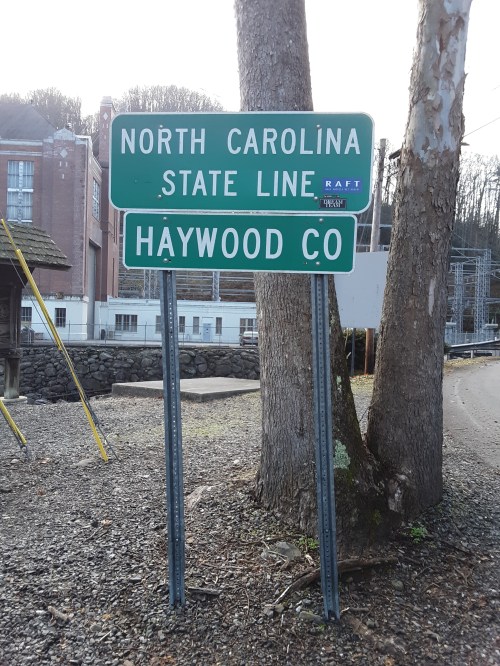
The exit is in Tennessee but the hike is in North Carolina.

Let do this!
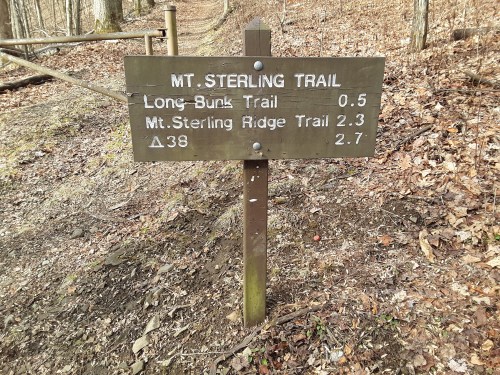
It simply is not 0.4 mile between the trail intersection and the tower at Campsite 38.

Low elevation outliers

Big outliers
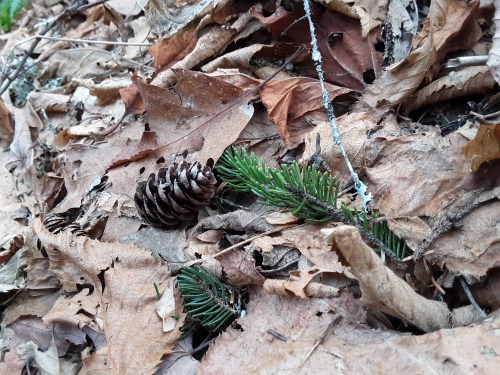
Spruce among decidies

A great niece learning about Galax

A break in the trees

Incline
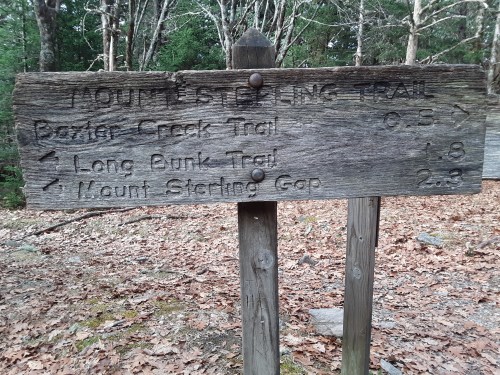
Almost there

Notice how it tappers, though you must know that perspective exaggerates the effect

Mt S BM (Wow, 1928!)

A camera with the proper filter would better catch what it really looked like with even more distant ridges appearing.

NE more or less

We made it. I wonder how any panes of glass survive in what must be a very windy site.
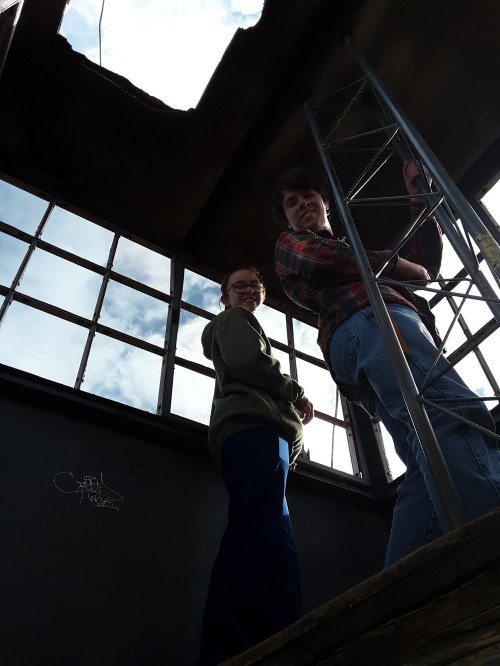
Enjoying the view?

Main ridge at Guyot to Cosby Knob

Campsite 38
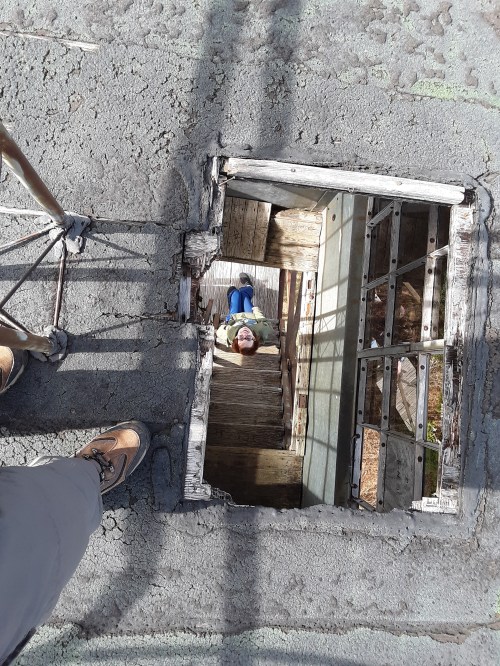
Interesting perspective
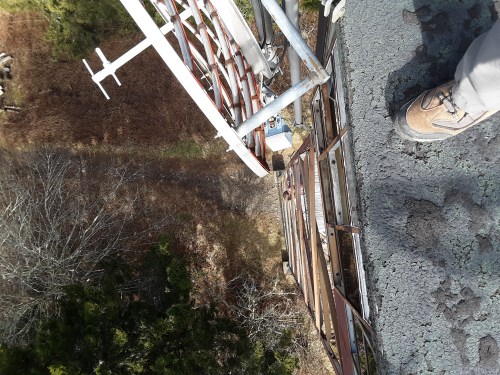
Do you see my great-nephew? Notice how perspective from here makes the tower appear straight-sided.
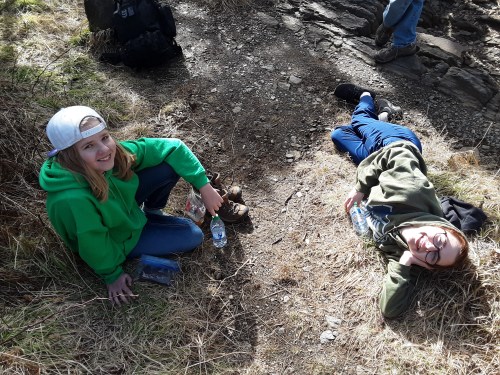
After lunch relaxing

Silly cousins!

Can you tell which one is his sister?
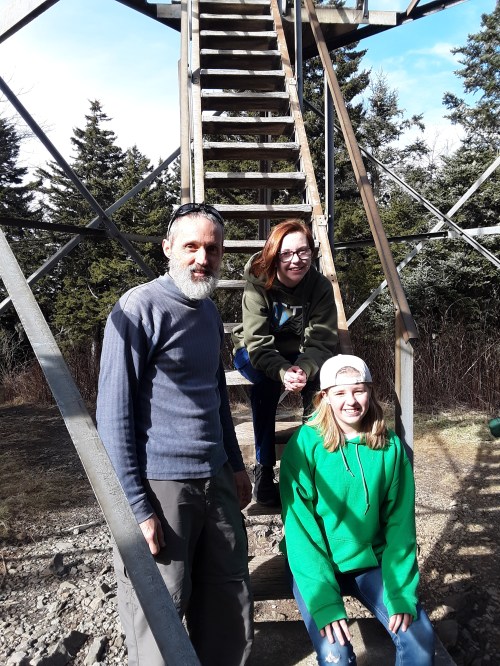
At the top and still smiling

Survived many a storm and wind
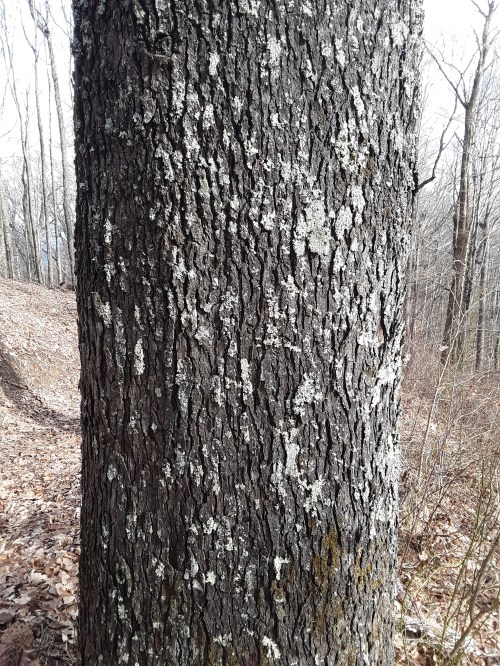
Black (or Wild) Cherry

White Ash

Beauty everywhere you look

Almost down
Planned Obsolescence
Posted in General, Metaphor, Photo, tagged 3R's, Metaphor, Planned Obsolescence on December 21, 2019| Leave a Comment »
I don’t know exactly what happened to my old chainsaw. It lasted 20 years and I rarely went easy on it. One day it just locked up. When I went to buy a new one there was a polarity of prices for seemingly similar saws. I asked why. The answer was basically that you pay $700+ for one of similar durability of the old one or you could pay ~$400 for one that was assured of wearing out in less than half the time. The store manager also said that all of the chainsaw companies have gone to this model: professional/homeowner grades. In the case of the homeowner grade, there is a predetermined and decided lack of quality that is sufficient to last a few years but not many. The plan is to sell more chainsaws at an affordable price, knowing they will have to come back for another one in a few years. The term for this “weak link” or introduced design flaw that results in an “artificially limited useful life” is planned obsolescence.
My wife has a nice crockpot that she uses regularly. It seems quality enough and I see no reason why it shouldn’t cook food for many years to come. However, recently the plastic handle on the glass lid broke. When I looked at it, two terms came to mind: cheap and planned obsolescence. If taken reasonable care of, there is little to break on this crockpot, except for the lid handle. If you can’t get the hot lid off of the crockpot safely, then you can’t really use it. Most people would throw the crockpot away. Some small percentage, probably less than one percent, might search for the part and buy it on Ebay or from the manufacturer. An even smaller percentage of people would make a durable replacement handle. I am part of this latter demographic, this smallest of tribes. The handle needed to be durable, easy to handle for my wife, and look at least reasonable.
About the time this all happened I was teaching my Biology students about cells. I had forgotten to discuss a term for programmed cell death- apoptosis. So, the day I took the lid and my materials into school to make the handle in the wood shop, I presented the parts before my classes with an explanation of planned obsolescence and my plan to reuse rather than recycle the crockpot. Then I proceeded to a segue into apoptosis. Cells have a weak link, as it were, to prevent them from going rogue, i.e. cancerous. Obviously, it doesn’t always work, but it prevents harm far more than allows it.
I had a student ask me if that means that “death really is a natural part of life.” I replied that on the contrary, the programmed death of cells when external or internal cues of stress arise is a way to prolong the organism’s life at the expense of individual rogue cells. Oh, that corporate entities were so altruistic and sacrificial, but perhaps I am looking at the situation from the wrong perspective. Perhaps the crockpot is the sacrificial cell that rescues the corporate organism by not outlasting its economic value. After all, whose survival are we concerned about here?
At any rate, planned obsolescence in cells is a good thing. I guess it brings a whole new meaning to the phrase, “stressed out”. Check out my new durable handle.
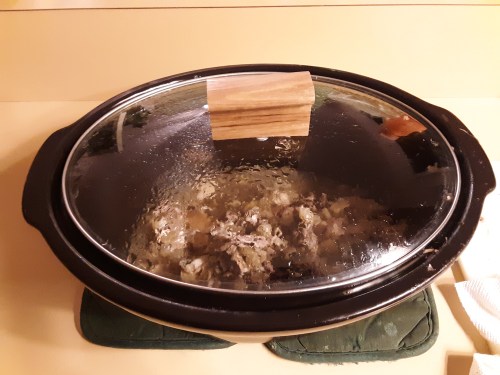
Chicken is done!

Custom made, prime, aged, ergonomic hickory wood handle from a tree where I grew up!
Always
Posted in Covenants, Family, General, Marriage, Poem, Relationship, tagged Anniversary, Covenant, Love, Marriage, Perseverance on December 21, 2019| Leave a Comment »
On the occasion of my 38th wedding anniversary yesterday,
I dedicate this poem to my good and loyal wife:

In sickness and in health
In poverty or wealth
Commitment I have made
Firm covenant was laid

Living love makes it sure
By God's Spirit made pure
The harder times become
More strength to overcome

Not in us two resides
With tempting, troubling tides
The strength to soldier on
With practice kindness hone

I don't know what to say
My actions hurts betray
To quiet service go
When good feelings don't flow

But you make no mistake
There's far more here at stake
God's will and His glory
Bound up in our story

I love you more each year
Troubles make it more clear
Losing you would be hard
Like a painful glass shard

And now we onward trudge
No one but God our judge
Work and love together
Nothing our joy tether

Be more affectionate
More kind, compassionate
Consideration grow
Keep irritations low

How can we do these things?
When all hell at us flings
Troubles and trials each day
Our hearts and flesh fillet

I'll tell you beloved spouse
The love that's in this house
Comes from our God above
Spirit of peace and love

I'll never cease to care
To grow in love and dare
To strengthen what is ours
'Til all see love flowers

We hope for better things
Our future with joy rings
With hope that ever clings
Until our spirit sings

In heaven we will be
Where God's face we will see
Not married at that time
But love will be sublime
More leisurely conversation
Posted in Family, General, Hike, Nature, Outdoors, Photo, Relationship, tagged Conversation, Hike, Photos, Waterfall on November 30, 2019| Leave a Comment »
Time to renew the Thanksgiving tradition. Because of extended family gatherings, our Thanksgiving dinner has been moved to Friday. We had more than 30 people in attendance. I didn’t get around to saying more than “hi” to a few, but I did have some good conversations with others. However, I find that some of the best conversations are had on our Thanksgiving Day hike, which once occurred on Friday. This time around, two brothers, a sister-in-law, a great-nephew, a great-niece, and I made the trek. The car trip to and from is frequently of equal or greater length, but there is much scenery to take in and much catching up to do. We went to Wolf Creek Falls near the NC border and up from Del Rio, TN.
(Interjection: I just saw something neat. The big drops of a beginning rain shower began to pelt down on the yard outside the window. When I heard it, I stood up and looked out to see large drops smacking leaves on the ground, making them look like Mexican jumping beans. Showers starting with large drops are not as common this time of year when it is cold and there are leaves on the ground.)
The sky was flawlessly blue and the temperature was refreshingly chilly. The trail was an old logging road and flat. But after one creek crossing and the second one going to require wading, my two brothers and sister-in-law decided to turn back. I didn’t want to stop, so I volunteered to go on with the great-nephew and great-niece. Of five total creek crossings the second one was the only one requiring wading. The other three went back to the vehicles and executed a long circumvention to a shorter approach from above the waterfall. They arrived 3 minutes after we did. We all enjoyed the process and the conversation.

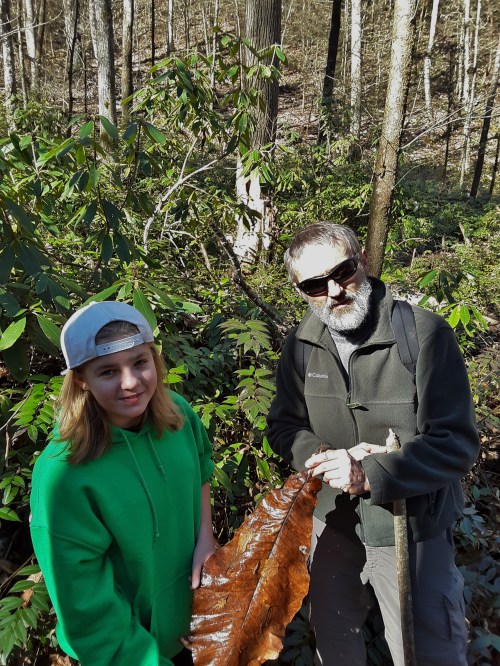
Largest Frazier Magnolia leaf I’ve ever seen. Umbrella and Bigleaf are supposed to be bigger, but you could fool me.
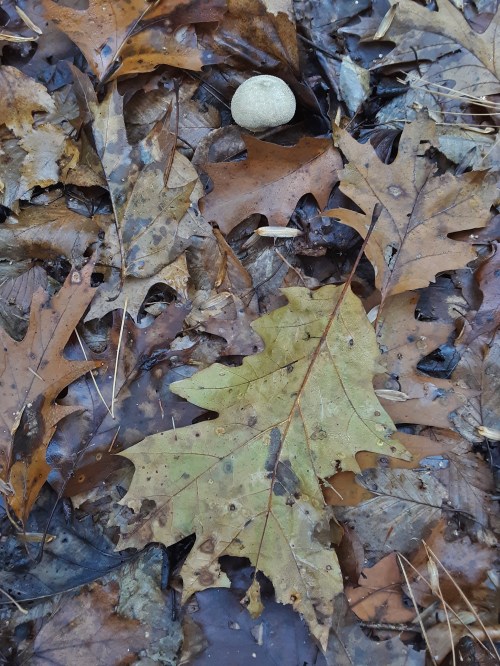
Mushroom button and possibly three different kinds of oak leaves (Southern Red, Northern Red, Black), hophornbeam (“musclewood”) and red maple

Approach glimpse
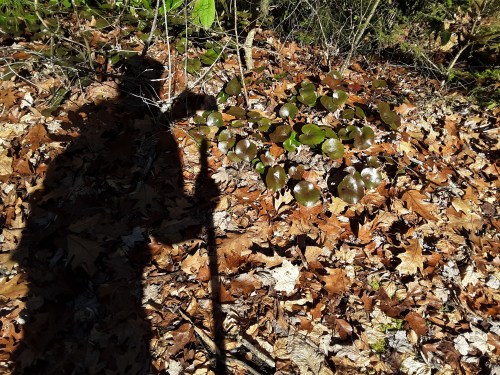
Unintended fascinating shadow, oh, and Galax
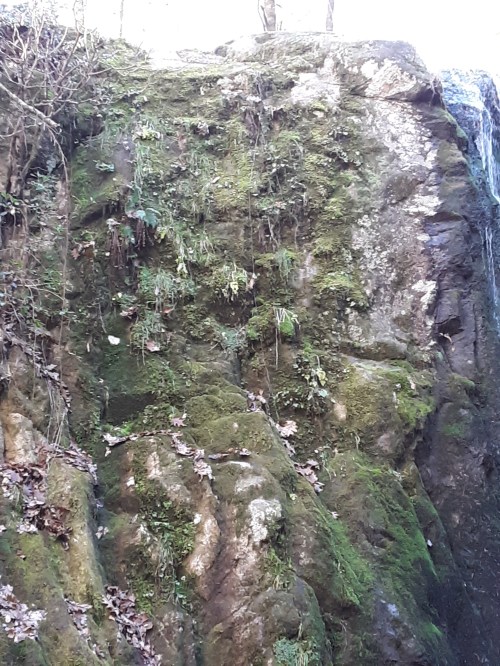
Hornworts and Liverworts, Batman!
-
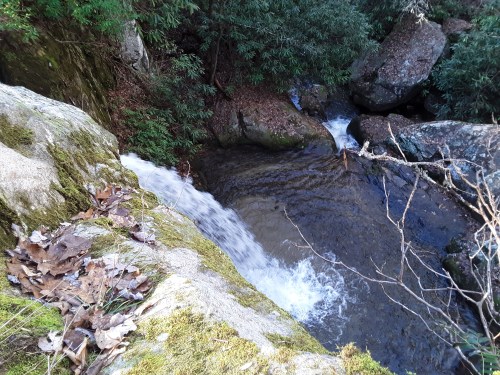
Over the Edge
-

Near the Edge


A brother, a great-niece, a great-nephew
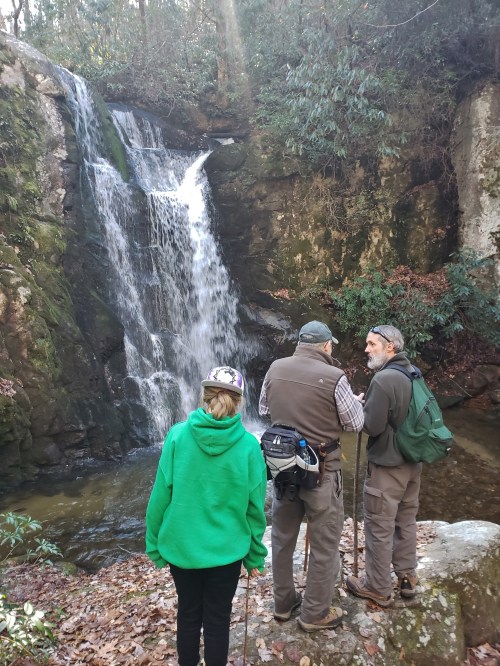
- Serious conversation (picture credit: older brother)
-
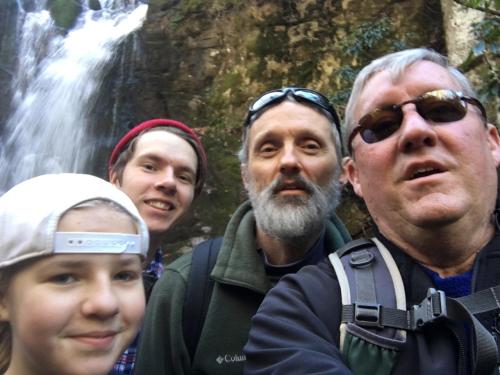
- I think us oldesters need to learn something about how to pose for a selfie (picture credit: older, pictured brother)

Double Cascade

Can…?
Posted in General, Gospel, Mercy, Trials, Work of Jesus, tagged Mercy, Trials of Jesus, Work of Jesus on November 28, 2019| Leave a Comment »
There is so much to be thankful for. James 1:2 says we should “Consider it all joy, my brethren, when you encounter various trials”. God’s ways are consistently counter and frequently appear odd to us. But accepting and even giving thanks during trials produces “endurance” and renders us “complete”. (James 1:3,4) The trials of Jesus were for our good (Hebrews 5:7-10).
Can scars be beautiful?
My Lord's certainly are
So rich in mercy full

Can troubles lend a hand?
My Lord's saved me from hell
By His strength I now stand

Can temptations bring good?
My Lord's perfected Him
I cling more as I should
Stress
Posted in General, Stress, Struggling, tagged Stress on November 27, 2019| Leave a Comment »
I am going to drop a few poems here that I have written over the past several months. Life has been very busy and stressful this Fall. I need to learn how to let cares roll off my back like water off a duck’s back. I have learned more about praying through and clinging to Jesus, but my personality causes too much internal stress that doesn’t need to be there. See if you can understand the repetitive nature of the stress cycle from the poem.
Go
Faster
More intense
Reap what you sew
Pretend you’re master
Don’t ride the fence
Hoe your row
Plaster
Rinse
Jesus and His Disciples
Posted in Doctrine, Education, General, God Thoughts, Influence, tagged Disciples, Discipleship, God-man, Who Jesus Is on November 24, 2019| Leave a Comment »
I was so happy for and with my Sunday School Class this morning. I had come up with three lists that I thought would fortify their young faith. The first was evidences from the Scripture that Jesus is a man. The class gave me all seven of them. Some of the answers were synonyms for the words I had listed. This was not a review of a list we had recently gone over. This resulted from several months of emphasizing that Jesus is fully God and fully man. Could you come up with seven evidences from Scripture that Jesus is man like my 10-12 year olds did? Here is our list: 1) born 2) baptized 3) hungry 4) tempted 5) slept 6) bled, and 7) died.
Our lesson today was about Jesus calling the disciples. It is amazing the trust that two disciples of John the Baptist had in him that they immediately followed Jesus when John identified Him as “the Lamb of God”. Andrew was one of those disciples, and when he found his brother Simon, he told him that “we have found the Messiah”. That is quite a statement for someone he had just met on recommendation of someone he trusted. But as Jesus told Nathaniel soon afterwards, “you will see greater things than this”, meaning the insight Jesus had into Nathaniel’s every move was “small potatoes” compared to the miracles he would see later. Their enthusiastic, new faith would be transformed into life-long, martyrdom faith.
So, if these men were being called to be disciples, what is a disciple anyway? In that culture spiritual teachers would have a following of those who wanted to learn the teacher’s life and insights.* I asked my students to tell me 7 things that disciples do (They actually listed 8, but I forgot to write down the last one. before I left. And again, some of their responses were synonyms of mine): 1) follow 2) believe 3) learn from 4) obey 5) copy 6) tell (share, testify), and 7) represent.
By the time He got James and John on board** and Matthew hosting his friends to meet Jesus, we didn’t have time for my other list: Scriptural Evidences of Jesus as God. I’m glad I didn’t. It would be too much for one week, but we will talk about it soon. And here it is: 1) virgin birth 2) testimony of man (John the Baptist, Nathaniel, Peter, Thomas, etc.) 3) testimony of God 4) commanded nature 5) healed diseases 6) sinless, and 7) rose from the dead.
My hope is that the truth of God’s Word will sink in deeply so that the false doctrines of the world will not later drown their faith. It is so good to see them want to know truth.
*It is a far better way to teach and learn than we generally do today. Apprentices in a trade who constantly shadow a mentor/boss learn this way, but so much of what we pass off for education is assembly line, mass production. Eli Whitney’s interchangeable parts work great for reproducing gun barrels and stocks, but for critically thinking, problem-solvers, saturated in truth, not so much. On the other hand, for basic rote learning to put tools in the toolbox, it works fairly well if the toolboxes are willing.
**Really it should be “off board”, since they were on board when Jesus called them, mending nets with their father Zeb.
Six Caring Teachers
Posted in Education, Experience, General, Influence, Kindness, Learning, Remembering, Reminiscence, Teachers, tagged Education, Elementary School, Kindness, Learning, Remembering, Reminiscence, Teachers on October 19, 2019| Leave a Comment »
I am amazed at times what a little rest and little reflection can allow to come around in our memory. The last two weeks have been a whirlwind of challenge by way of time pressure and emotional workout. So, even though today is also full of chores and duties, I had the privilege of sleeping late. But sleeping late for one in the habit of early rising is difficult. Usually 7 PM is all that I can manage, but it was a few minutes past 7:30 when I first saw the clock this morning, and my dear wife slept away. In the unhurried moments I lay musing on random thoughts when one came through quite clearly.
Do you remember the names of your elementary school teachers? Sequentially from 1st grade through 6th mine were Mrs. Denton, Mrs Gaston, Mrs. Henderson, Mrs. Gervin, Mrs. Tucker, and Mrs. Alexander. I know that a child’s view of the world and the addition of many years makes memories a bit skewed, but I thought of a few things I remember about them.
Mrs. D was a large lady. I don’t mean overweight, just a big person. She was kind but seemed sad. She had gray hair. None of my teachers were young. I always wanted to please my teachers and I wanted to do my best for her. One day during milk break in the cafeteria, I felt sick to my stomach and couldn’t finish my milk. Mrs. D would stand at the garbage can inspecting to see if we had finished our milk. I was nervous and dropped the carton, mostly full of milk, just before she took hold of it. It fell and splashed milk all over her dress. She had to go out and change her clothes. She was not happy with me. I don’t feel like that she held it against me after that. I think I remember struggling to learn to read and yet enjoying the new world it opened up.
Mrs. G was a small round woman who wore lots of jewelry and smiled most of the time. She was also strict. The first and last time I ever cheated on a test was on one of her weekly spelling quizzes. I wanted to do well but spelling did not and does not make sense to me. I used a little cheat sheet and she caught me. I was publicly shamed and worse, my parents were told. In this day and time publicly shaming is frowned upon, but I think it only hurts significantly because we tell children falsehoods about self-esteem the rest of the time so that they have “entitlement issues”. At any rate, I never cheated again, ever. I struggled in reading. After a short stint in reading group #1, I was demoted to the second reading group. My mother was told that I was struggling and it was suggested that I read extra at home. Mrs. G had a box of 2nd grade reading level books. I checked out one or two a week to read to my mother at home. I improved in reading, enjoyed the stories, being drawn most of all to facts related books. I am still a laboriously slow reader, but I understanding is good, and I enjoy an encouraging story or informative narrative. We still had nap, or quiet time. Most of the other students giggled and fidgeted on their mats, but I frequently went fast asleep. I distinctly remember several times awaking, disoriented and drowsy, to be given a hard time by classmates and defended fiercely by Mrs. G.
Mrs. H was almost certainly the youngest elementary school teacher I had and I’m pretty sure she was middle aged. She was innovative and energetic. She decided that our study of American History and the Capitol, Washington D.C., should have a visual. So she set out having us make paper mache models of the various buildings in D.C. I made a Washington Monument. By 3rd grade I had a best friend, Andy D. We loved math and did problems together. We liked science and talking about space exploration and going to the Moon. We liked drawing symmetrical shapes with ruler and compass. I grew up with mechanical drawing since my father worked as a draftsman for ORNL from shortly after the war.* So, Mrs. H selected Andy and me to draw out a map of D.C. with streets, bodies of water, and the locations of monuments and buildings all to scale. We did this on butcher paper laid out on the floor of a particularly large, empty classroom down the hall from her room. Andy and I would get to skip classes we did well in to work on the map. My childish memory wants to say the map was perhaps 20 x 30 feet in size. We spent many hours drawing, talking, and reveling in time together, just the two of us in that empty room. After all of the paper mache buildings were completed with white acrylic paint and all, they were placed on the map which was painted with black streets and blue rivers and pools, and large green spaces. The model that I had made was not selected and I thought it was better. Later someone helped me to understand that Mrs. H had allowed me the privilege and limelight of drawing the map. It would not be equitable to also place my paper mache monument on the map. During the next PTA meeting most of the school and their parents walked around the periphery of the map in that otherwise empty room admiring our work. It was probably the most unforgettable thing for me about elementary school.
Mrs. G was a thin, quiet woman. I somehow remember being a favorite of hers and growing in my love of learning new things. I had a vague memory of some written project that I did well on, but for some reason everything about that year is vague. In fact, even the room we were in seems vague, being set back in a corner at the end of the hallway. Mrs. G liked to keep the blinds shut so that the room had a dark, calm atmosphere.
Mrs. T was a fierce, little fireball who loved to raise flowers. She lived about a block from me in a little white house that was unimpressive, but the flower garden because of the small yard could not be anywhere else but next to the street, was impressive. When I would walk or ride my bike by her house, you could see the weedless beds of massive flowers of many varieties and smell them, too. Many evenings and summer mornings, Mrs. T was out weeding and replanting slips or cuttings. In class, she expected her students to work hard and behave, all orderly and well presented like her garden. I wanted to please my teacher so I did both. Good behavior produces good results. I was allowed to help the teacher and do work ahead of my grade. One of my best friends did something one day that set the class off and sent Mrs. T into a frenzy. It was warm and our school did not have air conditioning, so the banks of casement windows were laid open. A yellow jacket flew in and buzzed around the back of the room. Many of the girls screamed and others jumped out of their seats to get away. While Mrs. T was trying to settle the class, Jack jumped up with a new pencil, made noises as he sung his pencil like a sword, knocking the bee to floor dead on his last downswing. The class went wild with elation.
Mrs. A had to be close to retirement. She told me she had been a teacher for some period of time that seemed astronomical to my young mind. She always seemed to be happy and encouraging. I’m not sure if I am remembering correctly, but I think that I heard that she had had some deep hurts in her life, which if my memory is correct, made her demeanor all the more amazing. She liked to have classroom competitions and interclass competitions: weekly Spelling Bees, group math quizzes, history facts group competitions. I dreaded the spelling bees and seem to remember managing many 2nd places, despite my abhorrence of the art form. Mrs. A invited a number of her best students to come to her house a few times to study extra for a math competition that we went to. I felt so special eating a snack in her breakfast room with a few of my classmates.
This commentary is a very narrow slice of what I remember about my elementary school years. There was baseball and bowling and bike rides and vacations and good grades and friends and chorus and library and safety patrol and playground (woods, swings and monkey bars and merry-go-rounds, kickball) and PE with the principal and plays and promenades and always working real hard to please my parents, my teachers, and make good grades and times with friends. But my teachers had more influence on me than I have previously given credit for in many long years. They may not have been the best teachers by modern pedagogical standards, but they had high expectations, rewarded what was good, punished what was not, and seemed to care about their students and their content. That was enough for me.
* I decided to say it the way we would back then instead of explaining it for the younger set. ORNL stands for Oak Ridge National Laboratory, site of the Manhattan Project where my mother was secretary and just a couple of years before my father arrived, and much of the focus of anything related to radioactivity studies. The war, of course, was World War II where my father had recently arrived home from when he began working there.
No Sense and No Compassion
Posted in Abortion, Cultural commentary, Family, General, Implications, Value, tagged Abortion, Cultural commentary, Family, Life, Pro-Abortion, Pro-life, Rule of Law, Truth on October 10, 2019| Leave a Comment »
In Biology class we are studying cell reproduction. The somatic or body cells reproduce by mitosis, yielding genetically identical daughter cells. The gametes (sex cells: egg and sperm) come about by a “double mitosis” as it were called meiosis, that yields genetically divergent cells that have half as much genetic material. Biologically, when an egg and sperm combine you have all of the potential of the mature person. This single cell is called a zygote. After several mitotic cell divisions the zygote is called a blastula. As the cells continue to multiply, they differentiate into various major body parts and systems in what is now called the gastrula. These early stages with their various names are clumped under the name embryo. From 8 weeks on the differentiation is significant enough to recognize some large body form features and the embryo is called a fetus. Most people recognize the fetus as a baby even before he/she is born. The baby becomes an infant, the infant a toddler, the toddler a child, the child an adolescent, the adolescent a teenager, the teenager a young adult, then middle aged adult then senior adult. From fertilization until death the organism is a live person with all of the potentialities of the original zygote. None of us have reached our full potential, but that in no way makes us less human. Therefore, the zygote all the way through the old goat is a human fully deserving the respect of other humans and full protection of the law. Abortion makes no logical sense.
I had a student the other day want to present to me a position speech she was supposed to give for English class as a way to practice it. Several other students were in attendance in my classroom for this “study hall/remediation” session, so she had a willing audience. Her speech contrasted the conditions, laws, and attitudes about abortion in Missouri and Illinois. Then she ended by giving her opinion as the assignment required. She declared that she is pro-life. She stated along the way that she believed that the baby is a human and should not be aborted except under two circumstances. Her two exceptions were rape and incest. I ask her if the child conceived by rape or incest was also human. She conceded that they are human. “Then,” I asked, “Why shouldn’t he/she be afforded the same protections as any other baby whom you claim should not be aborted?” She replied that their conception was a horrible situation that would be harmful to the mother, the baby’s future, and the wider family. “So,” I continued, “You are saying it is OK to abort this baby based on feeling rather than law.” She replied, “The mother has a right to make her own decision.” “But you just said that she did not have a right to abort a baby not conceived by rape or incest,” I rejoined. I went own to say that we cannot ultimately rule by feelings because the whole society will and is falling apart. We must rule by law consistently and that her perspective about abortion did not make logical, legal, or moral sense.
I would throw this one small bone to the pro-abortionists. At least when they desire and demand abortion at any stage for any reason, they are being logically consistent. They are not being morally or legally consistent, however, because according to their scheme, no one has protection under the law. The fetus, like it or not, baby, is fully human at conception. Therefore, they must be given protection like all other humans, or else no humans are guaranteed protection. And of course, this is true. Euthanasia is an extension of abortion “rights”. An “all-wise” doctor, sanctioned by an “all powerful” government decides when the infirm are no longer human, just as they decided when the fetus began to be called human.
Claiming that I have no right to speak about the subject of abortion because I am a man is just another means of ruling by feeling. Besides, I have worked very hard, and by God’s grace, and raised five children. I pointed out to this young logician in my classroom that the problem of unwanted pregnancies could easily be solved by relaxing the adoption laws so that the many people wanting children could raise happy children conceived in less than ideal circumstances. The circumstances of no human are perfect. We live in a fallen world. Much better to make a child’s circumstances better than end his/her life and destroy the mother emotionally and sometimes physically.
A Lifelong Commitment
Posted in Beauty, Covenants, Family, General, Grandchildren, Photo, Relationship, wedding, tagged Covenant, Family, Grandchildren, Relationship, wedding on September 28, 2019| Leave a Comment »
I don’t know if I have enough time even now, but I have wanted to share some thoughts and pictures concerning my second son’s wedding that was on August 24th. The typical wedding comment is, “It was a beautiful wedding.” or “It was a beautiful ceremony.” There are two things that can be meant by that. It was visually beautiful and/or it was beautiful in content. Certainly my son’s wedding was visually beautiful: sunny day, aesthetically pleasing, hilltop venue (Whitestone Chapel), and beautifully dressed young people. But I see the true beauty of a wedding to be in the genuineness of the ceremony, which I define as a combination of giving glory to God, the creator and sustainer of marriage, and matching the couple’s personality by revealing a heartfelt commitment and participation in the ceremony (they are not rote repeating spectators). And it was that. Beyond the traditional vows which they repeated, they had written what they called promises to one another. My son asked me later, “Do you think we collaborated on those?” I said that it seemed likely since they followed the same line of thinking and simultaneously were complimentary to one another. No, he said, “We wrote them separately and then read each others.” He said that the only change she made was to add a comment about coffee similar to his, a moment of levity in the covenant of their promises. The two hymns, “How Deep the Father’s Love for Us” and “Amazing Grace” focused our attention to how gracious a God we have, Who not only saves us but gives us all good things to enjoy. The pastor directed our thoughts to the reality of how difficult marriage is, “two sinners living together”, and how the need for love is not just a feeling but a commitment to do what is best for our spouse. The ceremony was God glorifying throughout.
Another thing for which I am very thankful is the number of family members who were able to attend. Many family members from my wife and my extended families were able to attend. The reception afterward was held at a barn at the bride’s family property with 150+ people in attendance. All had feared the August scorching heat, but some clouds and a cool breeze prevailed and it was quite pleasant. I felt that the happy couple were carried along by God’s blessing the whole day, and may it be true throughout their lives.

Rehearsal
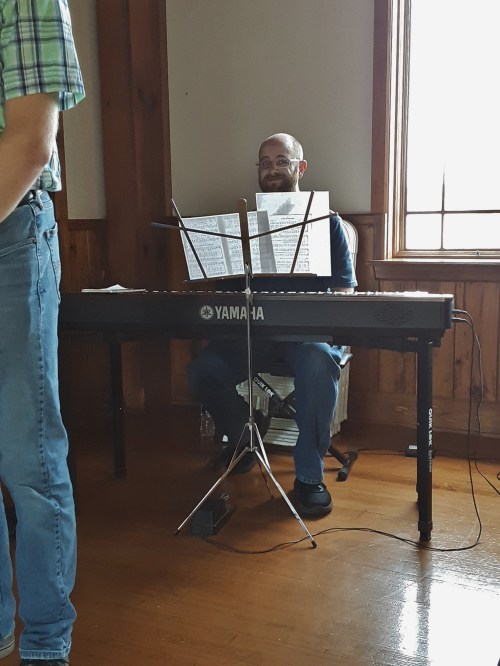
Pianist

Bride’s Oldest Sister and Family
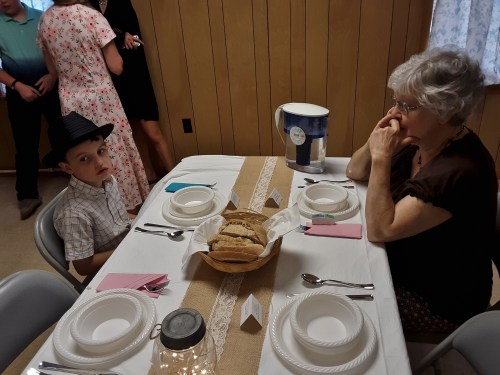
Mamaw and oldest grandson
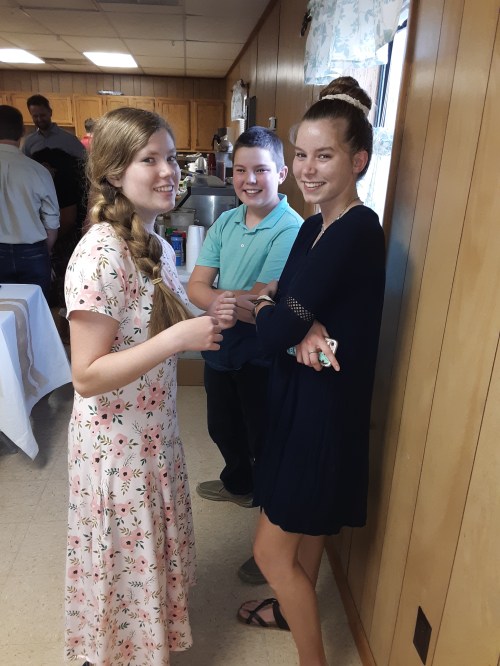
Bride’s younger siblings

Amazing, long preparations and carry through

‘We’re happy but it’s a long day.’

Bride’s mother and the Pastor and friends
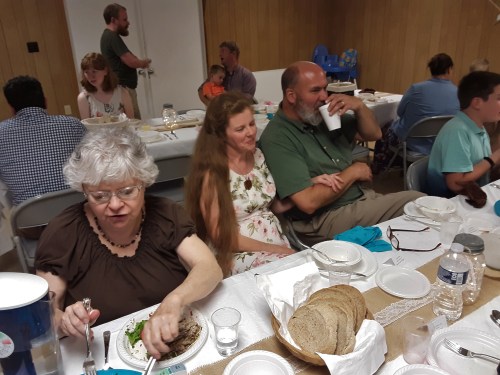
My wife beside Bride’s parents

Taking it in stride
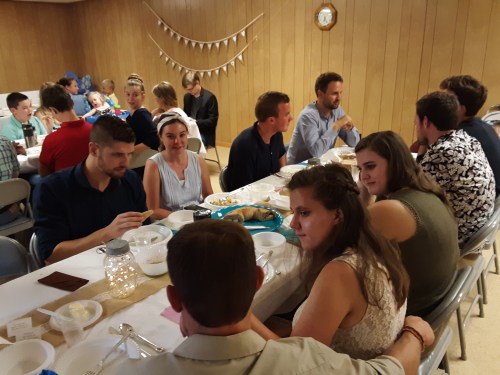
Fellowship

Uncle with the little chunk
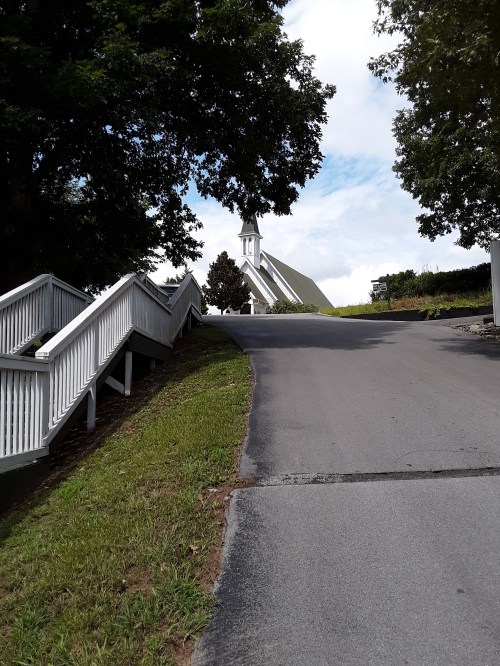
Hilltop Venue

Overlooking the Lake

The Wedding Party
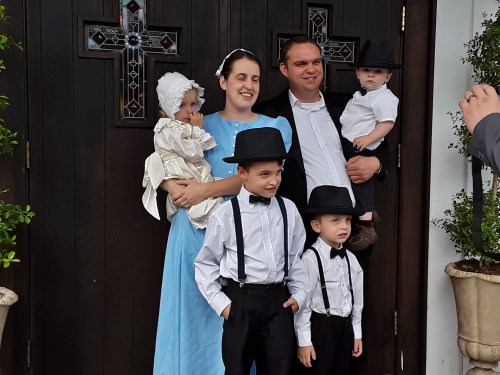
My Oldest and Family

My Youngest and Wife

My Daughter and Family

My Third Son and Roommate (This Son got engaged the next weekend)

The Growing Clan minus the Married Couple

The Grandchildren

The Children

Always in Costume
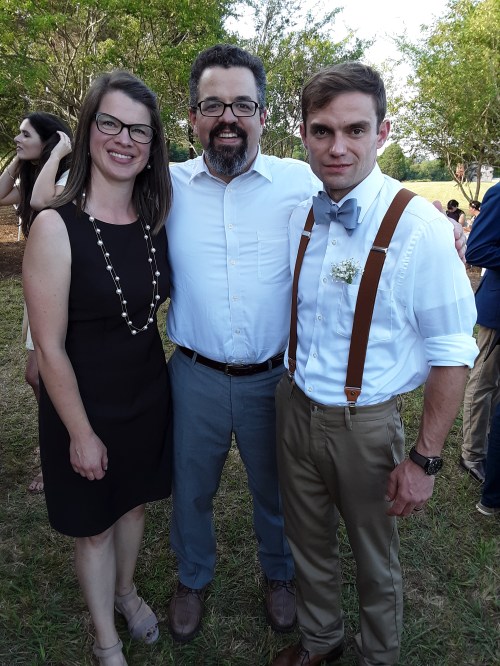
The Groom with the Pastor and His Wife

A Portion of My Family
A Full and Incontrovertible Testimony
Posted in Advent, Blessing, Delights, General, God's Word, Gospel, Hurry, Influence, Learning, Thanksgiving, Truth, Work of Jesus, tagged Gospels, Thanksgiving, Truth, work of christ, Work of Jesus on September 22, 2019| Leave a Comment »
I don’t deal well with time stress. Have I said that recently? I alternately repeat what I just got through saying and forget what I just said which is a degenerative form of circular reasoning that I am convinced is not solely due to age, but rather to stress. More on that later, IF I get the time. So, this is a short blog entry to say that I am thankful for my six Sunday School students who were singing out on “Great Is Thy Faithfulness” this morning, participating in prayers of thanksgiving, playing a review game on biblical concepts, reading the Scriptures out loud, and dutifully filling in their table of biblical facts that they promised to review with their parents. Well, it doesn’t always go quite that well, but they are children who want to know what the Bible says, and that is exciting. I prayed for them this morning that God might make them leaders in their future families, their churches, their communities, and their nation for the glory of God.
Our lesson was concerning the verifying and differing testimonies to who Jesus is and what He came to do as presented in the Gospels. Should you be interested in looking it over, following is the table I had them take down as we read and discussed the Scriptural passages:

- Comparison of the Gospels
Prophetic View
Posted in Advent, Day of the Lord, General, God Thoughts, God's Word, Implications, Prophecy, Understanding, Wisdom, Work of Jesus, Work of the Holy Spirit, tagged Discernment, Future Events, Prophecy, Truth, Wisdom, Work of Jesus, Work of the Spirit on September 15, 2019| Leave a Comment »
I haven’t blogged for one month now. I dislike not putting my thoughts down, but the last month has been an wholly unexpected whirlwind. Added to my absence from the blog was the 3-week loss of my journal. I use composition notebooks of the kind you might use in a science lab. This morning I found it. I decided that as time allows I will read back through it. The second entry was concerning a Bible study I had done about Jesus reading in the synagogue, His inaugural speech as it were. He read Isaiah 61:1-2a:
“The Spirit of the Lord God is upon me,
Because the Lord has anointed me
To bring good news to the afflicted;
He has sent me to bind up the brokenhearted,
To proclaim liberty to captives
And freedom to prisoners;
To proclaim the favorable year of the Lord…”
Then He stops, mid-thought, mid-sentence, and hands the scroll back to the synagogue official, saying, “Today this Scripture has been fulfilled in your hearing.” (Luke 4:21). Jesus was proclaiming the purpose and purview of His ministry. The reason He stopped at this exact place in the passage was “Today”, namely His 1st advent to Earth, it was “fulfilled”. The next parts, “And the day of vengeance of our God, …to comfort all who mourn, …they will rebuild the ancient ruins, …everlasting joy will be theirs,” (Isaiah 61:2b&c, 4a, 7d) refer to His second advent, followed immediately by the Millennium and Eternity Future.
Now, I know that this points to a certain theological perspective, but I am neither ashamed of it nor have any particular doubts about the general outline of it. In fact, my more than usual intense reading of the minor prophets this summer solidified and deepened my conviction that God still has a plan for physical Israel both to judge the majority and to save the remnant in order to fulfill all of the promises He has made and not yet completed. Many of these prophecies are just too clearly oriented to the blessings of land and nation to be spiritualized away. We who are spiritual Israel, which I believe includes the saved remnant of physical Israel, will participate in those blessings during the Millennium.
I had a small diagram in my journal that shows how prophecy frequently teaches us about future events. It is not at all new to me, but I like to put things down and add detail as I am able.
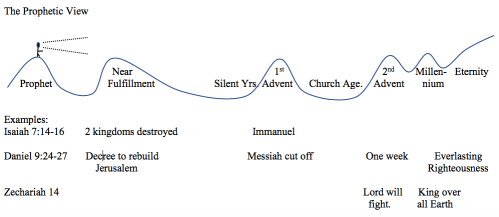
No diagram, analogy, type, or metaphor can ever be a complete explanation of the reality, but they may be accurate to the extent they are intended to explain the reality. The prophet is thought to not be able to see the valleys, because God is just revealing the mountaintops of future events. However, some of the events of the Inter-testamental Period (Silent years) are revealed in Daniel’s vision in chapter 11. Antiochus Epiphanes (though not named) is given as a type of the the Antichrist. So, the Inter-testamental Bad Guy and the “Day of the Lord” Antichrist are featured in the same prophecy.
This is a frequent pattern in prophecies. There is a near or historical (from our perspective) fulfillment and a future and/or spiritual fulfillment. David can truthfully groan, “My God, my God, why have You forsaken me?” (Psalm 22:1), and yet be simultaneously and more completely revealing the crucifixion of Christ a thousand years later. So, the prophet Isaiah proclaims that “The Spirit of God is upon me,” and God is saying that Jesus will say and do these things later over several periods of time.
To place this Isaiah 61 passage on my diagram above, I would understand to to look something like the following:
Prophet Near Fulfillment 1st advent 2nd advent Millennium Eternity
Isaiah 61:1-9 good news to the “The Spirit… “day of “comfort “everlasting
……………………………..afflicted favorable year” vengeance” all who mourn… joy” . portion in their land”
If I were to add or change anything in my diagram, it would be to add some labeled glasses on the prophet which read, “Holy Spirit vision”. We all need discernment and discretion and these come solely from God (Proverbs 2:1-12).
Pictometaphor
Posted in Art, Connotations, Cultural commentary, General, Implications, Photo, wedding, tagged Biblical Gender Roles, Connotations, Cultural commentary, Culture, Implications, Metaphor, wedding on August 14, 2019| Leave a Comment »
You know a metaphor to be a word picture, that is, words that bring to mind certain scenes or ideas. I was looking for a word whose definition is a picture that suggests words. Perhaps some of you wizened wordsmiths could help me out here and come up with the word. Unless and until that happens, I’m going to attempt to coin my second(1) word. Pictometaphor(2,3)- a picture or other visible art meant to suggest words. Now, you know we see these all of the time, but I don’t know if anyone has given it a name. And we say a picture is worth a thousand words, to which I say, of course, pictometaphor.
So, I want to try out my new word on you. I am making wedding rehearsal dinner decorations (That was a mouthful.). I am not really creative in this realm, so that the contrivance of my wife and I is a modified copy of things we liked online. It is in some respects simpler, and by me making it, much cheaper. But all that is not the point here, and I can’t give away too much before the dinner, so the pictures are limited. My point is for you to look at the following picture and write down pairs (in this case) of words that immediately come to mind. To see the quality of my pictometaphor, please don’t look at my answers until you have written down several pairs. It is totally fair and desirable to consider that this pictometaphor is in the context of an upcoming wedding. It needs context.

Before I give my answers, let me further comment on the quality of a pictometaphor. The picture, sewn cloth (in this case), statue, etc, should universally suggest the same words to all people. This might be too much to expect given different cultures, so perhaps, it should at least be universal within a given culture. Or perhaps it becomes a code word (code picture?), a sort of jargon joke for the initiated.
When I look at the picture above in the context of marriage, I immediately think male/female, strength/beauty, utility/luxury, mundane/special (plano/fancy?), daily/special event. How do your pairs fare? Do they align with mine, mean the same thing with different words, contradict at points? Share by commenting.
Now, I like extended metaphors, as long as they don’t verge on the ridiculous. So I have added some possible additional accoutrements to the decoration. (This is somewhat tongue in cheek, and my wife said that was not happening when I suggested it.) Make your list of pairs again and let me know how you did.

The selection of additional items colors(4) the connotations of the pictometaphor. Because I have selected two items that involve work or chores, the suggestion is not work versus play, but what kind of work. Probably for many of us, they suggest traditional gender roles. I am not going to apologize for that. I have hung up many clothes, particularly as a child, and my wife has helped me by hauling lumber and bags of concrete, but there are differences in our roles as male and female, and those have quite naturally and thankfully expressed themselves in our culture in nurturing and supporting ways. Much that is wrong with our society at present revolves around the abandonment of God ordained, given, and declared gender roles within the family, church, and society. Therefore, the first pair that came to my mind when seeing the nails and clothes pins was male/female. Also, I think home/job.
I could have directed the pictometaphor in a completely different direction by some simple change like replacing either the clothes pins or the nails with a few Lego bricks or a small doll. Then I would be driving the picture toward work/play, responsibility/privilege, chore/leisure, or even childhood/maturity depending on the exact toy I select.
I hope that you have enjoyed reading my comments and selecting your word pairs for the pictometaphor. The connotations of the pictometaphor need not be pairs, but the ideas must be ones that are widely understood. That is where culture and history and language come in. Language and art are at least partially an archive for culture and history. We should not revel in language and art changing so fast, because that blurs and eradicates much that can be learned and shared between generations. For instance, Western Culture has a rich language and art based on a biblical understanding. Many pieces of literature and art can not be understood in isolation from an understanding of the Bible. Of course, some want to rush the change, obliterate the references and understanding for the Bible given by language and art, and wholeheartedly reinterpret both, but that is a pictometaphor for another day.
1- The first word I tried to coin is “momentaneously”- circa 1995- used in response to impatient inquiry to mean you are high on my priority list and I will get to you with all speed as circumstances allow. Used in a sentence: “I will answer you momentaneously, but you are interrupting Jane at the moment.” For evidence of my coinage I site numerous classrooms full of students. Please spread the word since this may be my best possibility at fame. And, oh, by the way, don’t take me too seriously.
2- I considered iconometaphor, photometaphor, or imagometaphor, but each of these suggest connotations not in line with my definition, so I settled on pictometaphor.
3- “Hey, George.” What, Frank?” “How about photaphor or imaphor (or imagaphor) or iconaphor.” “Oh, Frank, that last one sounds good, but do you think people will understand what it means?” “George, the sound of a word can help the availability of its meaning, but ultimately, there is nothing like a clear and consistently used definition. ‘Is’ means ‘is’ even if some people say it ‘ain’t’.”
4- I am also partial to puns.
Celebrating Life and Family
Posted in Blessing, Delights, Family, General, God Thoughts, Grace, Grandchildren, Mercy, Photo, Praise, Prayer, Problems, Sustaining, Thanksgiving, tagged Celebration, Family, God's Grace, Health, Life, Thanksgiving on August 13, 2019| Leave a Comment »
If desperate times call for desperate measures, then tremendous provision calls for tremendous thanksgiving. Our youngest grandchild was born just over a year ago with heart problems. He had major heart surgery about 9 months later. Though small, he is now growing and happy with good skin color. It is amazing that he is alive and progressing. His father decided that in the light of God’s gracious provision of his child’s safety and health and the many people who showed concern, helped out, and prayed that a birthday party might not be enough. Instead, he decided to invite anyone who had been even distantly involved to come for a half day celebration of his son’s life and God’s goodness. 50 people responded that they would come. In the time my wife were able to be there, from 1-5:30 PM, the people came and went at a steady but reasonable pace for meet and greet. Good conversations, good food, and many stories of God’s goodness abounded.
After a year of multiple hospital stays, procedures, tests, and surgery, it is good to see the little man at home, content, and growing. God is good even when things are hard, but we celebrate His goodness when He is gracious to care for us with such largesse. His all sufficient grace is good and praiseworthy and full of joy.
In retrospect, I wish that I had taken pictures of the many people who came, but my few good pictures are of my own family gathered to encourage and give thanks. Also, notice that the little guy is almost always serious. He will go to anyone, probably because he is used to being held by nurses, but he takes a serious look at whoever picks him up.

First Arrival Greeting
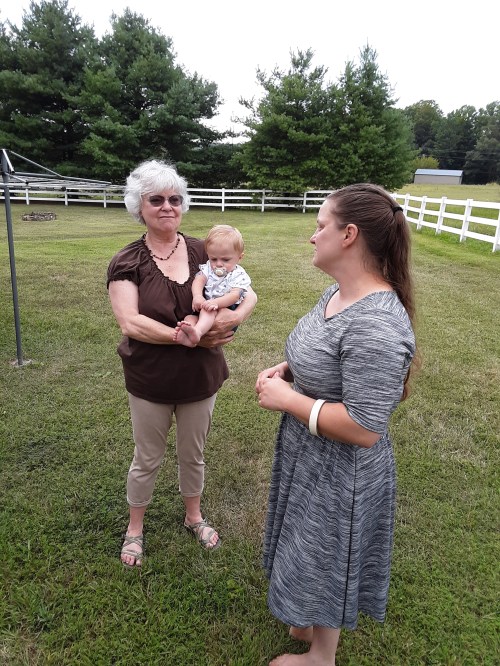
Mama Talk

Very Involved Sister
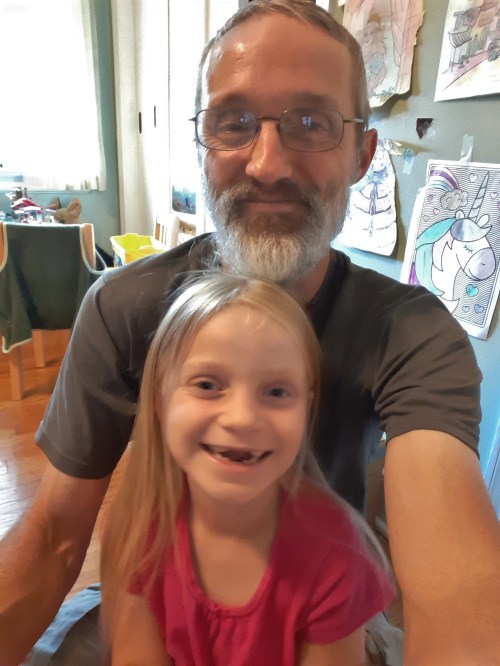
A Few Moments Together

Close Siblings (He smiles more often with his sister than any other time.)
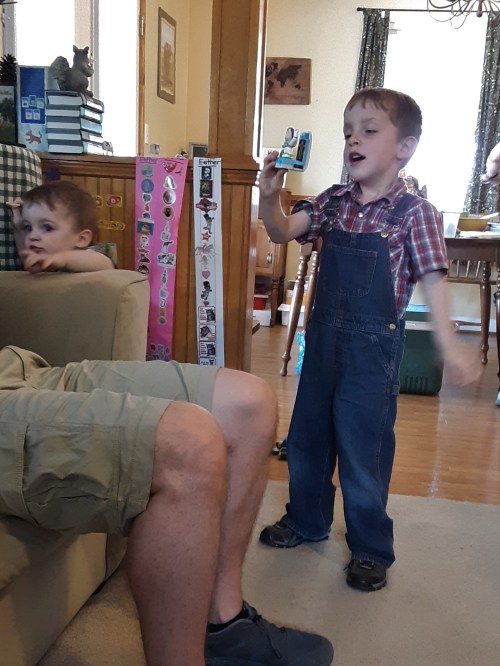
A Story and An Inquiry

Intense Little Video (Uncle Time)

With Uncle and Aunt

With Those Swingin’ Uncles
Gift from a Pilot
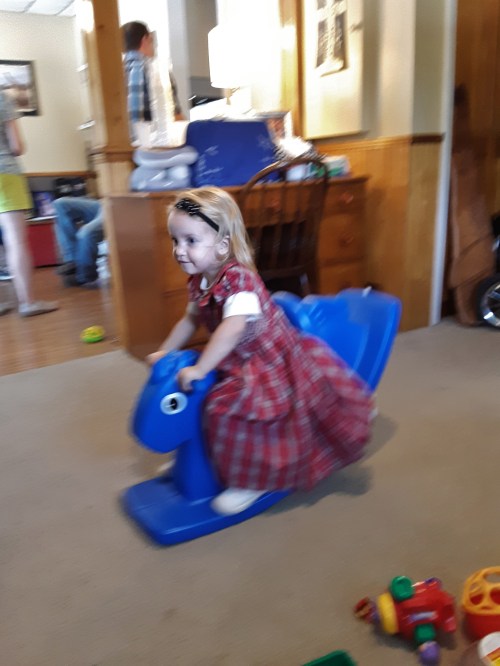
Odd picture: It must be blurred because I was shaky. Her face must be in focus because her movement matched my shakiness. That gives it a cool sense of motion.
-

Healthy and Happy

Mamaw Loves Those Grandchildren
Out of this World Question
Posted in Creation Articles, Cultural commentary, General, Questioning, Random thoughts, Science, Truth, Work of Jesus, tagged Astronomy, Extraterrestrial Life, Ice Sheets, Learning, Lost Squadron, Science, Thought Experiment, Truth, work of christ on August 6, 2019| 2 Comments »
Early this summer I had a student ask me a question by e-mail: “Do you think it is truly possible for someone to find the correct answer to the Drake Equation? If so, how would they prove it?”
After some research I gave the following reply:
“”The equation was written in 1961 by Frank Drake, not for purposes of quantifying the number of civilizations, but as a way to stimulate scientific dialogue…”(1) Therefore, the terms in the equation are considerations of what would have to be known in order to quantify (that is, count) civilizations. It is a thought experiment, and since we cannot go to many of those places (or probably any of them) because the distance is too great for even several lifetimes of travel [“Hey, grandkids, the goal of this mission when we started out 60 years ago was for you to visit two planets around the third star from our home star, Sun, to see if there is anybody living there. We’ll be there 40 years or so after your grandchildren are born.”], the whole scheme is pure speculation. In fact, I would go a step further and say that it is not even useful speculation.
So, to answer your question, no, it can neither be solved nor checked (proven). Based on my belief in the God of the Bible, I believe that it is not even a useful thought experiment. The Scripture says,”in as much as it is appointed for men to die once and after this comes judgment, so Christ also, having been offered once to bear the sins of many, will appear a second time for salvation without reference to sin, to those who eagerly await Him.” (Hebrews 9:27-28) Since “all have sinned and fall short of the glory of God,” (Romans 3:23), and since “Christ…offered once [died]”, then if any civilizations did exist, they would be without hope because God has not redeemed any of them. Instead, I think that it means they do not exist. And because of the distance we cannot know if they exist. The whole thought experiment becomes fruitless, a deceptive worldview way of avoiding the real truth about how [we got here and how] we “die once” and need that salvation.
A better thought experiment would be to explain how the rocks and ice we see confirm what God said about a worldwide flood in Genesis 6-9. Check out the “Lost Squadron” that landed on Greenland(2). Ask yourself some questions. 1) How deep were the “Lost Squadron” airplanes under the ice? 2) How long did it take for the ice to accumulate? 3) In how long of a time could the whole ice sheet have accumulated at that rate? 4) Has the rate of accumulation always been the same? 5) Is there any evidence for the rate of accumulation changing? 6) Comparing these estimates to the “declared age” of ice cores in Greenland, is there a problem with the present explanation of how the ice sheet got there?”
I think you will realize that the standard explanation for what the layers in the ice sheets means is flawed. Therefore, distractors are thrown up to keep us from seeing the logical fallacies of the ill-conceived conclusions masquerading as a scientific theory. There are many worthy thought experiments to be done. Einstein was particularly good at those, but much of today’s theoretical science is lacking in a creativity that adheres to truth as its basis, instead heralding false agendas and distracting from useful science. Let us be done with having any part of that.
1- https://en.wikipedia.org/wiki/Drake_equation
Stop Gap Procedure
Posted in Experience, General, Photo, Problems, Work, tagged Car Repair, Do It Yourself, Photos on August 4, 2019| Leave a Comment »
I am a self described “Jack of All Trades, Master of None”. How does one become part of this nation? My observation has been that there are generally two paths to “Jack”. 1) Be very smart and well studied and carefully try many things, having the resources to continue and succeed. 2) Be very desperate (or needy), having few resources, particularly money, imprudent to the dangers of failure, fail alot, learn from experience, and at last succeed. I am of the latter tribe. In the first tribe are those who have confidence that it will work because of their circumstances. In the second tribe are those who against all odds need it to work or “it ain’t happenin'”.
There is, perhaps, a third tribe, but they are small. They are masters of many trades, but those guys retire early to make YouTube videos with over a million subscribers.
My modest car had a modest oil leak, the kind you might ignore because you only need add a half a quart of oil between oil changes, unless you were at highway speeds for extended times (ring blow by likely as not due to mileage above 200K). I wanted to stop the leak because it was dripping on the exhaust manifold, burning, and smelling. That meant that my wife and I could not open the windows on a cool evening or dash through the mountains because the fumes made us feel sick. It also meant that the leak was hard to find because there was very little evidence.
My son who is training to be a mechanic found the leak that I could not. It turns out that the Rocker Arm Cover Gasket includes rings around the spark plugs. The leak was covered and the oil came out elsewhere in small amounts where it was burnt. Oh, what small problems cause such consternation.

- A fun drive, decent to low power, dependable, hoping for another 50 to 100K.

- Simpler approach than most modern compact car engines.

- Clean engine for 207,000 miles!

-
The offending tale-tale indicator of leakage
Over the years I have had many successes at mechanicing, carpentering, plumbing (oh, I hate that one), electricianing, tree felling, and the like. I ask lots of questions of people who know how, proceed carefully, beg, borrow, or buy tools as I can, and get help when I get stuck. I have also failed at times, needing costly bailout. But the need of this tribe member not to fail has compelled me to many paths, however so circuitous, to multiple successes. Because of properties of my personality (flaws?) I am not sure I would want to be so provided for that I had not learned all of these neat skills (unless it avoided plumbing, scraping paint, or completing a project after multiple nights after midnight). Therefore, I am thankful to God for the many, many times He has enabled me to provide for my family by a frugal rework of equipment I already possess. I could learn another way of just “Honey, call the plumber,” but that is not the path God has most usually called me to and I am content. I hope this present fix is just works at length.
Polishing Our Memory
Posted in Faith, General, God Thoughts, Grandchildren, Remembering, Strength, Sustaining, Work of Jesus, tagged Jesus, Metaphor, Rock, Security, Spiritual Rock, Stability, Water from the Rock, Work of Jesus on August 1, 2019| Leave a Comment »
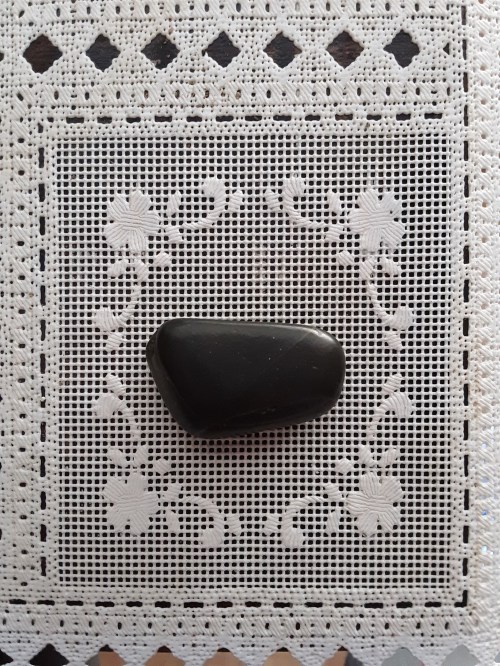
Recently, I gave each of my older grandchildren (that’s 4 out of 6, who are old enough to understand what I am saying) a polished black rock. I told them that every time they look at it or rub it with their thumb to keep it shiny, they should think, “Jesus is like a rock that is unchanged.” He is firm. He is sturdy. He is dependable. He provides for us. The Scripture describes Him as a rock in I Corinthians 10:4: “and all drank the same spiritual drink, for they were drinking from the same spiritual rock which followed them, and the rock was Christ.”
The illustrations for Paul’s comments in I Corinthians are found in Exodus 17:1-7, Numbers 20:1-13, and Deuteronomy 8:15, 32:1-43 (The Song of Moses). If you read the Numbers passage, you will see that God got angry with Moses and Aaron for striking the rock this second time instead of speaking to it as God had commanded. Even though Moses’ anger showed a presumption on his part, what God says to them reveals the source of God’s anger as resulting from them not treating (or representing) God as holy before the congregation. They had disobeyed God’s direct command. I have long wondered why God got so angry. I believe ultimately it may be because Moses’ careless and angry action destroyed a symbol God had designed to explain His work with man. The first time before a rock (Exodus 17), God commanded Moses to strike the rock. The second time (Numbers 20), God commanded Moses to speak to the rock. The first time Christ came He was struck on the cross to deliver us from sin, for “in that day a fountain will be opened for the house of David and for the inhabitants of Jerusalem, for sin and for impurity.” (Zechariah 13:1) Just as the rock poured forth life giving water for the people when Moses struck it, so Christ poured forth life giving blood when the nails were struck into his hands and feet. The second time Christ will come “having been offered once to bear the sins of many, will appear a second time, without reference to sin, to those who eagerly await him.” (Hebrews 9:28) He will gladly provide all we need and more for those for whom He was struck to rescue them. “Ask, and it will be given unto you; seek, and you will find; knock, and the it will be open to you. For everyone who asks receives, and he who seeks finds, and to him who knocks it will be opened to him.” (Matthew 7:7-8)
In Deuteronomy, Moses teaches Israel a song about the dependability, consistency, strength, perfection, faithfulness, righteousness, and jealousy for His people of Israel’s God, their Rock.
David helps to solidify our understanding about God as our Rock. His most direct explanation of the rock metaphor comes in Psalm 18. In verses 1-3 he sets forth the idea of the Lord as his rock:
“I love You, O Lord, my strength. The Lord is my rock and my fortress and my deliverer, my God, my rock, in whom I take refuge; my shield and the horn of my salvation, my stronghold. I call upon the Lord who is worthy to be praised, and I am saved from my enemies.”
The rock metaphor becomes a shorthand for David of security, protection, salvation, strength, victory, and all else that God means to him regarding physical, mental, and spiritual rescue from all variety of enemies. God is for him a firm place where his foot doesn’t slip and his enemies don’t overcome him (v.36-37)
I know that my grandchildren can’t understand all of that right now, but learning dependence upon God is a good lesson to begin early. We will always need to come around to learning it at a deeper level and life provides many opportunities to review that lesson.


GLUES
Posted in Cultural commentary, Discipline, Freedom, General, God Thoughts, God's Word, Government, Implications, Kindness, Mercy, Prudence, Relationship, Society, tagged Civility, Government, Integrity, Kindness, Love, Mercy, Respect, Rule of Law, Society, Truth on November 16, 2019| Leave a Comment »
I had another few moments of reflective insight upon waking this morning. All kinds of things bubble up when the pressure is only released for a few moments. It works for uncapped sodas and beleaguered minds alike.
Yesterday was an odd day for me. I was questioning my long-term purpose continuing where I am, doing what I am doing. For many years that was not a question as I felt confident as to my whereabouts and ‘whyabouts’. On top of that, my lesson plans were not the most gorgeous pedagogy, rather boring to be frank, and not having the time or creativity to fix it this time around. Add to that the fact that for some reason, for which I had no clue of at the time, I didn’t feel well. In this state of mind and body I experienced what is not an uncommon pair of interactions with two students.
The first interaction happened about noon. This class has informed me that they don’t want me to say “Good morning” when they arrive in class at 11:35 AM, but instead, “Good mid-day.” In the middle of lecture, I stood off to the side preparing to interpret what was on the screen in front of us all. I felt slightly nauseated and when I looked at the screen my eyes were sufficiently blurry to not be able to add memory (1) and read what it said. I took my glasses off to see if they had some outrageous smudges on the lenses and clean them anyway since I can’t really see them. The students were still copying the screen so that there was not an awkward moment. One student nearby looked up at me, having had me a previous semester, had read my facial expressions many times, and said, “Are you OK, Mr. F?” Rubbing my eyes and replacing my glasses I quietly said, “No.” She replied, “Maybe you should sit down.” I was struck by the utter kindness in her words and tone of voice. I was also secretly chuckling at how old a grey-bearded 59 year-old must seem to a 16 year-old. I was able to recover by using my peripheral vision to discern the screen and continue and a few moments later at my instruction the students were working away quietly on a worksheet practicing the concepts that we had just gone over. I went and sat down and the girl came up to my desk and asked if “maybe you need to go see the nurse”, followed by “did you eat breakfast this morning?” (2) There was nothing but concern in her face, demeanor, and words, and I thanked her several times before the period was over.
After lunch, blurriness gone, I entered my last period of the last weekday. Students filed in to and with “Good Afternoons” and other comments about the day. One surly student entered at the last minute, wearing his hood and plopping down demonstrably at the bell. I don’t allow hats and hoods on heads in my classroom and he regularly pushes this rule and grunts when I would say, “It’s not raining in here, ___”. This day I could tell that he was in a particularly bad mood, so I thought to wait and ask privately or let it occur to him from my sideways glances. I know that this expectation is considered deeply old-fashioned and inexplicable to most people, but I think that it is a matter of respect. (3) Once again, upon reflection, I figured out why this student was non-verbally resisting. He had been told, no doubt moments before, of his lunch detention for a fourth tardy to my class yesterday. If this were the only or rare exhibition of disrespect toward me from this student, I could have totally ignored it, but I had also had him another semester, and this was the regular fare he serves up. I try to be patient because he is under significant pressure I believe from parents and siblings and friends to “make something of himself” through success in education. He has a good mind but not an excellent ability, so to succeed he must struggle and work hard. Interpreting what I see, I’d say his bad attitude results from much extrinsic motivation but little intrinsic motivation, daily lessened by the pressure of the extrinsic forms. I am probably among his least favorite teachers because my expectations require either that you prove through testing that you know the material or work and organize hard enough and consistently enough to convince me of your learning. Either one will garner a B, but only both precipitate an A. Therefore, his extrinsic motivations get turned up a notch because he is not willing or able to live up to my expectations, though more effort on his part would solve the problem.
These two deeply contrasting interactions within the span of an hour and a half have triggered my reflection on interaction between people. And in fact, I had intended to comment on this previously (“Review of what we should have learned” #2), and am self-chided for not completing that thought. So, in quick fashion, I intend to say what I believe to be several GLUES (Good Lessons Underpinning Effective Society) of Society. Society here means “a voluntary association of individuals for common ends”, and in particular I refer to that kind which is “an enduring and cooperating social group whose members have developed organized patterns of relationships through interaction with one another”. (4)
These two students teach us what we already know to be two required underpinnings of society: respect and kindness. We will forever battle, literally and verbally, if we do not hold these two expectations of ourselves and our fellow citizens. Respect should be for a minimum of two reasons: 1) All people deserve it because they are made in the image of God (5), and 2) Those in authority: a) government servants including elected officials and police, to name a few, b) those who work for our good such as teachers and preachers, fathers and mothers, and c) elders (6). Without interacting layers of respect a society cannot function with civility.
Kindness and mercy, which includes forgiveness, are the only ways past the juggernaut of hatred and fear that propels us to quarrel and be defensive even when there is no offense real or intended.
Additionally, a society must be characterized by truth in order to long endure. I fear our society will not long endure into the future owing to the fact that we have shed all modicum of truth either as a concept or in practice.
The two areas of the practice of truth that I think are a minimum requirement are the rule of law and integrity. I don’t say justice because human government may not even be capable of that in any real and balanced way. Rule of Law it seems to me is a consistent, that is, not fickle, determination to approximate justice in the black and white and gray areas of human ignorance on what constitutes real justice. (7) Some will argue that if we merely follow God’s Word, justice will always be done. I retort that God’s Word is absolutely true and just but our laws are evidence that He did not illuminate us on every detail of how to carry out His justice, though the principles are all there. It is most certainly due to our blindness and rebellion that we do not carry out His law, but that is where we are nonetheless.
Integrity is a term that seems vague to most people I talk to. They simply say it means honesty, or the more astute say it means honesty when no one is watching. Though true, these two definitions fall short of the deeper meaning that a society needs to function. Integrity involves an internal consistency of thought and action based in worldview that makes honesty the unassailable default mode. To put it simply, a person of integrity can’t lie (8) because his/her worldview comes unglued. As an illustration, a student told me that she was telling the truth. In reply, not really questioning her honesty but questioning her integrity and view of herself, I asked, “Do you ever lie?” She thought a moment and slowly replied, “I have.” I pointed out to her that she must, by in large, be an honest person, therefore, because she admits to the human condition that we all lie. (I John 1:5-9) Without integrity there is no good reputation, so where do I take my car to be worked on and do I ever receive change from a cashier without counting it?
How could I make such a list without love. “God is love.” “Without love I am [we are] nothing.” “Love covers a multitude of sins.” (9) Love holds together everything: self, family, friends, communities, nations. It stems directly from God’s nature and is the greatest need of mankind.
And there you have it, my ideas about the GLUE of Society: Kindness, respect, rule of law, mercy, truth, integrity, and love.
Now this list could go on and I hope the reader will comment with your candidates and reasonings for including other ideas, but I think these seven GLUES can be reduced down to two found in Proverbs 3:3: “Do not let kindness and truth leave you; bind them around your neck, write them on the tablet of your heart.” And these two are not dichotomous in nature, whereby you can’t hold one while entertaining the other. Instead, they are two sides of the same coin, whereby you cannot truly have one without the other. As a fellow citizen, yea human being, I cannot truly be kind to you if I do not tell you the truth. And I cannot really be true if I do not communicate and interact in kindness, because you cannot accept it and real truth is always kind by instructing us for our good. And these two can be further be reduced to just love, because it is an essential attribute of God, but not the only one. And that last little clarification is the the reason I think we need to discuss seven or more GLUES for our life together (10) and stop here.
Read Full Post »