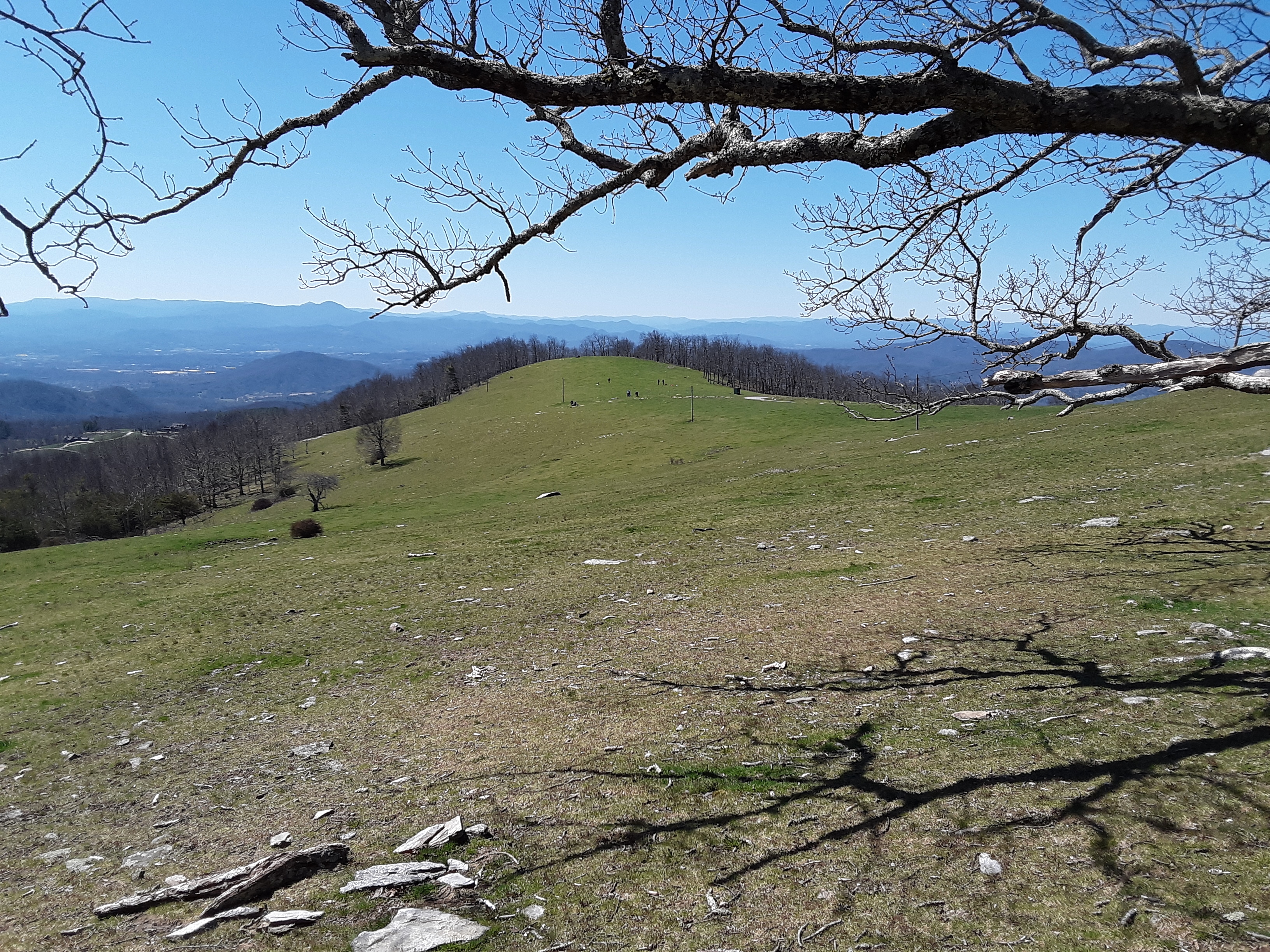
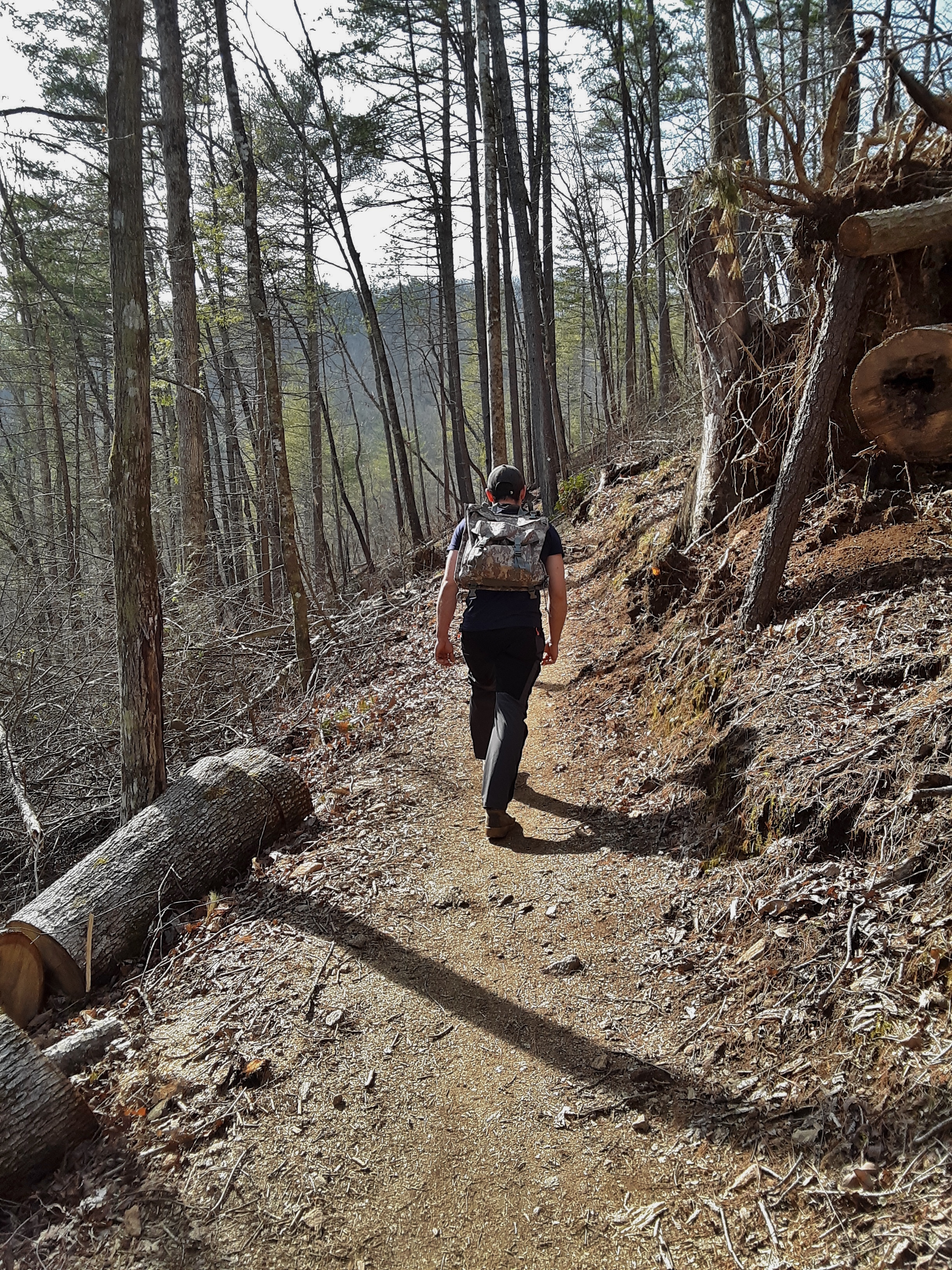
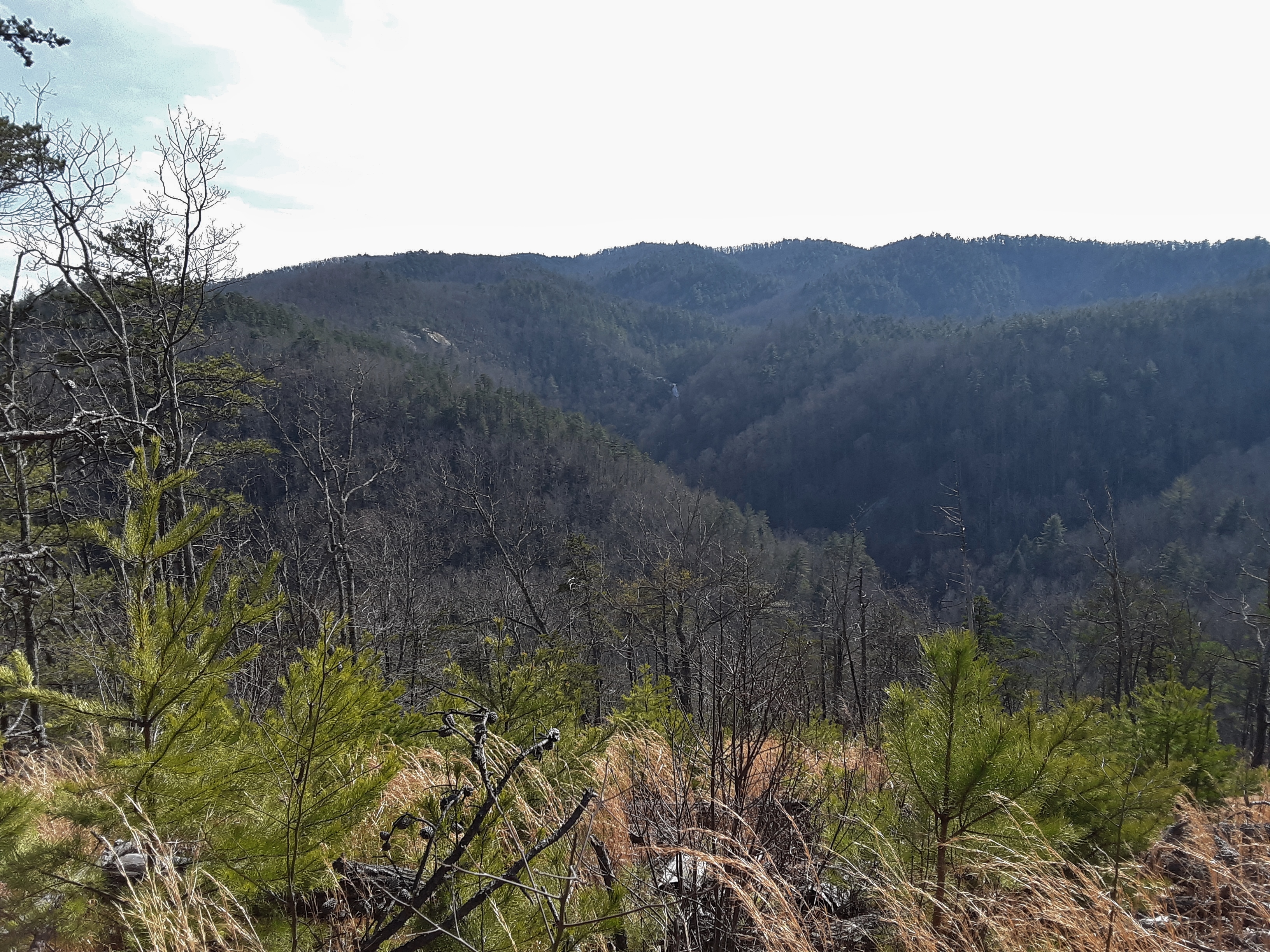
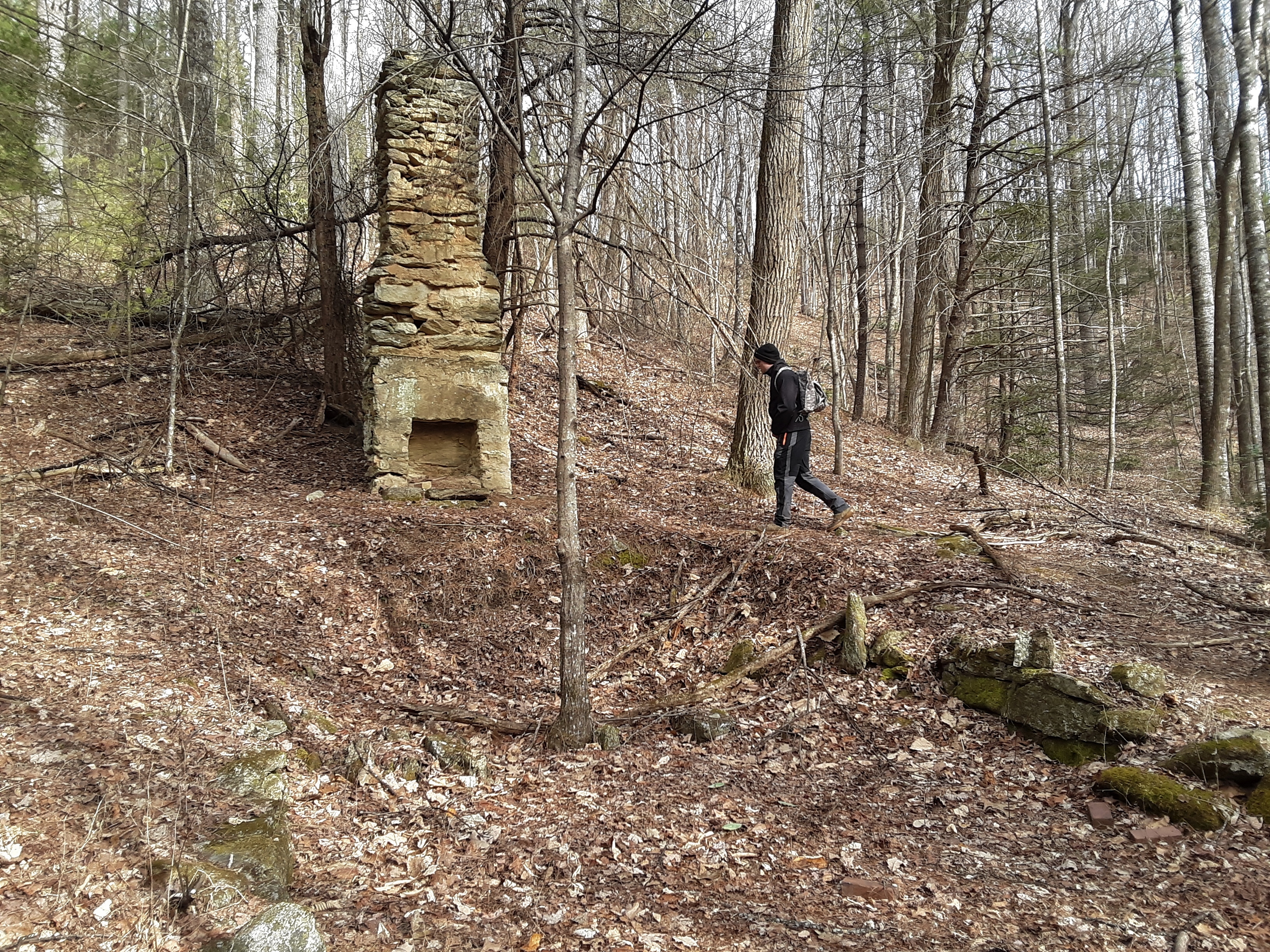
I was in need of going over the mountain a couple of days ago. I have done the trip so, so many times. I decided that I needed to stop on the way back to take a little hike and break up the trip. I appreciate scenes I have already seen and return to many frequently. I especially enjoy showing others little wonders of nature that I have seen. But I was alone and I longed to see something new, and it did not have to be big or impressive. I found what I suspect to be an underappreciated little jewel off the far end of the Linville Falls Access Parking Lot. Old growth forests are few in the Eastern United States. I content myself with enjoying the occasional lone larger tree. This Eastern White Pine is a healthy example.

The trail is very short. By the time you walk to the far end of the parking lot, you are half way there. The trail goes up over a little hump past several large trees and then down into a narrow notch where the park service has a bridge just right for viewing and walking up between the boulders.


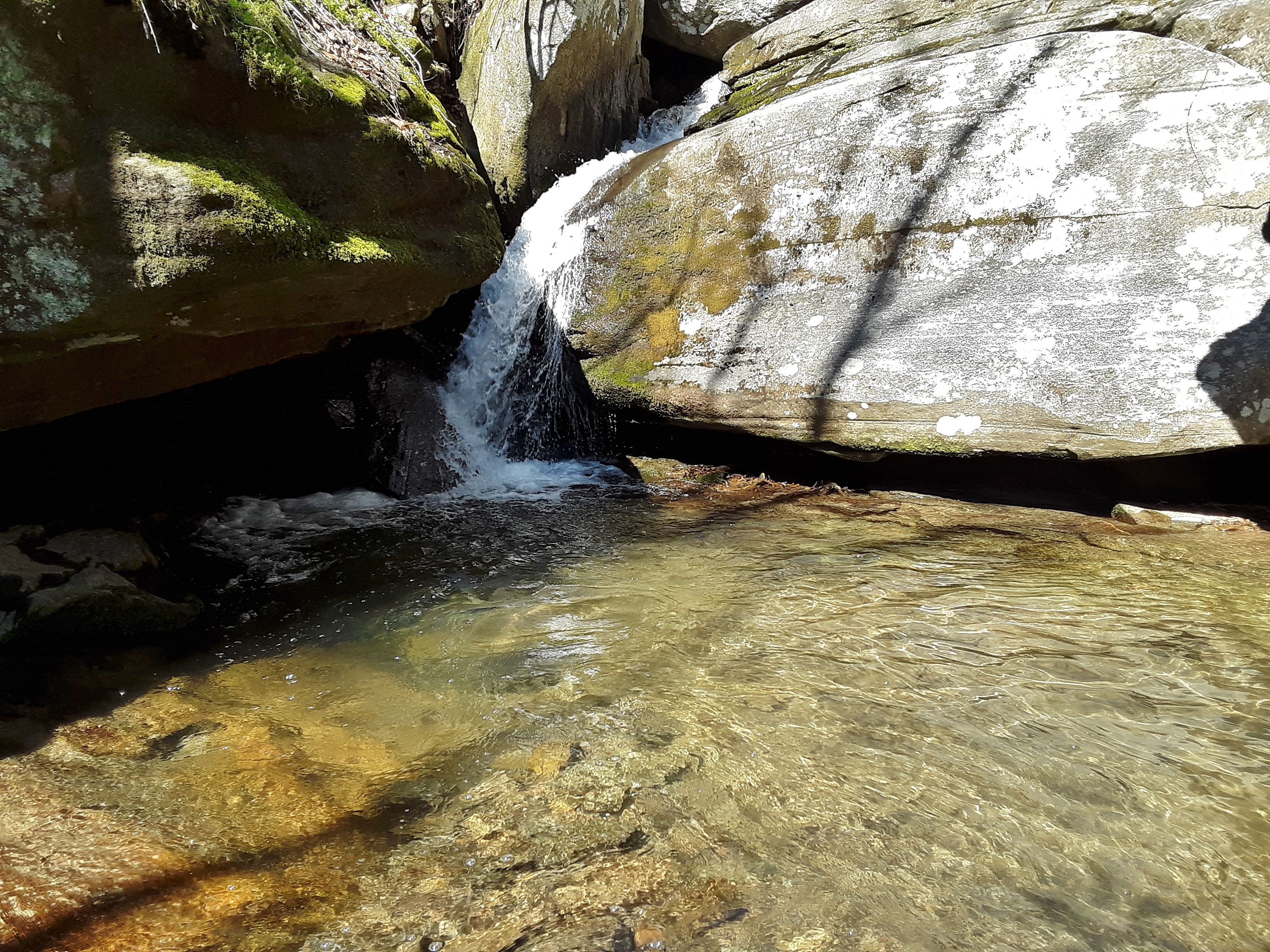
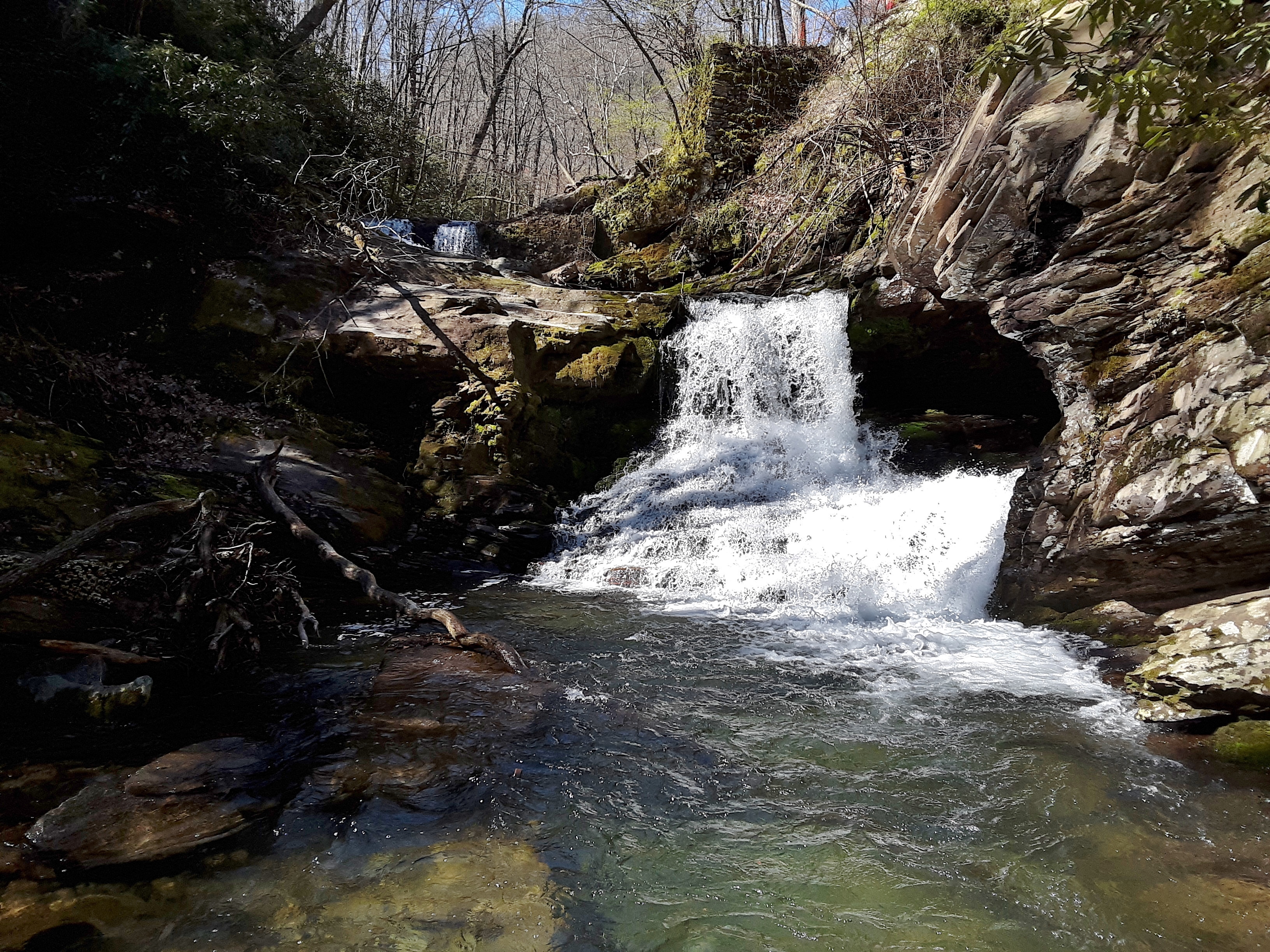
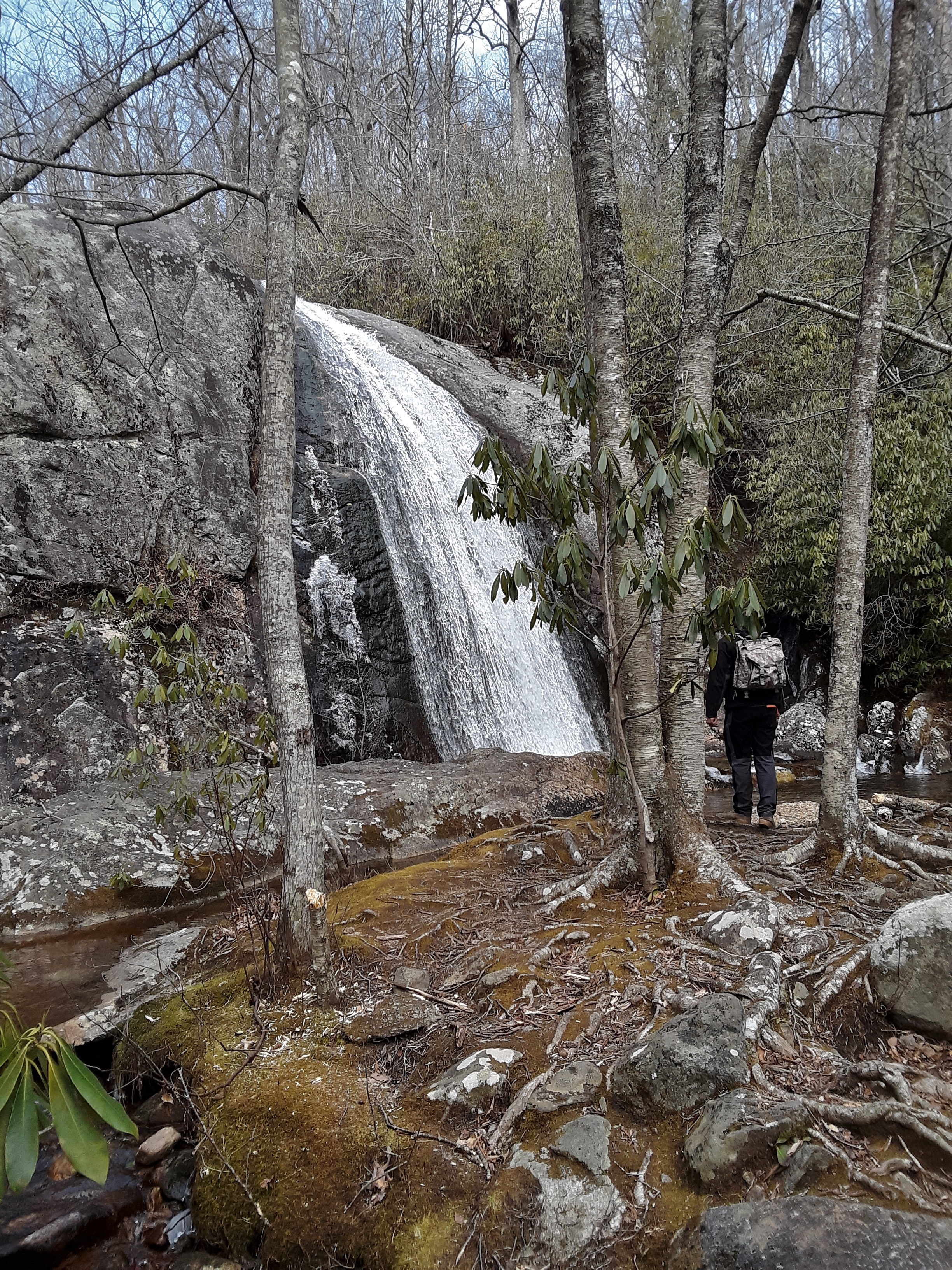
In the middle of the bridge, voila’, Dugger’s Creek Falls.

On the far side of the bridge the steps go up between the boulders in such an inviting way.

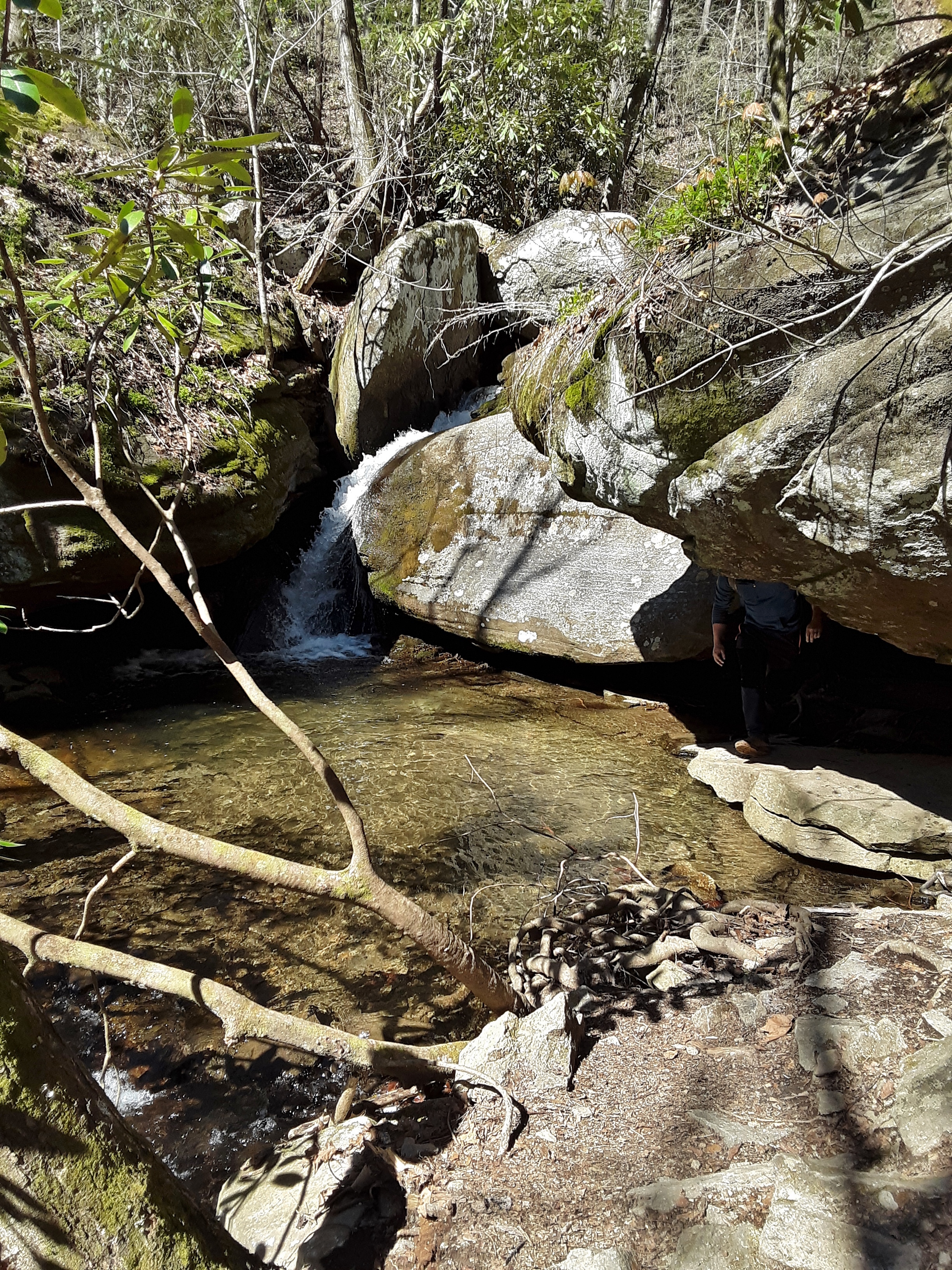
Always desirous of a little adventure and a better picture, I got off trail just at the base of these stairs. Inviting though they be, they were a bit too civilized for my present frame of mind. Instead, I battled a bit of rhododendron and some small drop offs. The falls, in the 12 to 15 feet wide notch and cloaked in rhodo’s was not having it.

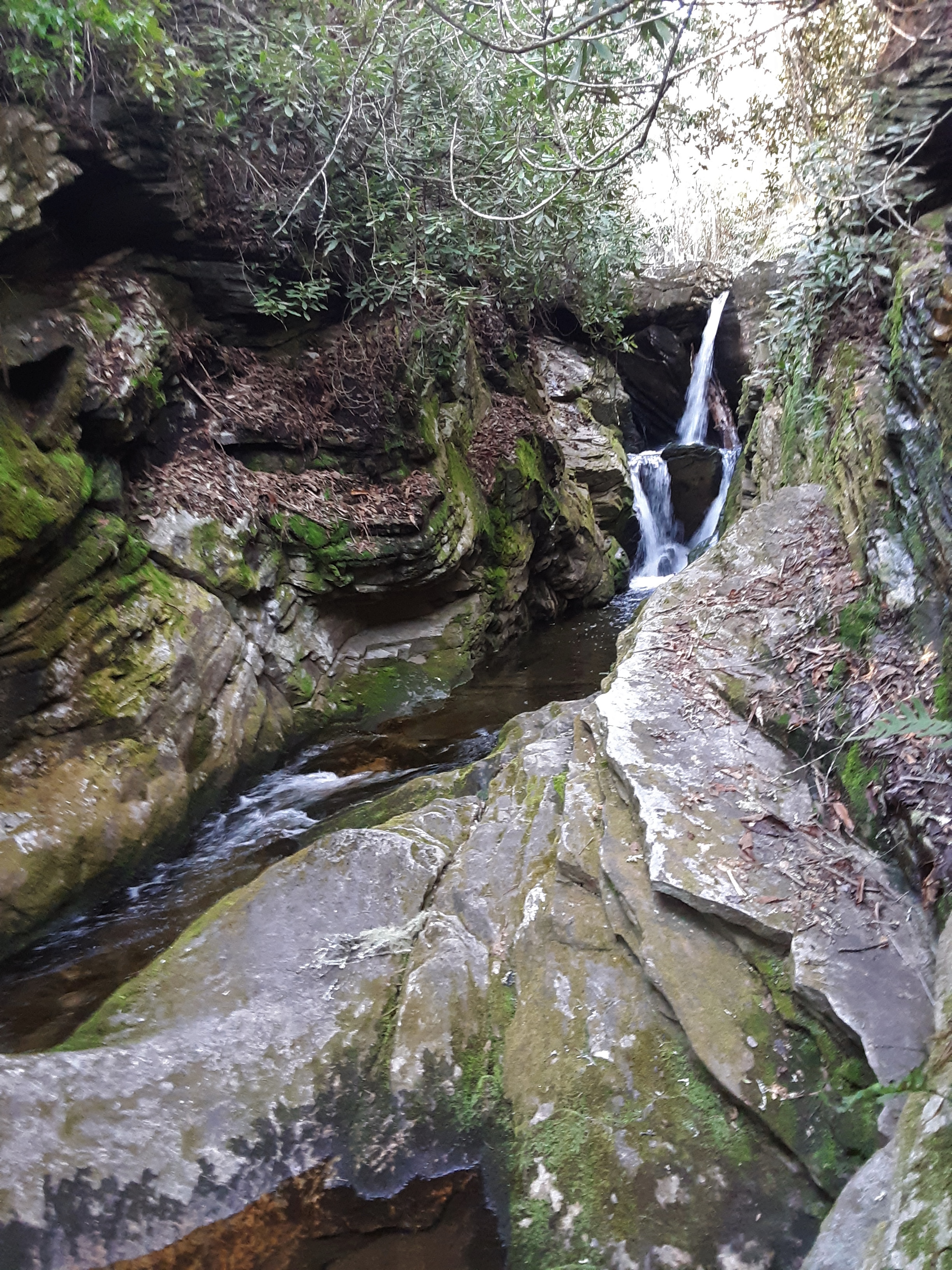
So, I went to the top of the falls in order to check out how and where the water squirms between the cracks and voids of the notch. If you look closely, you can see the bridge. If it were summer, I would probably wade up the stream to the base of the falls, but I don’t have a waterproof camera, so that would not be recorded.

Above the falls the creek comes rushing down into the notch, still a steep pitch with more broken boulders along the sides.

The scene is green with Galax and fern and moss.
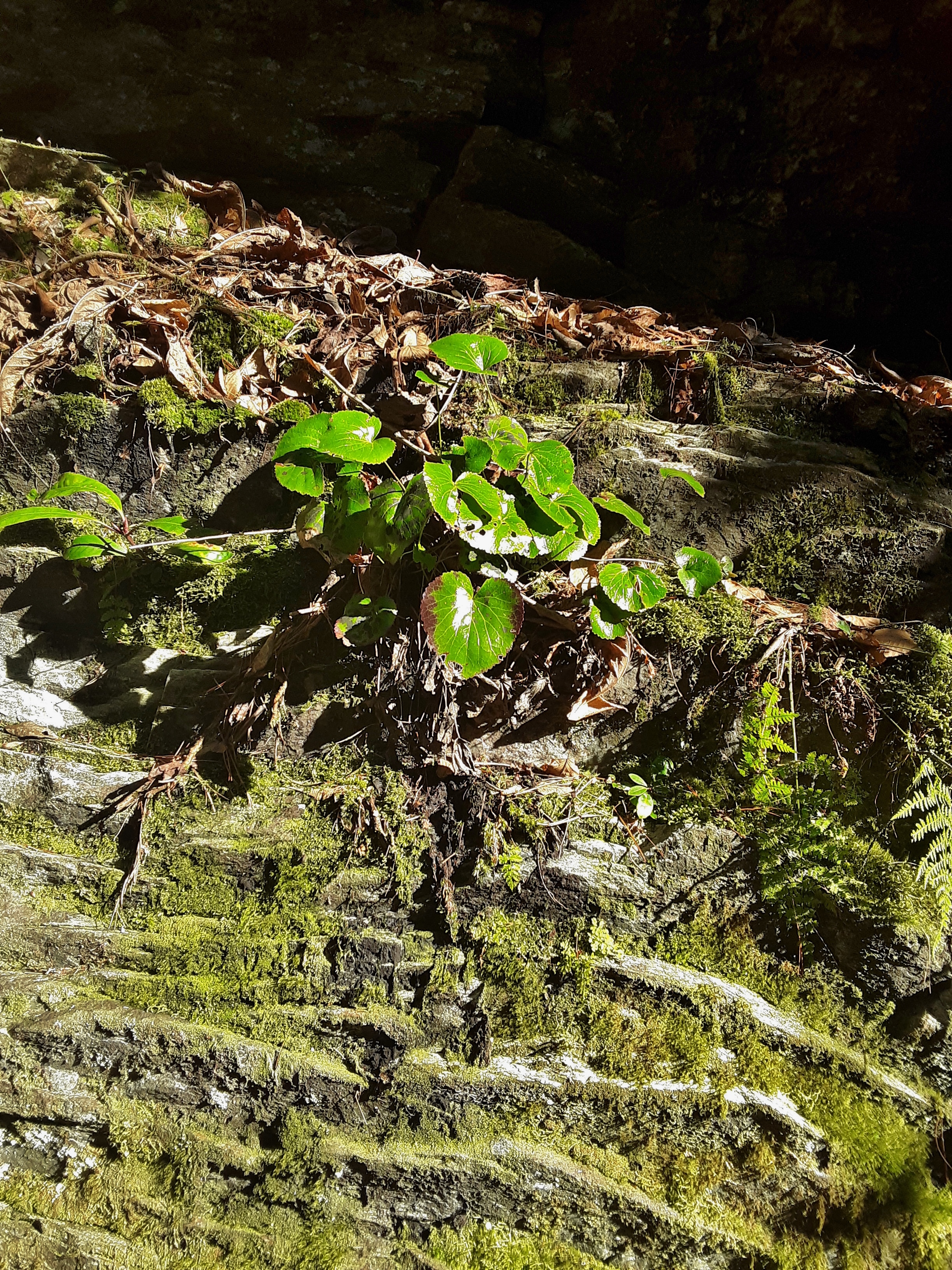
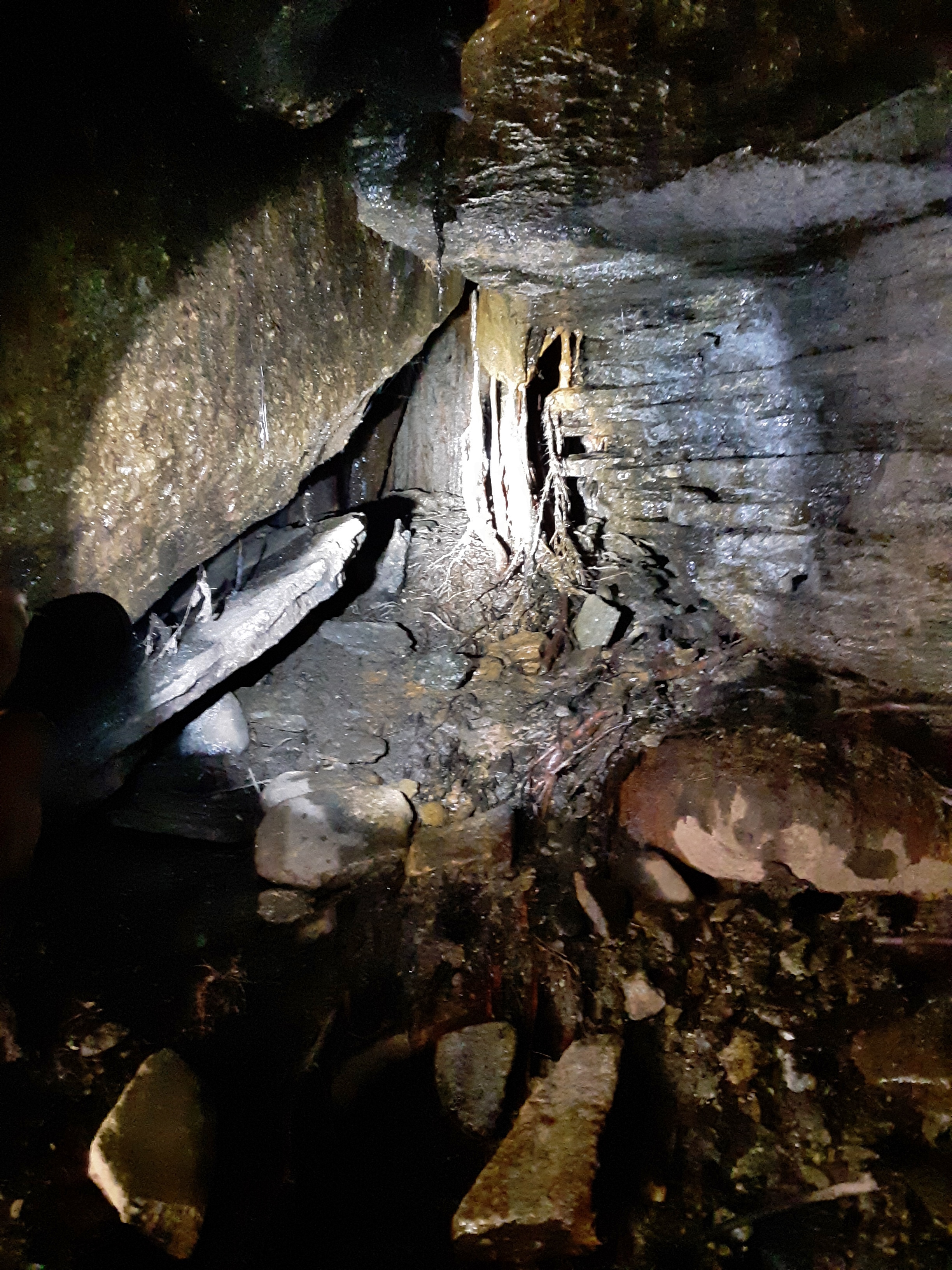
The rock form is definitely foliated metamorphic, the layers curiously formed in waves.

The trail exits the woods onto the road just out of sight of the bridge or falls, but just before it does you get one more good view.
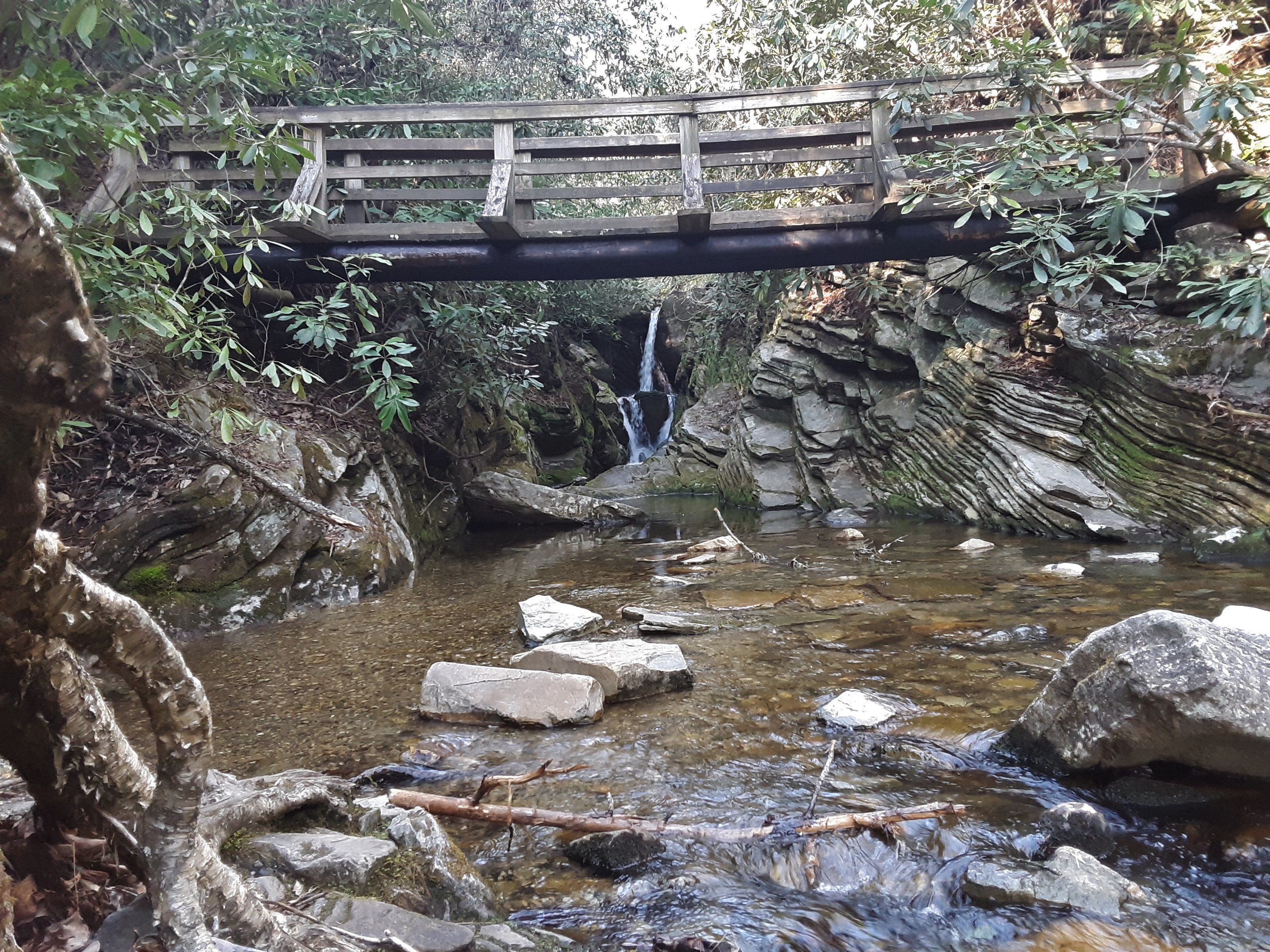
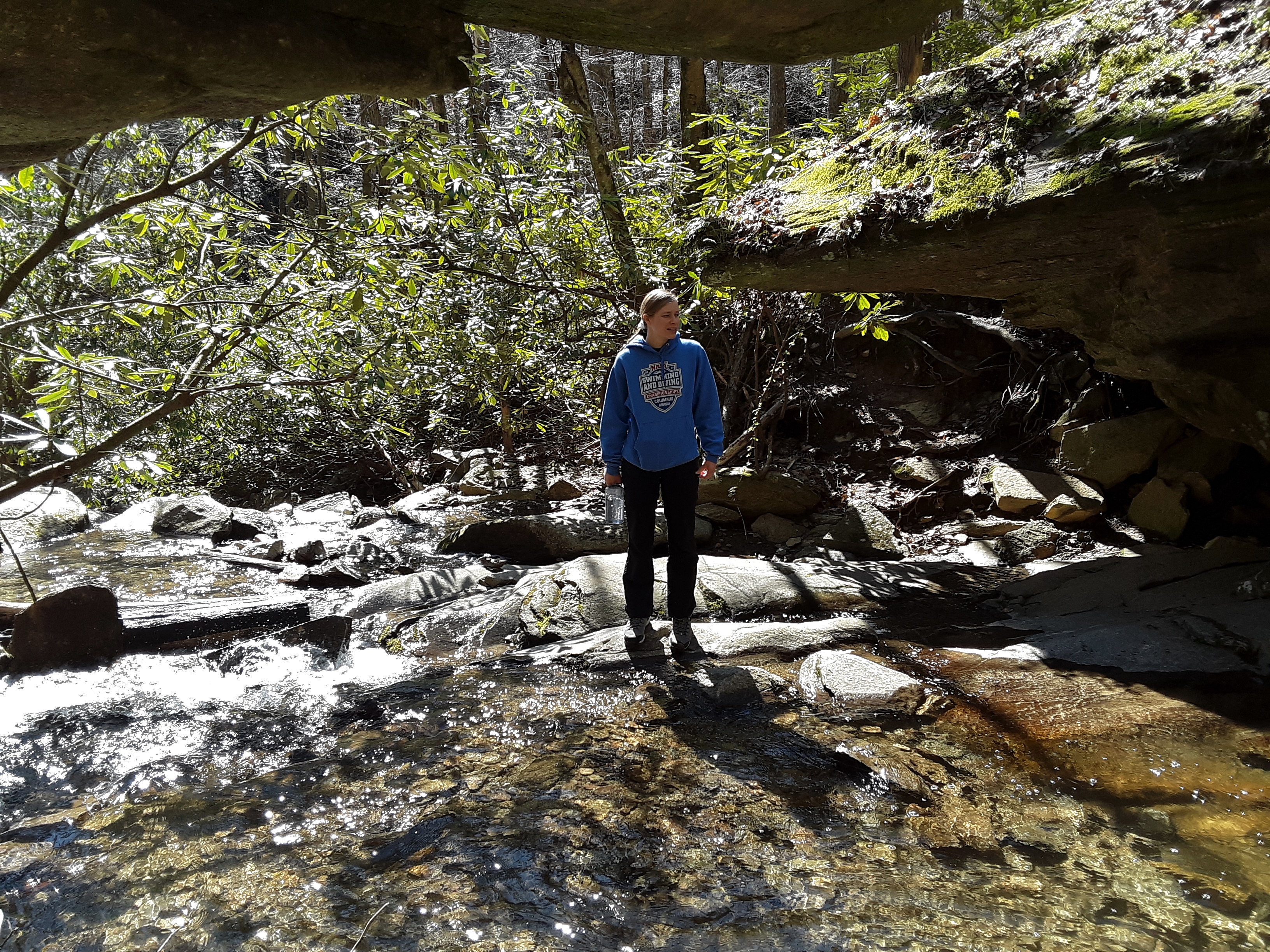
Not quite satisfied until I have explored every little turn and divot, I crossed the creek and worked my way under the bridge and edged up along the small cliffs. It was no use. The likelihood of wet feet or more (e.g. wet cellphone) stopped me short of completing every inch. I was satisfied with one more picture and a rock scramble back up to the trail.
On the beyond the bridge side of the trail are several plagues with quotes. The following was apt to my present situation.
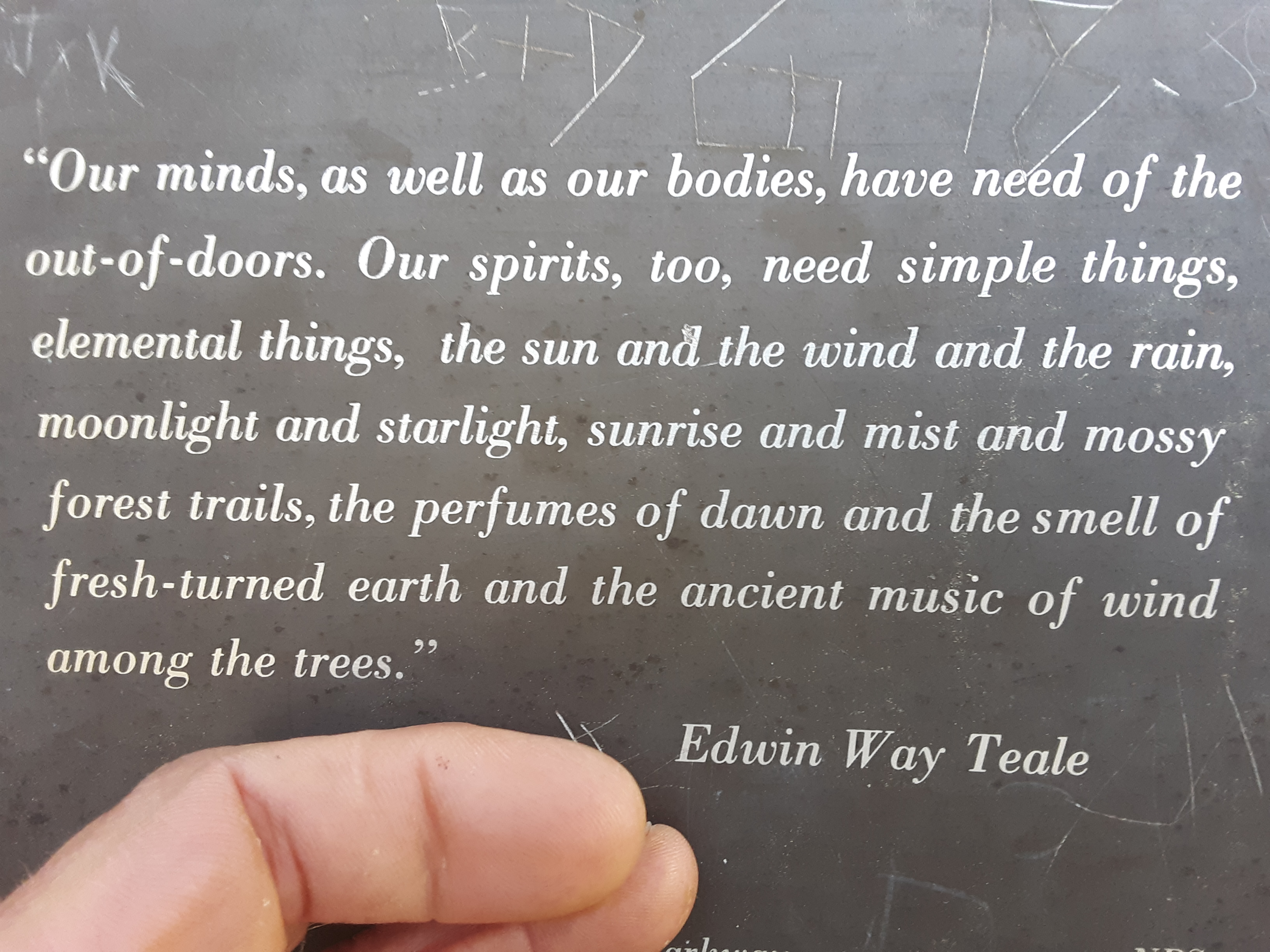
The author does not say why we are in need of these things, and it is certainly true that many never consider that they are. But when I muse upon why this quote is true, it seems to me to point to the beauty of God as the why we seek the beauty in nature. We cannot now see Him, though Jesus said, “Blessed are the pure in heart, for they shall see God.” (Matthew 5:8) We want to see His beauty and seek it in nature. But “How can a young man keep his way pure? By keeping it according to Your word.” (Psalm 119:9) But no one is able apart from the righteousness that Christ imparts, “for all have sinned and fall short of the glory of God. (Romans 3:230 As He told those questioning Him about the work of God, “This is the work of God, that you believe in Him whom He has sent.” (John 6:29) Therefore, I look forward, not based on my merit, but His in which I trust, to seeing His beautiful, awesome visage one day, just as I seeks its tarnished and veiled reflection in His Creation I so enjoy experiencing.




















































Red, …, and Blue
Posted in America, Civil Debate, Cultural commentary, Freedom, General, Government, Repentance, Society, tagged Acknowledging God, America, Dr. Seuss, Political Metaphor, Politics, Repentance, Society on January 20, 2021| 1 Comment »
The transition of power has occurred. We look forward with hope or dread or some ambiguous go between.
With all of the wrangling and division that has gone on, politics is about the last thing you want to read about right about now. But I kept having a thought run through my head during all of the insanity: This reminds me of the Dr. Seuss book, “One fish Two fish Red fish Blue fish”.
“One fish, Two fish, Red fish, Blue fish,
Black fish, Blue fish, Old fish, New fish.
This one has a little car.
This one has a little star.
Say! What a lot of fish there are.
Yes. Some are red, and some are blue.
Some are old and some are new.
Some are sad, and some are glad,
And some are very, very bad.
Why are they sad and glad and bad?”
Was Dr. Seuss only talking about differences in people or was he also making a political statement?
Well, “One fish…” was published in 1960, the year I was born. The present color scheme for Elephants and Donkeys solidified in the 2000 presidential election. So, no, Dr. Seuss was not being prophetic about politics.
But “why are they sad and glad and bad?” Politics is broken in America. Many, not all, are “very, very bad”. Contrary and contradictory worldviews have separated us into camps so that we don’t even know how to understand each other, let alone want to. There is very little talk about what God would have us to do that would work. And since He knows best, this lack of acknowledgement and seeking of His counsel will spell disaster, even if ever so slowly. There is non-stop wrangling about how the other side is stupid or trying to cheat or lie into power (see my blog called “The Basis of Civil Debate”). The words “public servant” are used but the idea and the sacrifice are missing.
So we have red fish and blue fish all living in the same pond trying to eliminate the other population in a feeding frenzy brought on by the very, very bad blood in the water and fear mongering croakers and immoral snappers dragging us down. The only hope for clearing the waters so that various stripes of fish can live in this habitat is a return to the ecologically sound living of repentance and acknowledging the Caretaker, Creator God.
Read Full Post »